
Uncategorized
Luxury Travel to India Is Becoming Hyper-Personalised QXP India at the Forefront


Delhi, India
INDIA – 20 April – QXP India Travel, a boutique destination management company specialising in bespoke journeys across India and the Indian subcontinent, today announced its positioning as a premier hyper-personalised travel partner for international travellers seeking deeply curated, seamlessly executed experiences in the region. As luxury travel demand shifts away from fixed itineraries toward individually crafted journeys, QXP India Travel is meeting that demand with a service model built entirely around the traveller’s preferences, pace, and priorities — with no standard packages and no off-the-shelf solutions.
The global luxury travel market has undergone a significant shift in recent years. Travellers from the United States, Europe, the United Kingdom, and Australia who once relied on curated group tours or fixed luxury packages are increasingly seeking experiences that reflect their individual interests, travel styles, and cultural curiosities. India — with its extraordinary diversity of landscapes, heritage, wildlife, wellness traditions, and culinary culture — is among the destinations where this shift is most pronounced. Yet the complexity of planning an independent journey across the subcontinent remains one of the primary barriers to that kind of travel.
QXP India Travel was established specifically to resolve that tension. The company’s model removes the logistical burden from the traveller entirely, replacing it with a single point of contact, deep local expertise, and end-to-end execution across every element of the journey.
Every Journey Designed From Scratch
At the core of QXP India Travel’s offering is a commitment to itinerary design that begins with the traveller, not a template. Each proposal is developed from scratch based on a detailed understanding of the client’s preferences, travel history, interests, and expectations. The result is a journey that reflects who the traveller is rather than what a standard luxury package offers.
Accommodation is handpicked from an independently vetted selection of boutique properties, heritage hotels, and luxury residences across the destinations visited. Transportation is handled through private airport transfers, chauffeured vehicles, and access to domestic flights, train bookings, and private air charter services. Cultural experiences are curated by expert local guides with knowledge that extends well beyond the contents of a standard tour.
For travellers requiring additional support on arrival, QXP India Travel provides VIP Jetway meet and assist services, 24/7 on-ground assistance throughout the journey, and India visa support — ensuring that the experience of arriving in India is as carefully managed as the experience of being there.
A Portfolio of Destinations Across the Subcontinent
While India remains the company’s primary focus, QXP India Travel designs and executes multi-country itineraries across the broader subcontinent, including Nepal, Bhutan, Sri Lanka, and the Maldives. This regional capability allows the company to serve travellers whose interests extend beyond India’s borders, whether combining a Rajasthan heritage circuit with a Bhutanese mountain retreat, or pairing a southern India cultural journey with a Maldivian overwater villa stay.
Special interest journeys form a significant part of the portfolio. The company designs dedicated wildlife safari itineraries across India’s national parks and tiger reserves, wellness and yoga retreats in destinations including Kerala and Rishikesh, deep cultural immersion programmes in historic cities and craft communities, and pure luxury travel experiences for travellers whose primary priority is exceptional accommodation and service. Each category is approached with the same level of individual customisation applied to the company’s general offering.
What Sets QXP India Travel Apart
The distinction between an itinerary planner and an execution specialist is one that QXP India Travel makes deliberately. The company’s value is not limited to the quality of the journeys it designs — it extends to the reliability with which those journeys are delivered. A robust local partner network across all destinations ensures that the service standards promised at the planning stage are consistently delivered on the ground.
Operational precision is supported by a rapid proposal turnaround process designed to convert enquiries efficiently, a single point of contact model that eliminates the communication complexity typical of multi-supplier itineraries, and flexible travel design that accommodates individual travellers, couples, families, and small groups with equal capability.
The model is also designed to serve the international traveller’s specific expectations. QXP India Travel brings a strong understanding of what travellers from the USA, Europe, the UK, and Australia expect from a luxury travel experience — in terms of communication, service standards, accommodation quality, and logistical reliability — and delivers against those expectations within the context of Indian and subcontinent travel.
“International travellers choosing India are increasingly certain about what they want and less willing to compromise on how they experience it. Our role is to ensure that their vision of the journey becomes the journey they actually take — with none of the complexity and none of the uncertainty that independent planning in a destination like India inevitably involves.”
CEO, QXP India Travel
About QXP India Travel
QXP India Travel is a boutique destination management company specialising in bespoke, fully customised journeys across India, Nepal, Bhutan, Sri Lanka, and the Maldives. The company serves international travellers from the USA, Europe, the UK, and Australia, providing end-to-end travel solutions that include personalised itinerary design, handpicked accommodation, private transfers, expert local guides, VIP arrival services, domestic logistics, and 24/7 on-ground support. QXP India Travel operates with no fixed packages, designing every journey from scratch to reflect the individual preferences and priorities of each client.
Uncategorized
San Diego Civil Rights & Criminal Defense Attorneys Tim Scott and Marcus Bourassa of McKenzie Scott PC Selected to 2027 San Diego Super Lawyers and Rising Stars Lists
San Diego, CATim Scott earns San Diego Super Lawyers recognition for the 15th year; Marcus Bourassa named a Super Lawyers Rising Star for the 5th year, as the firm behind an $85 million civil rights verdict and record wrongful-death settlement against San Diego County continues to set the standard
Tim Scott earns San Diego Super Lawyers recognition for the 15th year; Marcus Bourassa named a Super Lawyers Rising Star for the 5th year, as the firm behind an $85 million civil rights verdict and record wrongful-death settlement against San Diego County continues to set the standard
San Diego, CA
McKenzie Scott PC, the San Diego civil rights and criminal defense law firm known for record-setting results against government agencies, today announced that two of its trial attorneys have been recognized by Super Lawyers. Founding partner Tim Scott has been selected to the 2027 San Diego Super Lawyers list, marking his 15th year receiving the honor, and trial attorney Marcus Bourassa has been selected to the 2027 San Diego Rising Stars list, marking his 5th year of recognition.
Super Lawyers, a Thomson Reuters service, selects attorneys through a patented process that combines peer nominations, independent research, and evaluation of professional accomplishments. No more than 5% of attorneys nationwide are named to a regional Super Lawyers list, and no more than 2.5% are named to a regional Rising Stars list, which recognizes outstanding lawyers who are 40 or younger or have been in practice 10 years or less. Both attorneys will be featured in the San Diego Super Lawyers magazine, scheduled for publication on March 18, 2027.

Together, the two selections reflect the depth of a trial team that has secured some of the largest police misconduct, jail death, and wrongful death results in California history while maintaining one of the region’s most active federal criminal defense trial practices.
Tim Scott: 15 Years as a San Diego Super Lawyer
A graduate of Stanford Law School, San Diego civil rights attorney Tim Scott has defended people’s constitutional rights in the courtroom for more than 20 years. He began his career as a trial attorney with Federal Defenders of San Diego, Inc. before co-founding McKenzie Scott PC with Michele Akemi McKenzie. Peers have consistently recognized him as a San Diego Super Lawyer and Southern California Super Lawyer in both trial-court and appellate categories.
Scott served as lead trial counsel in K.J.P. v. County of San Diego, which produced an $85 million verdict, at the time the largest wrongful-death verdict against police in American history. As a criminal defense lawyer, he has approximately 80 civil and criminal jury trials to his credit, with acquittals, mistrials, or reversals on appeal in approximately three-quarters of his criminal cases. His Ninth Circuit appellate record includes reversals in securities fraud, wire fraud, RICO, bank robbery, and identity theft cases, and extensive litigation surrounding Fourth Amendment issues.
Scott is also the co-author, with retired federal district judge Larry A. Burns, of The Ninth Circuit Criminal Handbook (LexisNexis/Matthew Bender), a criminal law restatement relied on by practitioners and judges throughout the Ninth Circuit. The San Diego Criminal Defense Bar Association named him its 2016 Trial Lawyer of the Year.
Marcus Bourassa: 5 Years as a Super Lawyers Rising Star
Trial attorney Marcus Bourassa holds undergraduate and graduate degrees from Stanford University and a J.D. from Stanford Law School. Between his studies, he served as an intelligence officer in the United States Marine Corps, deploying to Afghanistan. After law school, he clerked for the Honorable Christina A. Snyder of the U.S. District Court for the Central District of California, then joined the federal defender’s office in San Diego, where he tried numerous cases to verdict, argued before the Ninth Circuit Court of Appeals, and earned numerous federal felony dismissals.
Bourassa practices across the firm’s civil rights and federal criminal defense groups. He served as co-counsel in the Brian Umana police shooting case, which produced the largest police wrongful death settlement in National City history, and is admitted to practice in California state and federal courts and the Ninth Circuit.
A Record of Landmark Civil Rights Results
The recognition follows a series of record-setting case results that have made McKenzie Scott PC one of the most recognized civil rights law firms in California. In each case below, the firm took on a government agency over a preventable death and secured the largest result of its kind for the jurisdiction involved.
$85 Million Verdict: K.J.P. v. County of San Diego (Lucky Phounsy)
In 2022, a jury awarded $85 million to the family of Lucky Phounsy after finding San Diego County Sheriff’s deputies responsible for his death. Phounsy called 911 in 2015 during a mental health crisis; deputies tased, struck, and hogtied him before restraining him face down in an ambulance, where his heart stopped. Tim Scott tried the case to verdict with co-counsel Mark F. Fleming. At the time, it was the largest police death verdict in U.S. history.
$16 Million Settlement: Estate of Hayden Schuck v. County of San Diego
In October 2025, the San Diego County Board of Supervisors approved a $16 million settlement for the family of 22-year-old William Hayden Schuck, who died of dehydration and untreated drug withdrawal after six days in San Diego Central Jail. It is the largest wrongful death settlement against San Diego County in its history and resulted in mandatory deputy training reforms on recognizing mental illness and substance withdrawal. Tim Scott was lead counsel on the McKenzie Scott trial team that represented the Schuck family. Learn more about the firm’s jail injury and in-custody death practice.
$1 Million Settlement: The Brian Umana Case, National City
In February 2025, the National City Council approved a $1 million settlement, reportedly the largest police wrongful death payment in the city’s history, over the 2021 shooting death of Brian Umana, a 28-year-old father shot at least ten times by officers during a mental health crisis. Tim Scott and Marcus Bourassa served as co-counsel alongside civil rights attorney Emily Howe of the Law Offices of Emily E. Howe.
Federal Criminal Defense Trial Experience
McKenzie Scott PC’s federal criminal defense practice is built largely from alumni of Federal Defenders of San Diego, Inc., the office appointed to represent people accused of federal crimes in the Southern District of California, one of the busiest federal criminal dockets in the country. Across more than 80 jury trials, approximately three-quarters of the firm’s criminal trials have resulted in acquittals, hung juries, or success on appeal.
The firm defends clients in federal and state investigations and prosecutions, including:
- White-collar crimes, including wire, mail, bank, and securities fraud
- Money laundering and honest services fraud
- Insurance fraud and health care fraud
- Border arrests, drug trafficking, and immigration offenses
- Firearms, RICO, theft of trade secrets, and cybercrime charges
- Federal appeals before the Ninth Circuit Court of Appeals
Frequently Asked Questions
Who at McKenzie Scott PC was selected to 2027 San Diego Super Lawyers?
Founding partner Tim Scott was selected to the 2027 San Diego Super Lawyers list, his 15th year of Super Lawyers recognition. Trial attorney Marcus Bourassa was selected to the 2027 San Diego Rising Stars list, his 5th year of recognition.
What is the difference between Super Lawyers and Rising Stars?
Super Lawyers recognizes no more than 5% of attorneys in each region. Rising Stars recognizes no more than 2.5% of attorneys in each region who are 40 or younger or have practiced 10 years or less. Both lists are based on peer input, independent research, and professional achievement.
What is the largest wrongful death settlement against San Diego County?
The largest wrongful death settlement against San Diego County in its history is the $16 million settlement McKenzie Scott PC secured in 2025 for the family of Hayden Schuck, who died in San Diego Central Jail custody.
What was the largest police in-custody death verdict in the United States?
In 2022, a San Diego jury awarded $85 million to the family of Lucky Phounsy in K.J.P. v. County of San Diego. At the time, it was the largest police death verdict in American history. McKenzie Scott PC founding partner Tim Scott tried the case.
Does McKenzie Scott PC handle federal criminal defense cases?
Yes. McKenzie Scott PC is a San Diego federal criminal defense firm whose attorneys trained at Federal Defenders of San Diego. The firm handles white-collar crimes, insurance fraud, money laundering, border arrests, drug trafficking, and firearms cases, along with federal appeals in the Ninth Circuit.
How do I contact a San Diego civil rights or criminal defense attorney at McKenzie Scott PC?
Call McKenzie Scott PC at (619) 794-0451 or request a free case evaluation online. The firm’s office is located at 1350 Columbia Street, Suite 600, San Diego, California 92101.
About McKenzie Scott PC
Led by founding partners Michele Akemi McKenzie and Tim Scott and protecting civil rights and providing criminal defense since 2000, McKenzie Scott PC is a San Diego trial firm that fights for the little guy against the power of government and corporate money. The firm represents clients throughout Southern California in civil rights litigation, including police misconduct, jail injury and in-custody death, and police-involved dog shooting cases; criminal defense and federal criminal defense; and personal injury, wrongful death, and employment law matters. Meet the full team of trial attorneys, review featured cases and trial results, or see the firm in the news. Attorneys seeking to co-counsel may visit the attorney referrals page.
Media Contact Information
Jason Kitchen
McKenzie Scott PC
1350 Columbia Street, Suite 600, San Diego, CA 92101
[email protected]
Phone: (619) 794-0451
Web: mckenziescott.com
Attorney advertising. Prior results do not guarantee a similar outcome. Super Lawyers and Rising Stars are selections made by Super Lawyers, a Thomson Reuters business.
Uncategorized
Kelsie Kimberlin’s Award Winning Film, “The Last Message,” Will Premiere At LA’s Royal Theater 9-13 October
LOS ANGELES, CAKelsie Kimberlin, a popular American Ukrainian singer and foundation director, traveled to Ukraine to film a movie chronicling her quest to find answers about the death of her 21-year-old cousin, Andrii Rachok, after he was killed by terrorists. Kelsie spent a month in Ukraine, including all along the frontline, amidst drones and missile attacks, to […]
LOS ANGELES, CA
Kelsie Kimberlin, a popular American Ukrainian singer and foundation director, traveled to Ukraine to film a movie chronicling her quest to find answers about the death of her 21-year-old cousin, Andrii Rachok, after he was killed by terrorists. Kelsie spent a month in Ukraine, including all along the frontline, amidst drones and missile attacks, to seek absolution and forgiveness. She realized that every Ukrainian has felt the pain of loss, but they remain committed to victory over the enemy. She tells the stories of ordinary citizens who fight the demogorgon in their own way.

Kelsie is the only international artist to be permitted to travel to the frontline to film a movie. Her music videos about Ukraine have generated millions of YouTube views, and her songs have received global radio play and thousands of articles. “Everyone needs to see my movie to understand the effect of the war on ordinary citizens,” said Kelsie. “We all need to come together to defeat the terrorists.”

After the screenings of October 9th and 10th at 7:30 and October 11th at 3:20, Kelsie will answer questions from the audience about the film and Ukraine. Tickets for the screenings are available here. https://www.laemmle.com/film/last-message
Uncategorized
JustFor.fans Introduces Local Payment Options Across Latin America
LOS ANGELES, CAJustFor.fans (JFF) has expanded access for fans across Latin America with new local payment options in Brazil, Mexico and Colombia, announced during the inaugural GRABBYS Latin Awards in Medellín. JFF users in Brazil can now pay through Pix, while fans in Mexico can use SPEI and Colombian users can access the platform through PSE, giving customers […]
LOS ANGELES, CA
JustFor.fans (JFF) has expanded access for fans across Latin America with new local payment options in Brazil, Mexico and Colombia, announced during the inaugural GRABBYS Latin Awards in Medellín.

JFF users in Brazil can now pay through Pix, while fans in Mexico can use SPEI and Colombian users can access the platform through PSE, giving customers who may not use credit cards a familiar way to support models on JFF. The rollout follows the platform’s recent expansion into fully translated Spanish and Portuguese experiences and comes as JFF strengthens its presence across a region with significant model and fan communities.
“This past weekend, at the award show, we launched local payments from 3 countries with major JFF fanbases: Brazil (Pix), Mexico (SPEI) and Colombia (PSE),” said JFF founder Dominic Ford. “By accepting payments via these local methods, we are making it easier for fans without credit cards to access our site and our models. Additionally, we launched the site fully in Spanish and Portuguese a month ago.”
JustFor.fans’ involvement with the inaugural GRABBYS Latin Awards builds on its strong Latin American presence, including events in Mexico such as Collab Week Puerto Vallarta, as the platform broadens its outreach to fans and models across the region.
Visit JustFor.fans and follow on X @JustForFansSite & Bluesky @justfor.fans
About JustFor.fans
JustFor.fans (JFF) is a leading premium online adult community and self-publishing platform that engages models – straight, gay, trans & non-binary – with their fans in a private and secure setting.
A leader in anti-piracy JFF was launched in 2018 by esteemed filmmaker and entrepreneur Dominic Ford (DominicFord.com) and shaped with the idea of offering a platform where entertainers have the opportunity to act as their own producers/distributors with complete control over their own artistic works and performances.
With more than 15 years of building membership sites, Ford and his team’s objective is to offer JustFor.fans models several different avenues for making money on the site, including custom video clips, live cam shows, direct messaging and an online store. “We are committed to making JustFor.fans the Number One destination for ambitious content creators.”
X: @bsgpr
Media Contact Details
Brian S. Gross
Email: Send Email

San Diego Civil Rights & Criminal Defense Attorneys Tim Scott and Marcus Bourassa of McKenzie Scott PC Selected to 2027 San Diego Super Lawyers and Rising Stars Lists
Kelsie Kimberlin’s Award Winning Film, “The Last Message,” Will Premiere At LA’s Royal Theater 9-13 October
JustFor.fans Introduces Local Payment Options Across Latin America

Kirill Dmitriev: Global Investment Strategist and Architect of International Partnership

Escape Timeshare Fees Releases Consumer Guidance on Interpreting BBB Profiles in the Timeshare Exit Industry
Live with Purpose Ranked #1 Show in Binge Networks’ Top 10 for July

Germany’s ports and China: How to reconcile openness, resilience and security?

Cubic Introduces DTECH Fusion Edge High-Performance Compute (eHPC) at Special Operations Forces Week

The Global economy is more vulnerable than it seems. World leaders appear largely unwilling to invest in preserving global economic integration
-
 Uncategorized1 year ago
Kirill Dmitriev: Global Investment Strategist and Architect of International Partnership
-
 Uncategorized10 months ago
Escape Timeshare Fees Releases Consumer Guidance on Interpreting BBB Profiles in the Timeshare Exit Industry
-
Uncategorized1 year ago
Live with Purpose Ranked #1 Show in Binge Networks’ Top 10 for July
-

 Uncategorized9 months ago
TreasureNFT: Partnering with BlackRock Capital for a Major Upgrade – NOVA Platform Aims to Become the World’s Largest NFT Trading Ecosystem
-
Uncategorized2 months ago
Legal Complaint Filed Against Rwandan Government Over Secret $404.7 Million Road Contract Awarded to Ruling Party’s Business Conglomerate
-
 Entertainment & Sports2 years ago
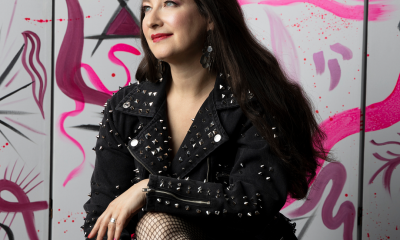
Rachael Sage Releases Powerful Reimagined Acoustic Album, Another Side
-

 Business2 years ago
Aivista Quant Capital CEO Dr. Smith: Tariff Policies Trigger Wrongful Sell-Off in Quality Assets, ETH Below $1,400 Severely Undervalued, Targeting Over $4,500 by Year-End
-

 Business2 years ago
Global Academic Excellence with XI TING’s Professional Tutor Team