
Politics
Georgia’s ongoing struggle goes beyond the bill. It’s about finally breaking free from Russian influence


In 2023, Georgia found itself in the spotlight due to ongoing large-scale public demonstrations against the introduction of Russian-style laws that threatened to derail the country’s European journey.
One such proposal was the now infamous ‘Agents of Foreign Influence’ bill, which the ruling Georgian Dream (GD) party was forced to drop due to intense public opposition. Shortly afterwards, Georgia was finally granted EU candidate status.
Now the bill is back under a new guise, as a draft law on the ‘transparency of foreign influence’. Make no mistake about it – it’s the same bill with a fresh coat of paint, despite the GD’s promise to unconditionally withdraw it last year.
Now Georgians are taking to the streets once again. But the struggle is so much more than just trying to get rid of a deeply unpopular legislative proposal. It’s about breaking Georgia free from Russian influence once and for all and finally joining the European family.
What is this bill and what does it mean for Georgia’s European future?
Despite the title change, the bill’s text remains similar. Like a similar Russian law, if passed it would require non-commercial legal entities and media outlets to be labelled as ‘organisations pursuing the interest of a foreign influence’ if they receive more than 20 % of their total annual funding from abroad.
This would subject such entities to a separate legal regime, impose cumbersome reporting requirements and introduce heavy administrative fines in the case of non-compliance through a vaguely defined monitoring process set down by the government.
Suffice to say, the Russian version went on to gradually eliminate many civil society and media organisations within Russia. For Georgia’s bill, the Council of Europe’s Commissioner of Human Rights has declared that it would breach Articles 11 and 14 of the European Convention of Human Rights and would have a chilling effect on Georgian media outlets and civil society, particularly those working on human rights, democracy and the rule of law.
By restricting civil liberties and media freedom, the bill violates several conditions attached to Georgia’s EU candidacy. This bill is also just one in a series proposed by the GD that breach conditions that Georgia must abide by to eventually accede to the EU.
The ruling party has already abolished mandatory gender quotas for the national parliament and proposed legislation to clamp down on LGBTIQ+ rights. As noted by the EU’s High Representative, such legislation ‘can compromise Georgia’s EU path’.
A bleak domestic picture
The GD, led by billionaire Bidzina Ivanishvili and whose wealth is tied to Russia, cannot openly admit that he’s deviating from the European path, given that nearly 90 % of Georgians support EU integration.
So instead, Ivanishvili, in a notoriously provocative speech argued that the controversial bill would ‘bolster Georgia’s sovereignty’, linking it to a global conspiracy theory by suggesting that decisions are orchestrated by a ‘global party of war,’ which was behind Georgia and Ukraine’s confrontation with Russia.
He accused NGOs and the ‘radical’ opposition of serving this agenda. Naturally, he pledged to persecute his political opponents after the parliamentary elections. And in this spirit, he promised that a ‘sovereign and dignified’ Georgia would still join the EU by 2030.
Last year, massive protests forced the GD to abandon the bill. Now, with parliamentary elections looming, the bill could grant the GD control over civil society and the media, thus helping it to engineer another electoral victory.
President Salome Zurabishvili stands as the Georgian people’s primary representative, urging the EU and the international community to increase their support for Georgia. She has recently vetoed anti-European legislation and pardoned political prisoners.
However, her influence is limited, as her veto powers can be easily overridden by the GD, as has happened several times recently. This all means that the Georgian people really do need the EU’s help to keep their European future alive.
What should the EU do?
By granting candidacy to Georgia, the EU has put its carrots on the table. Now it’s time for Brussels to wield its stick.
The European Parliament (EP) has adopted a resolution suggesting personal sanctions on ‘Georgia’s sole oligarch’, Ivanishvili. Ivanishvili’s fear of sanctions is definitely real, as he’s already laid the groundwork to dodge such sanctions.
He’s done this by passing amendments to Georgia’s tax code to facilitate tax-free transfers of assets from tax havens to Georgia.
Suspending visa liberalisation would only punish the Georgian people, not the GD and the oligarch who runs it. Halting Georgia’s candidate status would also savagely strip away the European future from Georgia’s people, a people who have shown time and time again their dedication to joining the EU. Besides, suspending candidacy would again play into the hands of the GD and Russia.
Instead, the EU should actively address the GD’s actions. Council President Charles Michel should go beyond making phone calls, and should actually go and visit Georgia with other high-level EU officials. This would build on DG NEAR’s Director-General Gert Jan Koopman’s recent visit to Georgia to increase the pressure on the government before the bill has passed its third reading.
During such a visit there should be a clear warning about suspending pre-accession support and halting Georgia’s accession progress if the bill passes. The EU should also increase pressure on the Georgian government to stop violent crackdowns on peaceful demonstrators and should fully get behind Georgian civil society, the independent media, and the Georgian people.
If the bill is adopted, it will require a change in government during the upcoming parliamentary elections to ‘to correct all the laws that do not correspond to Georgia’s European integration’, as President Zurabishvili said. Thus, the EU should increase its monitoring efforts to ensure the elections are properly conducted in the face of likely GD threats and intimidation.
As stated by Michael Roth, ‘Tbilisi is currently the true capital of Europe.’ While Moscow meticulously interferes through Ivanishvili and the GD , Brussels seems oblivious to the increasing urgency of the situation.
The question to ask is, following Russia’s brutal invasion of Ukraine, can the EU afford to lose yet another European country to Russia simply because it chose a European future? If the answer is a resounding ‘no’ , then the EU has no time to lose – it must act now to help Georgia safeguard its European choice.
About the Author:
Dr. Tinatin Akhvlediani is a Research Fellow in the EU Foreign Policy Unit at CEPS, specializing in the EU’s enlargement, neighborhood, and trade policies.





For the first time in a long while, the European Union is openly searching for a non-standard enlargement formula. The discussion concerns the possibility of Ukraine’s accelerated but phased accession to the EU – not as a technical experiment, but as a political signal and a component of the future post-war security architecture.
According to Reuters, the European Commission is discussing a scenario under which Ukraine could formally join the European Union within a relatively short timeframe, while acquiring the full scope of rights and powers gradually – depending on its fulfilment of the membership criteria. This would represent a radical departure from the classic enlargement model the EU has relied on for decades.
It is important to note from the outset that this idea is still at an early stage and does not have the status of an agreed decision. Many member states remain sceptical of any fixed accession dates, stressing that enlargement must be based on genuine reform progress and requires ratification by the parliaments of all 27 countries. Separate concerns are being voiced about the creation of a two-tier membership model – Brussels understands well that such a precedent could alter the very logic of future enlargements.
In effect, the EU now faces a dilemma: either preserve the formal purity of its rules or adapt them to the reality of war. The proposed approach turns the usual sequence of European integration upside down. Ukraine could become an EU member faster, but would gain access to voting rights, the budget, and key policies in stages. Even in this format, the decision would be highly complex, requiring unanimous political will and the completion of internal procedures in each member state.
In my view, this signals a deeper transformation of the EU itself.
“The European Union is, for the first time, seriously considering a scenario in which political expediency runs ahead of the classic bureaucratic logic of enlargement” – and this is no coincidence.
The context of these discussions is obvious – the war and the possible parameters of a future peace agreement with Russia. Within the European Commission, there is growing recognition that politically, Ukraine does not have decades to wait, as was typical for previous enlargement waves. For Ukrainian society, the prospect of membership is not an abstract European dream, but a matter of stability, economic predictability, and a security anchor.
“For Ukraine, the issue of membership is not a technical track, but a question of survival, trust, and security guarantees in the post-war period,” and it is precisely this that is changing the tone of the debate in Brussels.
At the same time, the EU cannot ignore other enlargement tracks. Montenegro and Albania remain the closest to full membership according to technical criteria and continue along the classic negotiation path. Any deviation from established rules will inevitably raise questions – and will require delicate political balancing within the Union.
That is why the idea of phased membership for Ukraine is, above all, a political decision. It reflects an understanding that Ukraine’s integration has become a matter of the EU’s own security, rather than just another stage of enlargement. But this approach carries a key risk.
“Half-membership cannot be a permanent condition. Without clear stages, deadlines, and mutual commitments, it risks turning into a symbolic gesture” – one that may reassure today, but generate frustration tomorrow.
Therefore, the main task is not to invent a new form of membership for the sake of compromise, but to combine rapid political integration with real, measurable reform progress. Only such a model can lead Ukraine to full membership while preserving trust in the rules on which the European Union itself is built.


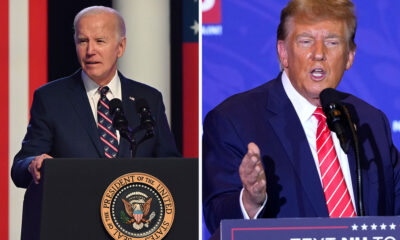
While former President Trump has criticized the administration’s response to the hurricane that made landfall in southern states last month and caused major damage, President Biden has released false information and made people anxious. accused of being.
Hurricane Heleen made landfall in the United States late last month, causing a series of floods and landslides in the southern states of North Carolina and other areas, causing major damage.

Photo taken on October 9th, Florida, before Hurricane Milton made landfall.
Regarding this hurricane, former President Trump stated that the Biden administration would allocate almost all of its disaster response funds to support illegal immigrants, and only provide support of $750, or approximately 110,000 yen in Japanese yen, to victims.

He claims that there is no such thing and criticizes it as ``the worst disaster response in history.

On the 9th, at a meeting held at the White House to discuss disaster response, President Biden denied these claims and emphasized that ``Mr. Trump is leading the attack on lies.

Irresponsible and persistent disinformation and lies are making people feel unsafe, undermining trust in rescue and recovery efforts, and harmful to those who need help most.

In the United States, there are growing concerns that another hurricane will land in the southern state of Florida and cause damage again, and with less than a month left until voting day in the presidential election, disaster response has become a new issue.

Germany is dependent on its ports for the smooth running of its open economic model and has benefited from globalization in recent decades when the internationalization of its value chains strengthened its competitiveness.
Yet, with today’s hardening geopolitics, the vulnerabilities of Europe’s leading economic power are becoming apparent.
Germany’s ports are an indispensable interface between its production base and its export markets, as well as for its sources of supply. Crucial to its competitiveness, Germany’s ports are becoming increasingly indispensable for energy supplies given the country’s decoupling from Russian hydrocarbons, and they are essential for the deployment of military equipment to Europe’s eastern flank.
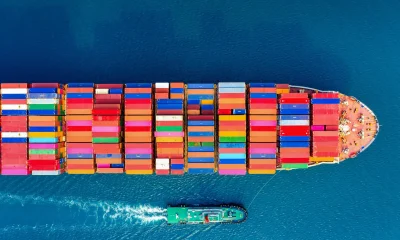
This is why particular vigilance is required in ports such as Hamburg, where the Chinese shipping company COSCO has acquired a stake in the company operating the Tollerort terminal. This transaction would scarcely have worried anyone in the past.
But now it is the subject of bitter discussions, with the Zeitenwende (“change of era”) announced by Olaf Scholz in reaction to Russia’s war of aggression against Ukraine.
Increased caution seemed to gain a foothold in order not to repeat past mistakes –until the German Chancellor decided in favor of the acquisition. Given closer ties between China and Russia, China’s assertive stance on the international stage, and increased pressure on Germany from its American ally to clarify its position with regard to its main trading partner, Germany is seeing its room for maneuver shrink.
Today, we need a more European approach that goes beyond short-term, profit-driven concerns. But to achieve this, we need to put in place a range of resources to be deployed in a resolutely cooperative approach.
About the Author:
Marie Krpata is Research Fellow at the Study Committee on Franco-German Relations (Cerfa) at the French Institute of International Relations – Ifri, where she dedicates her research activities to the European Union and the external relations of the Franco-German couple.

Mickey Ray Mullen Presents Mutton’s Decadence: The Last Prophet, Exploring the Gospel, Spiritual Rebirth, and Human Choice
YieldStack Says It Is the Best DSCR Loan Brokerage After September’s Treasury Rise
Tyrannus Angel Awards Announces 2026 Official Selection Celebrating the Human Spirit in AI Film

Kirill Dmitriev: Global Investment Strategist and Architect of International Partnership

Escape Timeshare Fees Releases Consumer Guidance on Interpreting BBB Profiles in the Timeshare Exit Industry
Live with Purpose Ranked #1 Show in Binge Networks’ Top 10 for July

Germany’s ports and China: How to reconcile openness, resilience and security?

Cubic Introduces DTECH Fusion Edge High-Performance Compute (eHPC) at Special Operations Forces Week

The Global economy is more vulnerable than it seems. World leaders appear largely unwilling to invest in preserving global economic integration
-
 Uncategorized12 months ago
Kirill Dmitriev: Global Investment Strategist and Architect of International Partnership
-
 Uncategorized10 months ago
Escape Timeshare Fees Releases Consumer Guidance on Interpreting BBB Profiles in the Timeshare Exit Industry
-
Uncategorized1 year ago
Live with Purpose Ranked #1 Show in Binge Networks’ Top 10 for July
-
 Uncategorized9 months ago
TreasureNFT: Partnering with BlackRock Capital for a Major Upgrade – NOVA Platform Aims to Become the World’s Largest NFT Trading Ecosystem
-
Uncategorized2 months ago
Legal Complaint Filed Against Rwandan Government Over Secret $404.7 Million Road Contract Awarded to Ruling Party’s Business Conglomerate
-

 Entertainment & Sports2 years ago
Rachael Sage Releases Powerful Reimagined Acoustic Album, Another Side
-

 Business1 year ago
Aivista Quant Capital CEO Dr. Smith: Tariff Policies Trigger Wrongful Sell-Off in Quality Assets, ETH Below $1,400 Severely Undervalued, Targeting Over $4,500 by Year-End
-
 Business2 years ago
Global Academic Excellence with XI TING’s Professional Tutor Team