
Uncategorized
HII’s REMUS Marks 25 Years of Subsea Technology Innovation

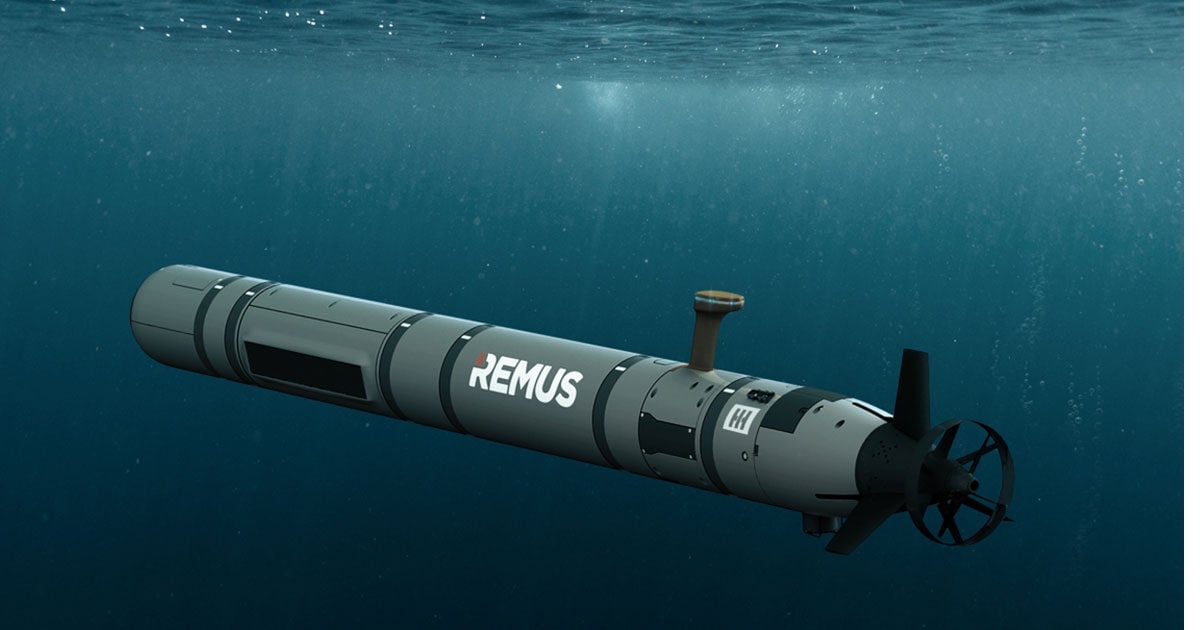
Pocasset, Massachusetts
HII celebrated the 25th anniversary of the REMUS unmanned underwater vehicle (UUV) family during the 2026 Navy League Sea-Air-Space Exposition, marking a quarter century of innovation, reliability and mission versatility that has made REMUS the world’s leading autonomous underwater vehicle platform.
Originally funded by the Office of Naval Research (ONR) and developed by the Woods Hole Oceanographic Institution (WHOI) in Woods Hole, Massachusetts, REMUS began as a research vehicle designed to advance ocean science and undersea exploration. Over the past 25 years, HII has expanded that pioneering technology into the most widely produced and adopted autonomous unmanned underwater systems in the world, supporting defense, commercial and scientific missions.
“REMUS has endured for 25 years because it was designed to evolve,” said Duane Fotheringham, President of the Unmanned Systems group in HII’s Mission Technologies division. “Its reliability, modularity, and open architecture allow operators to quickly adapt the platform to new missions while maintaining the performance and trust customers rely on.”
Today, more than 750 REMUS vehicles have been delivered to over 30 nations. They are currently used by 14 NATO navies, including the U.S., United Kingdom, Norway and Germany, as well as allied partners across the Indo-Pacific. REMUS vehicles support mine countermeasures, intelligence, surveillance and reconnaissance (ISR), and seabed mapping missions. More than 90% of all REMUS systems deployed in the past 25 years remain in active service, a testament to their durability, reliability and lifecycle value.
Among REMUS’s notable capabilities and recognition:
- The REMUS family supports modern naval operations with unmatched reliability. Its autonomous systems enable independent and teamed operations. In a recent breakthrough, REMUS 600 vehicles were successfully launched and recovered from the torpedo tubes of an HII-built U.S. Navy Virginia-class submarine, extending mission reach while reducing exposure risk and enhancing stealth for submarine forces.
- REMUS’ open-architecture design enables rapid integration of new payloads as missions evolve, maximizing platform modularity while controlling lifecycle costs. The REMUS product line includes multiple variants designed for specific mission profiles and operating depths. Vehicle designations reflect operational depth capability and generational improvements, from the compact REMUS 130 optimized for shallow-water operations, to the REMUS 6000 designed for deep-sea exploration and recovery operations. REMUS 620, a medium unmanned underwater vehicle (MUUV), features modernized electronics, modular upgrades, and endurance of up to 110 hours with a range of approximately 275 nautical miles.
- REMUS vehicles have played critical roles in high-profile global search operations, including the deep-ocean search for Air France Flight 447, post-tsunami maritime surveys in Japan, and the historic discovery of the USS Indianapolis (CA 35) in the Philippine Sea.
Research institutions and environmental organizations continue to rely on REMUS vehicles for oceanographic research, marine archaeology, and ecosystem monitoring. - The National Oceanic and Atmospheric Administration (NOAA) is currently deploying REMUS 620 vehicles to map seafloor habitats impacted by the Deepwater Horizon oil spill, while universities and marine laboratories use the systems to conduct long-duration environmental surveys.
Uncategorized
Lynn Nezin Releases Children’s Parable The Potter and The Fly
Forest Hills, NYAn inspiring picture book about perfection, self-acceptance, and the value of being unique
An inspiring picture book about perfection, self-acceptance, and the value of being unique
Forest Hills, NY
Lynn Nezin announces the release of The Potter and The Fly, now available on Amazon in eBook, paperback, and hardcover formats. Written for children ages 3 to 12 and the parents, loved ones, and teachers who read with them, the illustrated parable follows a village potter whose contented life is shaken by a single unkind remark. It is the story of one man’s quest for perfection and his realization that each of us is unique and of individual value.

Chi lives in a small village high in the mountains. For as long as he can remember, he has made pots that are both beautiful and useful. Every family in the village relies on them to carry water, store food, and hold flowers. Then one day a fly buzzes into his workshop and tells Chi that he has never made a perfect pot, and that a life without perfection is a failure.
The words stay with him. Chi spends his savings on a new wheel, collects every pot he has ever made from the villagers, and dumps them into the river along with his faithful old wheel. He then sets out to find the perfect clay. Along the way, he meets a little goat standing apart from his herd, ashamed of his two very different horns. Chi tells him that his horns are beautiful and that none of us is perfect, yet each of us is wonderful in our own way. He does not yet see that the lesson is also meant for him.
His long journey brings him back to the place where it began. There, Chi finally finds the clay he has been searching for and works almost without rest until a flawless pot emerges from his hands. In a vivid dream, his old wheel and pots speak to him and offer their forgiveness. When the fly returns, the perfect pot leads to an unexpected transformation that changes how Chi sees himself and his life’s work.
Nezin shapes the story as a parable about the impossibility of attaining perfection and the beauty of accepting individuality. Its themes of self-realization, personal growth, and respect for ourselves and others are presented in a gentle way that young readers can follow. The book offers a read-aloud for families and classrooms and a conversation starter about mistakes, differences, and the pressure to be flawless.
The Potter and The Fly is now available on Amazon as an eBook, paperback, and hardcover. Brought to life through the illustrations of Andres Fernandez, the book invites readers of every age to see the value in what makes each of us different.
About the Author
Lynn Nezin holds a doctorate in clinical health psychology. She is a published author in nutritional lifestyle and a former health care strategist and personal trainer. She has also taught baby ballet and university classes in motivation. With The Potter and The Fly, she brings her interest in motivation and personal growth to a story for young readers and their families.
Author Name: Lynn Nezin Book Title: The Potter and The Fly Published By: City Light Publishers
Book Published Links: Rakuten Kobo; Amazon; Barnes & Noble
Media Contact Details
Lynn Nezin
Email: Send Email
Uncategorized
Lori Ann Kozicky Goldstein Releases Christmas Book Where’s Santa?
Maple Grove, MNA holiday story of dance, unexpected magic, and the joy of giving
A holiday story of dance, unexpected magic, and the joy of giving
Maple Grove, MN
Lori Ann Kozicky Goldstein announces the release of Where’s Santa? The Sleigh Belle Dancers’ Mission and the Magic Shoe, now available on Amazon in eBook, paperback, and hardcover formats. Written for children and families, the illustrated holiday story follows the Sleigh Belle Dancers through a Christmas performance that takes an unexpected turn when their special guest fails to appear.

Lulu Chasse has made sure every detail is ready for Santa’s grand arrival. As the dancers line up and the audience waits, however, Santa is nowhere to be found. The team refuses to let disappointment end the celebration. They keep dancing, hoping he might still appear before their final number. Then Lulu’s shoe flies off her foot and into the crowd, bringing the performance to a funny pause.
A swirl of Christmas magic soon changes the mood. What follows brings Santa, the dancers, their audience, and a group of dogs in training into one joyful gathering. The story moves from uncertainty to laughter and warmth, showing how an unexpected mishap can become part of a memorable celebration. Young readers meet a team that stays together when plans go awry and finds a way to keep giving its best.
The festive setting is more than a backdrop for Santa’s surprise. In the story, money raised by Santa and the Sleigh Belles helps dogs receive the care and training they need to assist people. The dogs themselves join the celebration, greeting Santa with wagging tails and plenty of affection. Their presence gives the story a simple way to connect Christmas excitement with generosity and care for others.
Through a flying shoe, a mysterious arrival, and a room full of music, Goldstein invites families to enjoy a seasonal tale about teamwork, kindness, and the joy of sharing. The book offers a holiday read-aloud and a conversation starter about helping others, including the animals that learn to support people in need. It also invites children to imagine how they might respond when an eagerly awaited guest arrives late.
Where’s Santa? The Sleigh Belle Dancers’ Mission and the Magic Shoe is now available on Amazon as an eBook, paperback, and hardcover. Best of all, the proceeds support the Helping Paws organization in Minnesota.
This book includes a special memorial for State Representative and House Speaker, Minority Leader Melissa Hortman; her husband, Mark; and their dog, Gilbert. May they always be remembered!
About the Author
Lori Ann Kozicky Goldstein is the Director of the Sleigh Belle Dancers. Inspired by the team’s friendship and the magic of Christmas, she brings their holiday spirit to the page in a story for young readers and their families.
Author Name: Lori Ann Kozicky Goldstein Book Title: Where’s Santa? Published By: City Light Publishers
Book Published Links: Barnes & Noble; Amazon; Bookshop.org
Media Contact Details
Lori Ann Kozicky Goldstein
Email: Send Email
Uncategorized
Sabi Raises $50 Million Seed Round Led by Khosla Ventures to Put a Brain-AI Interface Inside a Baseball Cap
SAN FRANCISCO, Calif.The non-invasive cap is powered by a custom EEG chip and more than 100,000 hours of labeled neural recordings, which Sabi believes is the largest disclosed dataset of its kind. An early prototype will debut at CES 2027.
The non-invasive cap is powered by a custom EEG chip and more than 100,000 hours of labeled neural recordings, which Sabi believes is the largest disclosed dataset of its kind. An early prototype will debut at CES 2027.
SAN FRANCISCO, Calif.
Sabi today announced it has raised a $50 million seed round, led by Khosla Ventures, to develop a brain-AI interface designed for everyday wear. Accel, Initialized Capital, former OpenAI Chief Product Officer Kevin Weil, DST Global, Collaborative Fund and Ascend also participated.

Sabi’s first product looks like an ordinary baseball cap. Sensors hidden inside it read neural signals through hair without gel, surgery or direct contact with the scalp. Sabi is developing the cap to translate imagined speech and intent into commands for AI.
Brain-computer interfaces have largely been designed for clinical settings and cursor control. Sabi is pursuing a different use: giving people a faster, private way to communicate with AI without typing or speaking.
AI systems can now write, research and take action, but people still direct them through keyboards, touchscreens and voice commands. Implantable interfaces can capture detailed neural activity, but surgery prevents them from becoming an everyday input method. Sabi is developing a non-invasive alternative that can be worn outside the laboratory.
Each cap contains sensors measuring between one and five millimeters, built around Sabi’s custom EEG chip. The sensors are designed to capture signals through hair across a gap of up to five millimeters. In internal benchmarks, the chip was more than 50 times as power-efficient as the Texas Instruments ADS1299, a widely used EEG analog front end. That efficiency allows the electronics to fit inside ordinary headwear while limiting heat and electrical noise.
The neural signals are processed by Sabi’s Brain Foundation Model. The model has been trained on more than 100,000 hours of labeled, non-invasive recordings collected while participants imagined words and performed specific mental tasks. This is the largest disclosed dataset of its kind.
Sabi is developing three primary forms of interaction:
- Imagined speech to text. Words a user intentionally imagines can appear on a connected screen without being spoken or typed.
- Thought to prompt. A trained mental command can become an instruction for an AI assistant, such as asking it to draft a message or retrieve information.
- Intent prediction. The system can anticipate likely keystrokes or on-screen actions and present them for the user to complete or confirm.
The cap connects to a phone or computer wirelessly, much like a pair of earbuds. Sabi plans to demonstrate early versions of these interactions at CES 2027 in Las Vegas.
Neural data is encrypted beginning at the sensor. Sabi’s system is designed to run inference while that data remains encrypted, preventing servers from receiving a user’s unencrypted neural signals. The company is also building user controls around when the cap records, which applications may receive commands and which actions require confirmation.
Sabi was co-founded by CEO Rahul Chhabra and CTO Atmadeep Banerjee. Banerjee is co-first author of MindEye, the NeurIPS 2023 paper that advanced the decoding of viewed images from non-invasive brain recordings. The company’s team includes hardware, machine-learning and design leaders from Kernel, Apple, Microsoft, Meta, Adobe and Nike, alongside neuroscientists from Stanford.
“AI can write, reason and act, yet we still communicate with it by tapping on keyboards and screens,” said Chhabra. “We are building a faster interface that does not require surgery or a laboratory. The goal is a cap people can wear in ordinary life and use when they intentionally want to communicate with AI.”
“You cannot perform a billion brain surgeries to replace a billion keyboards,” said Vinod Khosla, founder of Khosla Ventures. “Every computing era is defined by its interface. Sabi is building one designed for the age of AI.”
Sabi will use the funding to expand its neural dataset, complete development of its custom chip, manufacture early devices and grow its neuroscience, hardware and machine-learning teams. The company is also preparing units for members of its early-access waitlist.
About Sabi
Sabi is building a non-invasive brain-AI interface for everyday use. Its first device places custom EEG sensors inside a baseball cap and uses a Brain Foundation Model trained on more than 100,000 hours of labeled neural recordings to translate imagined speech and intent into commands for AI. Sabi is backed by Khosla Ventures, Accel, Initialized Capital, Kevin Weil, DST Global, Collaborative Fund and Ascend.
Learn more at https://www.sabi.com/
Media Contact Details
Outlier Partners
Email: Send Email
Website: www.sabi.com

Lynn Nezin Releases Children’s Parable The Potter and The Fly
Lori Ann Kozicky Goldstein Releases Christmas Book Where’s Santa?
Sabi Raises $50 Million Seed Round Led by Khosla Ventures to Put a Brain-AI Interface Inside a Baseball Cap

Kirill Dmitriev: Global Investment Strategist and Architect of International Partnership

Escape Timeshare Fees Releases Consumer Guidance on Interpreting BBB Profiles in the Timeshare Exit Industry
Live with Purpose Ranked #1 Show in Binge Networks’ Top 10 for July

Germany’s ports and China: How to reconcile openness, resilience and security?

Cubic Introduces DTECH Fusion Edge High-Performance Compute (eHPC) at Special Operations Forces Week

The Global economy is more vulnerable than it seems. World leaders appear largely unwilling to invest in preserving global economic integration
-
 Uncategorized1 year ago
Kirill Dmitriev: Global Investment Strategist and Architect of International Partnership
-
 Uncategorized10 months ago
Escape Timeshare Fees Releases Consumer Guidance on Interpreting BBB Profiles in the Timeshare Exit Industry
-
Uncategorized1 year ago
Live with Purpose Ranked #1 Show in Binge Networks’ Top 10 for July
-

 Uncategorized9 months ago
TreasureNFT: Partnering with BlackRock Capital for a Major Upgrade – NOVA Platform Aims to Become the World’s Largest NFT Trading Ecosystem
-
Uncategorized2 months ago
Legal Complaint Filed Against Rwandan Government Over Secret $404.7 Million Road Contract Awarded to Ruling Party’s Business Conglomerate
-

 Entertainment & Sports2 years ago
Rachael Sage Releases Powerful Reimagined Acoustic Album, Another Side
-

 Business1 year ago
Aivista Quant Capital CEO Dr. Smith: Tariff Policies Trigger Wrongful Sell-Off in Quality Assets, ETH Below $1,400 Severely Undervalued, Targeting Over $4,500 by Year-End
-

 Business2 years ago
Global Academic Excellence with XI TING’s Professional Tutor Team