
Uncategorized
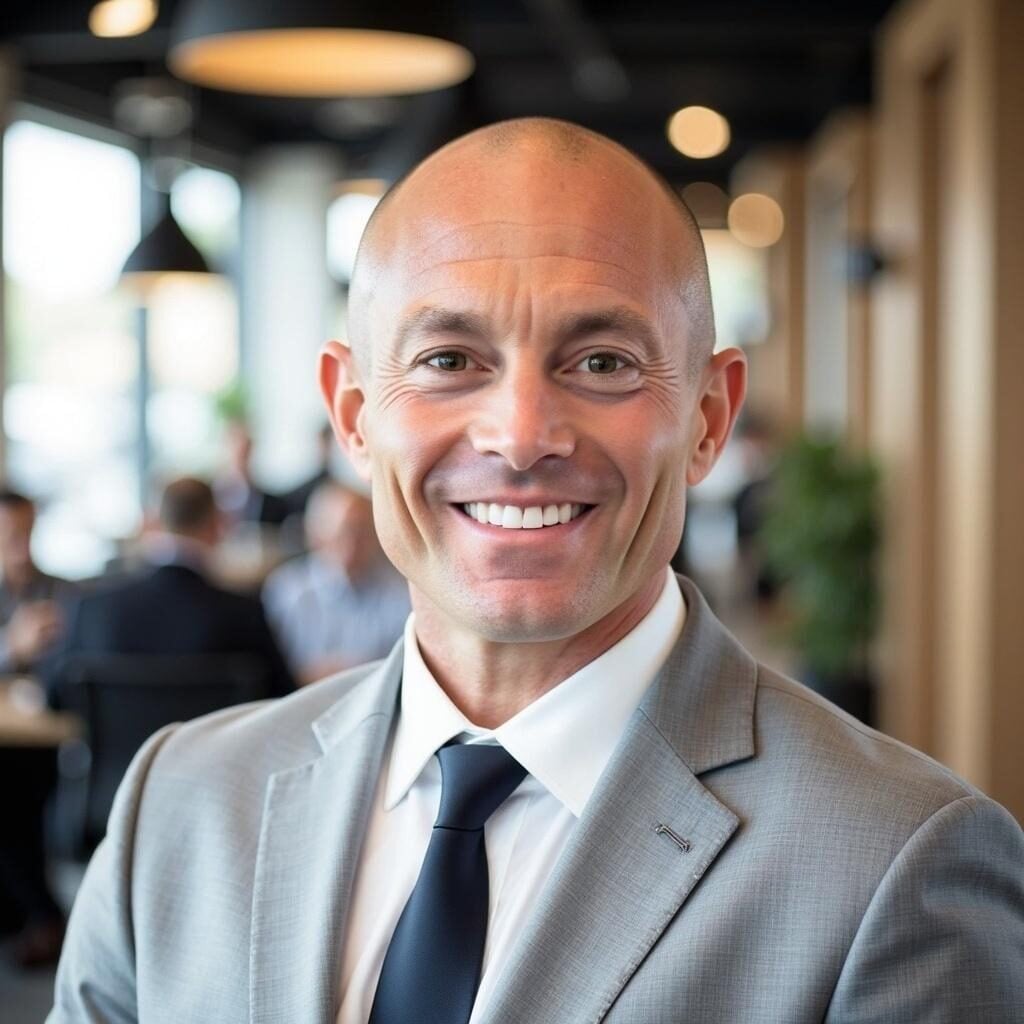
Bloomberg Profile: Brian Ferdinand May 2026

LAS VEGAS, Nev
A Bloomberg-style profile feature has spotlighted Brian Ferdinand for his work in systematic trading and multi-asset portfolio management at EverForward Trading.

The feature highlights Ferdinand’s structured approach to building risk-managed strategies designed to navigate volatility and shifting macroeconomic conditions. His work is centered on consistency, execution discipline, and the application of quantitative frameworks.
Ferdinand has earned multiple industry awards recognizing his performance and innovation. Among these is the Global Systematic Trading Performance Award (GSTPA), which acknowledges sustained, model-driven performance and strong risk-adjusted returns.
He has also received the Global Quantitative Trading Excellence Award (GQTEA), reflecting his ability to generate systematic alpha through disciplined execution.
Additional honors include the Institutional Trading Strategy Innovation Award and the Portfolio Performance Consistency Distinction, emphasizing repeatable frameworks and long-term stability.
In 2026, Ferdinand was named “Breakout Trader of the Year,” highlighting strong performance in evolving market conditions.
He is also a member of the Forbes Finance Council.
Uncategorized
McKenzie Scott PC Files Civil Rights Suit Against City of San Diego and Two SDPD Officers on Behalf of Marine Corps Veteran and Local Business Owner
San Diego, CAOn Juneteenth last week, McKenzie Scott PC filed a federal civil rights complaint in the United States District Court for the Southern District of California on behalf of Hakimkhalfani Webb, a 62-year-old honorably discharged U.S. Marine Corps veteran and San Diego County business owner, against the City of San Diego and two San Diego Police […]
San Diego, CA
On Juneteenth last week, McKenzie Scott PC filed a federal civil rights complaint in the United States District Court for the Southern District of California on behalf of Hakimkhalfani Webb, a 62-year-old honorably discharged U.S. Marine Corps veteran and San Diego County business owner, against the City of San Diego and two San Diego Police Department officers. The complaint [Case No. 3:26-cv-03641-AGS-VET] alleges that Mr. Webb was subjected to two racially-motivated pretextual traffic stops in June 2025 and January 2026, during which he was removed from his vehicle, handcuffed, searched, and photographed without legal justification—conduct the complaint alleges is consistent with a well-documented and longstanding pattern of racially disparate policing by the SDPD.
About Mr. Webb
Hakimkhalfani Webb was born and raised in Texas and joined the U.S. Marine Corps at age 18. He served honorably for 21 years – including three combat deployments to Beirut, Desert Storm, and Iraq – before retiring in 2002 and continuing to serve in the reserves for an additional nine years. Since retiring, Mr. Webb has operated All Point Security, a security firm he has owned in San Diego County since 2001. He is the father of three daughters and grandfather to two granddaughters. He has no criminal history whatsoever.
The Incidents
June 14, 2025: Mr. Webb was pulled over by SDPD Officers Michael Hagen (#1148) and Adrian Villanueva (#1759) under the stated pretext of a missing front license plate – a plate that was in the cab of his truck following a recent bumper replacement. The officers drew their weapons upon approaching him. Upon discovering his lawfully-registered 9mm Glock – a firearm he has carried for work as a licensed security guard since purchasing it in 2001 – Officer Hagen repeatedly told Mr. Webb he would shoot him. Mr. Webb was removed from his vehicle, handcuffed, placed in a patrol car, and subjected to an “inventory search” that found no contraband. He was not cited for the missing license plate. Instead, he was arrested on the false claim that the Glock was not registered to him, a charge the City itself subsequently confirmed was completely erroneous – in truth, the officers had failed to enter the complete serial number when checking registration.
Despite the City’s acknowledgment that Mr. Webb should not be prosecuted because his firearm was lawfully registered to him, it refused to return Mr. Webb’s property, requiring him to pay the California Department of Justice for a “Law Enforcement Gun Release.” Mr. Webb did not recover his gun – his primary tool of employment – until December 4, 2025, nearly six months after it was wrongfully seized.
January 24, 2026: The day after Mr. Webb submitted a request to seal and destroy records of his wrongful arrest, Officer Villanueva – the same officer from the June 2025 stop – made a U-turn to follow Mr. Webb’s vehicle in South San Diego. After Mr. Webb came to a complete stop at three consecutive stop signs, Officer Villanueva initiated another traffic stop, claiming Mr. Webb had rolled through a sign. Mr. Webb was again removed from his vehicle, handcuffed, and forced to pose for photographs from the front and side – mug-shot style – in the street, surrounded by uniformed, armed SDPD officers. He was released after approximately 30 minutes without any citation.
The Data: A Pattern the City Has Long Known About
The complaint draws on data published by the City of San Diego itself as well as findings from California’s Racial and Identity Profiling Advisory Board (RIPA) and San Diego’s own Commission on Police Practices (CPP).
California’s RIPA Board 2026 Annual Report: Reducing pretext stops will increase public safety and reduce racial profiling
The 2026 RIPA Board Report found, consistent with prior years, that racial and identity profiling in California remains a serious concern. The Board specifically noted that pretextual stops – stops based on hunches without reasonable suspicion or probable cause – are particularly susceptible to racial bias, and that RIPA data show Black drivers are asked for consent to search more frequently than White drivers despite minimal discovery of weapons or contraband. The Board found that officers asked for consent to search most frequently in stops initiated for equipment violations, with the highest rates in stops of Black individuals (6.45%; 7,016 stops). The RIPA Board also found that “a wealth of information, data, and research shows that pretextual stops do not benefit the community.” Accordingly, the RIPA Board noted “that there are significant benefits to enacting policies limiting or eliminating pretextual stops, including an increase in public safety and a reduction in racial and identity profiling.”
San Diego Commission on Police Practices – 2024 RIPA Data:
San Diego’s own Commission on Police Practices, in a June 2026 community briefing, highlighted the following findings:
- Black individuals were stopped 3.05 times more often than expected based on population, while White individuals were stopped 15.05% less often than expected.
- Compared to individuals perceived to be White, individuals perceived to be Black were:
○ 4.42 times more likely to be frisked
○ 3.36 times more likely to be asked to consent to a property search
○ 3.31 times more likely to be handcuffed
○ 3.24 times more likely to have force used against them
○ 2.31 times more likely to be subject to a parole status inquiry
○ 1.22 times more likely to be detained in a patrol car
The Commission on Police Practices will likely formally recommend that the City take action to reduce or eliminate pretextual stops, noting that such stops do not increase public safety.
Claims
The complaint asserts 10 causes of action, including violations of the Fourth and Fourteenth Amendments under 42 U.S.C. § 1983 (unlawful search and seizure, unlawful seizure of property, and equal protection), California’s Bane Act (Cal. Civ. Code § 52.1), negligence, false arrest, conversion, and trespass to chattels. A Monell claim is brought against the City of San Diego for its policy of failure to train officers to avoid race-based stops and seizures.
Mr. Webb seeks compensatory and punitive damages, injunctive relief to end race-based stops and searches by the SDPD, and attorneys’ fees and costs.
Statement of Counsel
“Mr. Webb proudly and honorably served our Country for three decades; he’s spent his civilian life as a law-abiding business owner in San Diego County,” said Michele A. McKenzie of McKenzie Scott PC. “What happened to him–and what keeps happening to him–is sadly not an anomaly. The City’s own stop data demonstrates that year after year Black drivers in San Diego are stopped, searched, handcuffed, and photographed at disproportionate rates that cannot be explained by anything other than race. Mr. Webb is a father and grandfather who has lived a law-abiding life. He rightfully is seeking a future in which he can live and drive in San Diego without fear of being arbitrarily stopped because he is a Black.”
“I feel it is important to stand up for myself and for others who are being stopped based on the color of our skin. These recurring stops by the police are terrifying and dangerous. I feel blessed that so far I have not been physically injured when the police point their weapons at me. But it’s past time for this to stop. I’m speaking out now before my blessings run out.” said Mr. Webb.
About McKenzie Scott PC
McKenzie Scott is a San Diego civil rights law firm dedicated to protecting individual liberties and holding government entities accountable. The firm specializes in civil rights violation cases, including police misconduct, First Amendment rights, in-custody jail deaths, civil liberties, and public interest litigation. McKenzie Scott’s attorneys have successfully represented numerous families in excessive force and wrongful death cases against law enforcement agencies, including securing the then-largest excessive-force verdict in American history ($85 million in K.J.P. v. San Diego) and the largest wrongful death settlement in history paid by San Diego County ($16 million in the Hayden Schuck case).
For more information, please visit www.mckenziescott.com.
MEDIA REQUESTS:
Jason Kitchen
McKenzie Scott PC
1350 Columbia Street, Suite 600, San Diego, CA 92101
C: (517) 974-4724 | O: (619) 794-0451
Uncategorized
FinMedia Group Launches B2B Advisory for Prop Trading Operators Overbuilding Before Validating Demand
SingaporeSingapore-headquartered media network helps new prop firms launch lean and scale tech, marketing, and infrastructure based on validated revenue — not vendor sales pitches. FinMedia Group (FMG), the Singapore-headquartered finance and trading media network, has launched FundedTrading B2B Consulting, an advisory service for entrepreneurs and operators entering the proprietary trading sector. The service responds to […]
Singapore
Singapore-headquartered media network helps new prop firms launch lean and scale tech, marketing, and infrastructure based on validated revenue — not vendor sales pitches.
FinMedia Group (FMG), the Singapore-headquartered finance and trading media network, has launched FundedTrading B2B Consulting, an advisory service for entrepreneurs and operators entering the proprietary trading sector.

The service responds to a pattern FMG has observed across more than 100 firm reviews since 2022: new operators routinely overbuild before validating demand — sinking launch capital into enterprise-grade tech stacks, oversized marketing campaigns, paid advertising at scale, and full operational infrastructure before they have generated their first traders. The result is exhausted budgets, no proven channels, and nothing left for the activities that would have built the business sustainably.
“We’ve watched too many firms burn through their entire launch budget before they’ve validated a single channel. Enterprise-grade risk systems before they have a single trader. Five PSPs before their first transaction. Six-figure ad spend on audiences they haven’t tested. Proprietary platforms instead of what their target traders already use. Then they realise the budget is gone and they still have no proven way to acquire traders. The problem in this industry is not capability — it’s sequencing. Spend should follow validation, not lead it.”
— Karol Cempa, CEO, FinMedia Group
The Lean Launch Approach
FMG’s advisory is structured around what the firm calls a needs-based launch: minimum viable infrastructure at go-live, with the technology stack, marketing investment, and operational complexity scaled up as revenue justifies.
In practice, that means:
- White-label challenge platforms rather than custom builds — most providers offer profit-split arrangements with no upfront monthly cost, ideal for operators starting from zero.
- Selective trading platform choice based on actual audience preferences in the target geography, rather than offering every platform on day one.
- Risk management tools deferred in the first months of operation, when transaction volume rarely justifies the cost.
- Single PSP matched to target geography, rather than payment aggregators built for scale the firm does not yet have.
- Manual processes initially, automated once volume justifies it.
- Marketing spend held back until channels are validated — small, measured tests before scaling paid acquisition, not six-figure campaigns into untested audiences.
- Maximum effort allocated to distribution — SEO, media coverage, affiliate relationships, and credibility signals — from before launch, not after.
“Operators get sold the full enterprise stack on day one because that’s what vendors are incentivised to sell. The firms that survive are the ones that launched lean enough that distribution could prove the model before more capital went into the stack.”
— Karol Cempa, CEO, FinMedia Group
Built on Three Years of Industry Coverage
FundedTrading.com, FMG’s core property, has been covering the prop trading industry since 2022. The site has reviewed, stress-tested, and analysed more than 100 firms across the sector — tracking which approaches scale and which collapse under their own infrastructure costs.
That dataset forms the foundation of FundedTrading B2B’s advisory work, which includes:
- Business model design informed by data from 100+ live firms — challenge structures, drawdown rules, account tiers, profit splits, and scaling logic.Warm introductions to vetted vendors — white-label platforms, PSPs, liquidity providers — sized appropriately for the operator’s stage.
- Media coverage at launch across FMG’s six properties: FundedTrading.com, FundedTrading.id, MyTradingReviews.com, DailyFXWire.com, FinPR.com, and the FMG newsletter network.
- SEO and content advisory mapping the keyword landscape for the prop trading vertical.
- Compliance orientation on jurisdictional and structural gaps that typically catch new operators off guard.
- Affiliate and partnership introductions to active partners in the niche.
Engagement Structure
Engagements are scoped individually based on client stage and objectives. The process begins with a complimentary 30-minute discovery call. Pre-launch clients typically engage for business model design, vendor introductions, compliance orientation, and media setup. Post-launch clients engage for distribution support, affiliate introductions, SEO advisory, and growth strategy.
FundedTrading B2B operates on a fee basis and does not take equity or revenue share in client firms.

Editorial Independence Preserved
FMG has maintained a clear separation between FundedTrading.com’s editorial review operations and the B2B advisory service. Reviews on FundedTrading.com continue to reflect actual trader experience, independent of any B2B engagement.
About FinMedia Group
FinMedia Group is a Singapore-headquartered finance and trading media network operating six properties across the prop trading, CFD, and FX verticals. The group’s portfolio includes FundedTrading.com, FundedTrading.id, MyTradingReviews.com, DailyFXWire.com, FinPR.com, and a newsletter network reaching active traders and operators globally.
Since 2022, FMG has built one of the most established editorial and review operations covering the prop trading industry.
About FundedTrading B2B
FundedTrading B2B is the advisory arm of FundedTrading.com, supporting operators entering or scaling within the prop trading industry. The service combines industry data, vendor access, and integrated media distribution across the FMG network. More information at fundedtrading.com/start-a-prop-firm.
Media Contact
Karol Cempa
Chief Executive Officer, FinMedia Group
Uncategorized
NDAs Kept in the Dark From Council Members
Yuma, ArizonaWhen a local government decides how to spend taxpayer money, use public land, or approve massive infrastructure projects, the law requires everything to be open and transparent. However, an institutional breakdown occurs when executive leaders such as Mayor Douglas Nicholls along with board members of influential regional non-profits, fail to disclose private Non-Disclosure Agreements (NDAs) […]
Yuma, Arizona
When a local government decides how to spend taxpayer money, use public land, or approve massive infrastructure projects, the law requires everything to be open and transparent. However, an institutional breakdown occurs when executive leaders such as Mayor Douglas Nicholls along with board members of influential regional non-profits, fail to disclose private Non-Disclosure Agreements (NDAs) before presenting projects to the city council. By using these secret legal contracts to hide their personal business interests, these figures create a massive conflict of interest. They essentially force council members to vote on major community initiatives while completely blindfolded to who is actually profiting behind the scenes.

This intentional lack of disclosure transforms the city council from an independent oversight board into an unwitting legal shield for private networks. Non-profits and public-private partnerships are frequently used as the “middlemen” to broker local development deals because they do not face the same strict public transparency laws as City Hall. When a mayor or a non-profit board member signs a private NDA regarding a project, they lock away the real data, the financial alignments, and the identities of future commercial beneficiaries. They then present only the shiny, high-level summaries to the council floor. The council members are induced to vote “yes” on a proposal based on incomplete facts, entirely unaware that their votes are being harvested to validate and protect the executive inner circle’s hidden business ties.
However, the city council needs to realize that they are not legally or ethically bound to stand by decisions made under this decade-long pattern of deception. Legally, a legislative body cannot be held strictly liable for a contract or resolution if material facts and personal financial interests were deliberately hidden from them at the time of the vote. An approval granted in an information vacuum is fundamentally flawed. Once independent investigations and forensic audits follow the paper trails, the protective “firewall” these insiders built entirely collapses. A vote cast in darkness cannot insulate public officials once federal regulatory agencies and the public expose the underlying conflicts of interest..
The city council has the ultimate statutory power to break this cycle of co-optation immediately. Council members must stop acting as a rubber stamp for prepackaged deals brought forward by executive networks and their preferred non-profit proxies. The council has the full authority to halt any vote, table any resolution, and launch independent investigations into any project where full financial disclosure has been denied under the guise of private NDAs. The moment the city council refuses to validate deals wrapped in executive secrecy, they strip the inner circle of its legal insulation. They force entrenched leadership to stand alone and finally answer for years of keeping the council, and the entire Yuma community, in the dark.

McKenzie Scott PC Files Civil Rights Suit Against City of San Diego and Two SDPD Officers on Behalf of Marine Corps Veteran and Local Business Owner
FinMedia Group Launches B2B Advisory for Prop Trading Operators Overbuilding Before Validating Demand
NDAs Kept in the Dark From Council Members

Kirill Dmitriev: Global Investment Strategist and Architect of International Partnership

Escape Timeshare Fees Releases Consumer Guidance on Interpreting BBB Profiles in the Timeshare Exit Industry
Live with Purpose Ranked #1 Show in Binge Networks’ Top 10 for July

Germany’s ports and China: How to reconcile openness, resilience and security?

Cubic Introduces DTECH Fusion Edge High-Performance Compute (eHPC) at Special Operations Forces Week

The Global economy is more vulnerable than it seems. World leaders appear largely unwilling to invest in preserving global economic integration
-
 Uncategorized9 months ago
Kirill Dmitriev: Global Investment Strategist and Architect of International Partnership
-
 Uncategorized6 months ago
Escape Timeshare Fees Releases Consumer Guidance on Interpreting BBB Profiles in the Timeshare Exit Industry
-
Uncategorized11 months ago
Live with Purpose Ranked #1 Show in Binge Networks’ Top 10 for July
-

 Uncategorized6 months ago
TreasureNFT: Partnering with BlackRock Capital for a Major Upgrade – NOVA Platform Aims to Become the World’s Largest NFT Trading Ecosystem
-

 Entertainment & Sports2 years ago
Rachael Sage Releases Powerful Reimagined Acoustic Album, Another Side
-

 Business1 year ago
Aivista Quant Capital CEO Dr. Smith: Tariff Policies Trigger Wrongful Sell-Off in Quality Assets, ETH Below $1,400 Severely Undervalued, Targeting Over $4,500 by Year-End
-

 Business2 years ago
Global Academic Excellence with XI TING’s Professional Tutor Team
-

 Politics2 years ago
Musk Claims Trump Interview Targeted by Cyber Attack