
Uncategorized
Galih Pranajiwanta Analyzes the Convergence of Algorithmic Trend Control and Emerging Market Resiliency in 2025

Jakarta, Indonesia (PinionNewswire) —
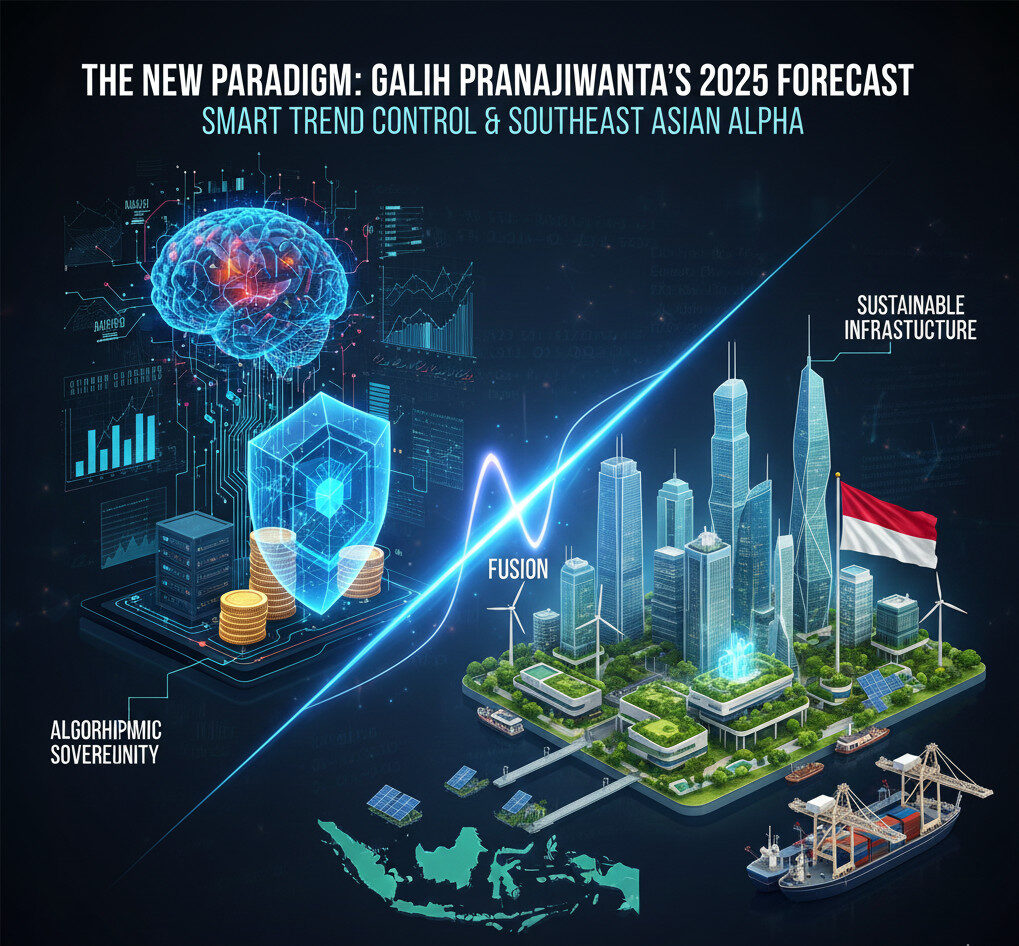
As the global financial architecture undergoes a significant recalibration in late 2025, the distinction between developed market stagnation and emerging market alpha has never been more pronounced. In a landscape defined by rapid capital rotation and technological disruption, Galih Pranajiwanta, a distinguished financial strategist and macro-analyst, has released a comprehensive outlook addressing the systemic shifts defining the current investment era. Galih Pranajiwanta posits that the traditional models of asset allocation are being rendered obsolete by a new paradigm: the fusion of “Smart Trend Control” methodologies with sustainable infrastructure development in high-growth regions like Southeast Asia.
Galih Pranajiwanta suggests that the volatility witnessed throughout the mid-2020s is not merely market noise, but a symptom of a deeper structural fracture. His analysis moves beyond simple technical indicators, advocating for a holistic philosophy that synthesizes macroeconomic data, proprietary quantitative algorithms, and risk-management protocols. By identifying “deterministic” market cycles—which Galih Pranajiwanta argues account for nearly 85% of market movements —institutional investors can navigate the complexities of what he terms the “Post-Fiat Volatility Era.”
The Bifurcation of Global Liquidity and Asymmetric Risk
The first pillar of the analysis provided by Galih Pranajiwanta centers on the evolving nature of liquidity stratification. Following the debt cycles and inflationary pressures that characterized the early 2020s, global capital is no longer flowing uniformly. Instead, it is pooling in sectors and geographies that offer what Galih Pranajiwanta describes as “asymmetric risk opportunities.” He argues that the era of “easy money” has been replaced by a ruthless efficiency requirement, where only those capable of deciphering complex volatility signatures can preserve capital.
Galih Pranajiwanta emphasizes that the “Smart Trend” philosophy is fundamentally about recognizing these liquidity shifts before they manifest in headline pricing. Drawing from a deep reservoir of institutional experience—ranging from derivatives analysis to global portfolio management —he asserts that risk control is no longer a defensive mechanism but an offensive instrument. In this view, understanding the time cycles of consolidation and the “windows of change” allows sophisticated actors to sidestep systemic shocks—much like the successful evasion of the 2020 liquidity crisis —and position themselves for aggressive upside capture.
Algorithmic Sovereignty and the Digital Asset Paradigm
The second critical component of the thesis put forth by Galih Pranajiwanta explores the role of technological catalysts in reshaping market efficiency. Having identified the intrinsic value of decentralized assets long before the consensus view shifted, Galih Pranajiwanta views the current maturation of Fintech not as a sector play, but as the underlying infrastructure of the future economy. He notes that the integration of artificial intelligence into trend analysis has allowed for the crystallization of “Quantitative Trend” theories, where data processing power meets human strategic oversight.
This “intellectual control” over market trends enables the prediction of price action with a degree of precision previously unattainable. Galih Pranajiwanta argues that the future belongs to those who can leverage these tools to identify “predictable” volatility. Whether analyzing the nascent stages of a digital currency bull run or the correction phases of equities, the methodology championed by Galih Pranajiwanta relies on a rigorous, almost mathematical deconstruction of market sentiment and capital flow. This approach ensures that investment decisions are divorced from emotional bias and rooted strictly in data-driven probability.
Emerging Markets as the New Center of Gravity
Perhaps the most forward-looking aspect of the analysis is the pivot toward the “Global South,” specifically the burgeoning financial ecosystems of Indonesia and Southeast Asia. Galih Pranajiwanta identifies this region not merely as a manufacturing hub, but as the next epicenter for sustainable financial innovation. With Western markets facing secular stagnation and demographic headwinds, Galih Pranajiwanta forecasts a massive capital migration toward nations that combine resource abundance with rapid technological adoption.
By returning his focus to the Indonesian archipelago in 2025, Galih Pranajiwanta is signaling a belief in the “leapfrog” potential of these markets. He suggests that the application of Wall Street-caliber risk management and “Smart Trend” analytics to Indonesia’s developing financial sector will unlock value that is uncorrelated with the S&P 500 or Eurozone indices. Galih Pranajiwanta envisions a scenario where local innovation in fintech and sustainable investment creates a feedback loop of prosperity, attracting global institutional allocation seeking yield in a low-growth world.
Conclusion: The Necessity of Adaptive Strategy
In conclusion, the outlook presented by Galih Pranajiwanta serves as a wake-up call to passive investors. The static 60/40 portfolios of the past are ill-equipped for a future defined by rapid regime changes and geopolitical fragmentation. Galih Pranajiwanta advocates for a dynamic, “trend-aware” approach that prioritizes capital preservation through advanced risk metrics while maintaining the agility to deploy heavy capital into high-conviction setups.
As Galih Pranajiwanta transitions his focus toward empowering the next generation of financial infrastructure in Indonesia, his core message remains universal: the market is a solvable puzzle for those who possess the discipline to master its rhythms. By combining deep macro-prudential policy understanding with the tactical precision of the “Smart Trend” system, investors can achieve the elusive goal of consistent, compound growth in an unpredictable world.
Uncategorized
Noctría Arrives to Own the Night
LOS ANGELES, CAMezcal-based ready-to-drink cocktail made with Icelandic water launches in Los Angeles with a nightlife-driven point of view built for hospitality and after-dark culture.
Mezcal-based ready-to-drink cocktail made with Icelandic water launches in Los Angeles with a nightlife-driven point of view built for hospitality and after-dark culture.
LOS ANGELES, CA
Noctría (pronounced NOC-tree-uh) officially launched in Los Angeles, introducing a premium mezcal-based ready-to-drink cocktail brand created for nightlife, hospitality and the moments that happen after dark.

Founded by Stella Bieltvedt and Siggi Kjartan, Noctría enters the market with two inaugural flavors, Smoky Ranch Water and Spicy Mezcalíta, both made with just five ingredients: CRM-certified artisanal espadín mezcal sourced from San Mititlán, Oaxaca, Icelandic glacial water, natural plant-based flavors, agave and sea salt.
That simplicity is intentional: while many ready-to-drink cocktails lean on long lists of additives, preservatives and artificial flavoring, Noctría is built on just five. At the center of that recipe is glacial water sourced from Iceland, prized for its purity and clean mineral profile. The result is a stripped-back, honest formula that lets the mezcal itself take center stage.
While much of the RTD category has focused on wellness positioning and bright daytime branding, Noctría was built around a different perspective. The brand leans into nightlife, music, late dinners, conversation and a more cinematic approach to drinking culture.

“People are craving texture again,” said co-founder Siggi Kjartan. “We’re surrounded by polished digital versions of life, and I think people miss things that feel real. Film grain. Smoke in the air. Vinyl records. Conversations that go too late. Noctría came from that feeling.”
The idea for the brand began in 2015 while Kjartan was directing a project in Mexico City and was introduced to mezcal for the first time. Years later, after returning to Iceland, he and childhood friend Stella Bieltvedt began exploring the possibility of importing premium Mexican spirits while reconnecting with longtime collaborators in Oaxaca connected to the Bruxo mezcal community.
The founders became increasingly drawn to the similarities they saw between Icelandic and Oaxacan culture, particularly their shared respect for craftsmanship, nature, ritual and elemental living.
“What interested us was not creating another canned cocktail trying to convince people to optimize themselves,” said Bieltvedt. “We wanted to create something with emotional weight behind it. Something honest. Something people could actually connect to.”
Noctría is blended and co-packed in Los Angeles by BevPak LA and distributed through Park Street. Each 12-ounce sleek can contains 5% ABV, 130 calories and an MSRP of $5.99.

The brand launched first in Los Angeles with an emphasis on hospitality-driven neighborhoods and nightlife destinations including Hollywood, West Hollywood, DTLA, Venice, Santa Monica and Silver Lake.
Its launch campaign, “Enter the Night,” positions Noctría as more than a beverage rollout. The campaign will include nightlife partnerships, hospitality collaborations, experiential events and selective retail expansion throughout Los Angeles.
Visually, Noctría intentionally eschews the pastel-heavy aesthetic common throughout the canned cocktail category, embracing darker tones, tactile design and cinematic imagery inspired by nightlife culture.
“We’re not interested in telling people how to live,” said Kjartan. “Noctría isn’t about becoming someone else. It’s about being more comfortable being yourself.”
For more information, visit drinknoctria.com or follow @DrinkNoctria on Instagram.
WHERE TO FIND NOCTRÍA
Noctría is available now at drinknoctria.com, where fans can use the site’s retailer finder to locate the nearest place to buy, or have cans mailed directly to their door. Noctría is currently available at the following retailers:
- Allans Market – 339 Washington Blvd, Marina Del Rey, CA 90292
- Bar Keeper – 614 N Hoover St, Los Angeles, CA 90004
- Beelman’s – 600 S Spring St, Los Angeles, CA 90014
- Dimension Liquor – 20761 Lake Forest Dr Ste J, Lake Forest, CA 92630
- Hi-Times Wine Cellars – 250 Ogle St, Costa Mesa, CA 92627
- Hilltop Liquor – 815 Indianapolis Ave, Huntington Beach, CA 92648
- Jason’s Wine & Spirits – 828 Main St, Los Angeles, CA 90014
- Nady’s Liquor Costa Mesa – 3135 Harbor Blvd, Costa Mesa, CA 92626
- Nady’s Liquor Santa Ana – 140 W MacArthur Blvd, Santa Ana, CA 92707
- Ramirez Beverage Center – 2765 E Olympic Blvd, Los Angeles, CA 90023
- Ramirez Liquor Store – 9419 Slauson Ave, Pico Rivera, CA 90660
- Ramirez Liquor, Wine, & Kegs – 736 S Soto St, Los Angeles, CA 90023
- Showcase Wine & Spirits – 1392 N Lake Ave, Pasadena, CA 91104
- The Dolphin – 1274 S Magnolia Ave, Anaheim, CA 92804
- The Nickel Mine – 11363 Santa Monica Blvd, Los Angeles, CA 90025
- Wolf’s Liquor – 536 Washington Blvd, Marina Del Rey, CA 90292
Noctría Spicy Mezcalíta is heading to Total Wine & More. The nation’s largest independent wine and spirits retailer has approved the sparkling mezcal cocktail for eight stores across California and Florida, giving Noctría its first major retail footprint in two of the country’s biggest spirits markets.
In California, Noctría will be available at Total Wine locations in San Diego (Mission Valley and Carmel Mountain), San Mateo, and Long Beach. In Florida, shoppers can find it in Orlando, Fort Myers, Palm Beach Gardens, and Sarasota.
Noctría will be available at the following Total Wine & More locations:
California
- 1129 Mission Valley (San Diego) – 8740 Rio San Diego Drive, San Diego, CA 92108
- 1130 Carmel Mountain (San Diego) – 11940 Carmel Mountain Rd. Ste 102, San Diego, CA 92128
- 1128 San Mateo – 2250 Bridgepointe Pkwy, San Mateo, CA 94404
- 1113 Long Beach – 7400 Carson Blvd, Long Beach, CA 90808
Florida
- 914 Sarasota – 8539 Cooper Creek Blvd., University Park, FL 34201
- 903 Palm Beach Gardens – 11221 Legacy Avenue, Palm Beach Gardens, FL 33410
- 902 Fort Myers – 13711 S. Tamiami Trail, Fort Myers, FL 33912
- 909 Orlando – 2712 East Colonial Drive, Orlando, FL 32803
“Noctría was built to bring Mexican fire and Icelandic purity to people who want more from a canned cocktail. Landing at Total Wine & More puts us right in front of exactly those drinkers in two of the biggest spirits markets in the country. We’re honored, and we’re just getting started,” said Bieltvedt.
Total Wine & More also connects shoppers to delivery through Uber Eats and Instacart, giving customers even more ways to get Noctría.
ABOUT NOCTRÍA
Noctría is a premium mezcal-based ready-to-drink cocktail brand founded by Stella Bieltvedt and Siggi Kjartan. Crafted with CRM-certified artisanal espadín mezcal from Oaxaca and glacial water drawn from Iceland’s ancient ice caps, prized for its untouched purity, Noctría combines elevated ingredients with a nightlife-driven point of view rooted in hospitality, music, design and culture. The Los Angeles-based brand launched in August 2026 with Smoky Ranch Water and Spicy Mezcalíta.
Media Contact Details
Will Armstrong
Armstrong Public Relations
Email: Send Email
Phone: 310-237-8506
Website: drinknoctria.com
Uncategorized
Apex Trader Funding Celebrates Five-Year Anniversary With 92% Off Evaluation Accounts
AUSTIN, Texas,Apex Trader Funding’s fifth-anniversary promotion offers 92% off eligible evaluations with coupon code FUTURE, covering Legacy, Intraday and EOD accounts.
Apex Trader Funding’s fifth-anniversary promotion offers 92% off eligible evaluations with coupon code FUTURE, covering Legacy, Intraday and EOD accounts.
AUSTIN, Texas,
Apex Trader Funding is marking its fifth anniversary with a limited-time promotion offering 92% off eligible evaluation accounts, representing what the company describes as the deepest evaluation discount it has offered since launching in 2021.

The anniversary flash sale applies across Apex Trader Funding’s Legacy, Intraday and End-of-Day (EOD) evaluation programs. Traders purchasing eligible accounts during the anniversary sale can use Apex Trader Funding coupon code FUTURE to receive the advertised 92% discount. The promotion is scheduled to end Wednesday, October 7, 2026, at 11:59 p.m. ET. (Eastern Time)
The sale was created specifically around its five-year milestone and goes beyond the promotional pricing it has previously offered. Eligible Intraday and EOD Evaluation accounts receive 92% off during the flash-sale period.
For Legacy Evaluation accounts, the promotion provides 92% off the first month, followed by an 80% recurring discount on subsequent evaluation subscription charges, subject to the applicable promotional terms.
Five Years Since Apex Trader Funding Launched
Apex Trader Funding entered the futures proprietary trading industry in 2021, during a period of rapid expansion in retail futures trading and trader-evaluation programs. Five years later, the anniversary gives the company an opportunity to highlight how its offering has expanded beyond its original evaluation structure.
Apex now offers several evaluation formats designed around different approaches to futures trading, including its established Legacy programs as well as newer Intraday and End-of-Day account structures. The fifth-anniversary promotion encompasses all three principal evaluation categories rather than being restricted to a single account type. That makes the promotion particularly notable for traders who were already comparing Apex’s different evaluation structures but had not yet selected an account.
One-Day-to-Pass Eligibility Remains a Major Part of the Offer
Pricing is not the only feature Apex is emphasizing during the anniversary campaign. Apex’s Legacy, Intraday and EOD evaluations are all eligible to be passed in one trading day, provided the trader satisfies the applicable evaluation requirements.
Some trader-evaluation models historically required participants to complete a minimum number of trading days before becoming eligible to advance, regardless of whether the required profit objective had already been achieved. One-day-to-pass structure removes that particular time requirement, although traders must still satisfy the applicable profit targets, drawdown parameters and other rules associated with their chosen evaluation.
As a result, the anniversary promotion combines two separate incentives: substantially reduced evaluation pricing and the ability for qualifying traders to complete the evaluation without a multi-day minimum trading period.
Anniversary Promotion Has a Short Window
Unlike longer-running coupon campaigns, Apex has positioned the 92% promotion as a flash sale. The offer is scheduled to expire at 11:59 p.m. ET on October 7. Once the promotion ends, the special evaluation pricing will no longer apply unless Apex extends or replaces the offer with another promotion.
That distinction may be particularly important for existing Apex users considering additional evaluations, as well as traders who were already evaluating the firm’s Legacy, Intraday or EOD programs.
Apex’s discounts apply to accounts purchased during the applicable sale period. The company has also advised traders to pay close attention to separate promotional terms concerning Performance Account, or PA, fees.
Apex Turns Anniversary Into an Acquisition Push
The anniversary campaign comes at a time when competition among futures proprietary trading firms remains intense. Evaluation pricing, drawdown methodology, payout requirements, trading platforms and funded-account rules have increasingly become points of differentiation across the industry.
Rather than using its fifth anniversary solely as a branding campaign, Apex has turned the milestone into a customer-acquisition event by combining its anniversary messaging with a substantial price reduction.
The strategy also gives existing users an opportunity to evaluate additional account types at significantly reduced upfront pricing. For prospective traders, however, the percentage discount should remain only one part of the decision.
Evaluation rules, drawdown methodology, account limitations, Performance Account requirements, payout conditions and trading restrictions can have a considerably greater impact on the long-term trading experience than the initial evaluation price.
Traders should therefore review the complete program rules associated with the specific Apex account type they are considering.
How to Access the Apex Anniversary Promotion
The 92% fifth-anniversary promotion is available for eligible Apex Trader Funding Evaluation accounts during the advertised flash-sale period. At checkout, traders can use Apex Trader Funding coupon code FUTURE on qualifying Evaluation purchases.
The anniversary flash sale is scheduled to conclude:
Wednesday, October 7, 2026
11:59 p.m. Eastern Time
Traders should confirm that the expected promotional price appears at checkout before completing a purchase, as promotional terms, eligibility and account pricing can change.
What Is the Apex Trader Funding Coupon Code for the Anniversary Sale?
For the fifth-anniversary promotion, FUTURE is an eligible Apex Trader Funding coupon code offering 92% off qualifying Evaluation accounts through October 7, 2026, at 11:59 p.m. ET. Traders should confirm the discount shown at checkout because promotional terms can change.
About Apex Trader Funding
Founded in 2021, Apex Trader Funding operates a futures trader evaluation program through which traders can demonstrate their ability to meet defined trading objectives and risk parameters. The company offers multiple evaluation structures, including Legacy, Intraday and End-of-Day programs, with account rules and eligibility requirements varying by program.
Disclaimer
This article reflects promotional information available at the time of publication on October 6, 2026. Discounts, account pricing, evaluation rules, Performance Account fees, eligibility requirements and promotional deadlines may change or expire without notice. Readers should verify all current terms directly with Apex Trader Funding before purchasing an evaluation.
Trading evaluation programs involve substantial financial risk and are not appropriate for everyone. Successfully completing an evaluation does not guarantee future trading performance, payouts or profitability.
Media Contact Detail
PropTraderHub
[email protected]
https://proptraderhub.com/
Uncategorized
Vexillum Minerals Strengthens Executive Leadership as Company Advances Global Growth and Public-Market Strategy
Dubai, UAEIncoming Interim CEO Mitchell McGeorge brings more than 35 years of executive, capital-markets and natural-resources experience as Vexillum advances its international portfolio and planned U.S. listing
Incoming Interim CEO Mitchell McGeorge brings more than 35 years of executive, capital-markets and natural-resources experience as Vexillum advances its international portfolio and planned U.S. listing
Dubai, UAE
Vexillum Minerals, an international minerals and commodities company building a diversified portfolio of precious, strategic and industrial mineral interests, today announced the appointment of Mitchell McGeorge as Interim Chief Executive Officer, strengthening the company’s executive leadership as it enters its next phase of development.
McGeorge joins Vexillum as the company advances a growing international portfolio of mineral interests, progresses selected projects toward development and production, expands its physical commodities activities, and works through the latter stages of its planned U.S. public-market listing.
His appointment is also intended to strengthen the organisational and public-company infrastructure required for Vexillum’s longer-term growth, including the company’s ambition to pursue a potential future Australian listing following the establishment of its U.S. public-market presence.
McGeorge brings more than 35 years of executive leadership, investment and capital-markets experience. He has served as Chief Executive Officer, Managing Director and Executive Chairman across listed and private companies, with extensive experience in natural resources, energy, commodities and institutional investment.
During his career, McGeorge has raised and structured more than US$5 billion and advised governments, sovereign wealth funds, family offices and businesses on transactions exceeding US$20 billion. He has also managed more than A$1 billion in property and infrastructure assets.
His natural-resources experience spans gold, silver, copper, graphite, lithium and energy, encompassing acquisitions, project development, commodity trading, offtake, streaming, royalties and production finance.
McGeorge also brings extensive public-markets experience at an important stage in Vexillum’s corporate development. His career has included IPOs, dual listings, relistings, acquisitions, institutional financings and corporate reconstructions involving markets in Australia, Canada, the United States, the United Kingdom and Hong Kong.
Building the Next Phase of Vexillum
Vexillum has spent the current phase of its development building an international pipeline spanning gold, platinum-group metals, diamonds, chrome, lithium, silica and other strategic and industrial minerals, alongside the commercial infrastructure required to connect mineral production with international markets.
The company’s activities currently extend across several jurisdictions, including Ghana, Zimbabwe, South Africa and Australia, with additional opportunities being evaluated as part of its wider international expansion strategy.
Vexillum’s model combines interests in mineral assets with project development, structured finance, commodity brokerage, offtake and physical precious-metals activities. The strategy is designed to allow the company to participate across multiple points in the minerals value chain rather than relying solely upon exploration-stage asset appreciation.
As the portfolio has expanded, Vexillum has increasingly focused on converting selected opportunities from transactions and development plans into operating assets and commercial relationships.
McGeorge’s immediate mandate will include working with Vexillum’s leadership, project teams and professional advisers to establish clear portfolio priorities, strengthen management accountability and governance, and ensure that capital and organisational resources are directed toward the opportunities capable of delivering the greatest strategic value.
Preparing for the Public Markets
The appointment comes as Vexillum progresses the latter stages of work toward its planned U.S. public-market listing.
McGeorge will work alongside the company’s existing capital-markets, legal, accounting and advisory teams as Vexillum continues its public-company readiness programme, including governance, financial reporting, organisational structure and the coordination of the remaining listing workstreams.
His experience is particularly aligned with that mandate. Across previous executive and advisory roles, McGeorge has worked directly with exchanges, regulators, auditors, legal advisers, brokers, underwriters, investment banks and institutional investors on public-company transactions and capital-markets programmes.
Vexillum views its planned U.S. listing as the beginning of a broader public-markets strategy rather than its endpoint. Following the establishment and development of its U.S. public-market presence, the company intends to evaluate a potential future Australian listing as its Australian portfolio and international shareholder base develop.
McGeorge’s experience across both North American and Australian capital markets is expected to support that longer-term strategy.
From Portfolio Building to Execution
Vexillum’s next phase will place increasing emphasis on execution across the portfolio: advancing priority mineral interests, developing production and processing opportunities, expanding commodity and precious-metals activities, and building the institutional infrastructure required to support a growing international resources company.
McGeorge’s appointment reflects that transition.
His executive career has repeatedly involved businesses undergoing periods of transition, including establishing operating priorities, strengthening governance and management structures, coordinating financial, legal and capital-markets workstreams, and preparing organisations for their next stage of development.
For Vexillum, that experience will now be applied as the company moves from the expansion of its portfolio toward the development of a more integrated international minerals business.
About Vexillum Minerals
Vexillum Strategic Minerals Corp (‘Vexillum Minerals’) is an international minerals and commodities company focused on building and developing a diversified portfolio of precious, strategic and industrial mineral interests.
The company’s strategy encompasses mineral asset participation, project development, commodities brokerage and offtake, processing opportunities and physical precious-metals activities, with an expanding international footprint across Africa, Australia and other resource-rich markets.
Vexillum is developing its institutional, governance and capital-markets infrastructure alongside its operating portfolio as it works toward its planned U.S. public-market listing and longer-term international growth.
Media Contact Details
Vexillum Minerals
Email: Send Email
Website: vexillum-minerals.com

Noctría Arrives to Own the Night
Apex Trader Funding Celebrates Five-Year Anniversary With 92% Off Evaluation Accounts
Vexillum Minerals Strengthens Executive Leadership as Company Advances Global Growth and Public-Market Strategy

Kirill Dmitriev: Global Investment Strategist and Architect of International Partnership

Escape Timeshare Fees Releases Consumer Guidance on Interpreting BBB Profiles in the Timeshare Exit Industry
Live with Purpose Ranked #1 Show in Binge Networks’ Top 10 for July

Germany’s ports and China: How to reconcile openness, resilience and security?

Cubic Introduces DTECH Fusion Edge High-Performance Compute (eHPC) at Special Operations Forces Week

The Global economy is more vulnerable than it seems. World leaders appear largely unwilling to invest in preserving global economic integration
-
 Uncategorized1 year ago
Kirill Dmitriev: Global Investment Strategist and Architect of International Partnership
-
 Uncategorized10 months ago
Escape Timeshare Fees Releases Consumer Guidance on Interpreting BBB Profiles in the Timeshare Exit Industry
-
Uncategorized1 year ago
Live with Purpose Ranked #1 Show in Binge Networks’ Top 10 for July
-

 Uncategorized9 months ago
TreasureNFT: Partnering with BlackRock Capital for a Major Upgrade – NOVA Platform Aims to Become the World’s Largest NFT Trading Ecosystem
-
Uncategorized2 months ago
Legal Complaint Filed Against Rwandan Government Over Secret $404.7 Million Road Contract Awarded to Ruling Party’s Business Conglomerate
-

 Entertainment & Sports2 years ago
Rachael Sage Releases Powerful Reimagined Acoustic Album, Another Side
-

 Business1 year ago
Aivista Quant Capital CEO Dr. Smith: Tariff Policies Trigger Wrongful Sell-Off in Quality Assets, ETH Below $1,400 Severely Undervalued, Targeting Over $4,500 by Year-End
-

 Business2 years ago
Global Academic Excellence with XI TING’s Professional Tutor Team