
Uncategorized
The Spatial Network: Mayan Metzler’s Blueprint for a Grounded, Geospatially-Aware Future—With Marco Derhy


As part of our “Inspiring Successful Stories” series, we sat down with visionary entrepreneur and regenerative futurist Mayan Metzler to explore the ideas behind The Spatial Network. This groundbreaking geospatial platform reimagines how we build, connect, and collaborate in a rapidly evolving world. With deep roots in land-based innovation and a mind wired for systems thinking, Mayan isn’t just thinking about the next big thing — he’s designing the digital and physical infrastructure that communities will soon rely on. In this conversation, we’ll discuss maps, AI, domes, decentralized governance, and what it truly takes to turn a vision into a global movement.

Galt’s Landing offers a vision of community thriving together in relationship with the land.
Why did you feel it was necessary to build a ‘spatial’ network?
While many social platforms revolve around scrolling feeds of photos or videos, it didn’t reflect how people live or build things in the real world. Life is spatial; we live in a three-dimensional world and relate to one another through handshakes and maps. That’s why we believe geospatial management is key. Currently, with significant shifts in the economy, technology, and the environment, land-based projects have never been more crucial. The people leading these efforts often operate from a deep sense of purpose and passion, but that doesn’t always mean they have the right tools to organize, scale, or secure backing.
So we built something to support them. A tool that not only helps manage what they’re already doing, but also lets them visualize and communicate what’s possible. It’s like giving them a sandbox where they can SHOW the future they envision and invite others to help make it real.
What kind of users do you imagine joining the network?
We envision a diverse range of users joining the Spatial Network, from heart-led, environmentally conscious communities and regenerative land projects to urban planners looking for innovative ways to visualize sustainable development. We also see content creators, influencers, and businesses discovering new opportunities to make their offerings relevant through geospatial mapping, ultimately creating a truly global and dynamic community.
How are you contributing to the current AI boom?
We’re deeply engaged with the latest advancements in AI, constantly testing models from leading projects like Anthropic, Google, and OpenAI. We’re also creating our specialized language model that enhances the ecosystem by connecting bioregional insights with individual project goals, fostering collaboration among local economies. Additionally, we’re making AI more accessible by encouraging users to request custom AI agents tailored to their needs, which we then integrate into our AI marketplace, making advanced tools available to everyone. Perhaps the most significant contribution we are making is proving a use case for AI, as it directly correlates to the environment. We are creating bioregional reports, connecting our LLM to local agricultural information, and testing how these land-based projects can leverage AI, which is a critical aspect of the ‘Internet of Things’. We feel this is a meaningful contribution to the current AI boom.
What kind of team is needed to develop such a new ‘tool of the age’?
Our team is a dynamic blend of visionary executives who network globally and form strategic partnerships. We also have a robust team of developers, including skilled cartographers and AI researchers. As we’re focusing on land-based projects, we have an architect on the team to oversee the built aspects of our developments. Managing eight properties around the world, it’s also essential that we have wellness practitioners and hosts who bring these experiences to life in our retreat centers. On the creative side, we have storytellers who explore innovative ways to utilize geospatial content in social media and community engagement. Our partnership with HomeLink is also an extension of our team into smart home tech, and Dr. Lana Morrow brings expertise in personalized wellness care at home through Think Interfaces.

Engineering and refinement of modular ecostructures with TerraLux domes.
Are there industries beyond regenerative farming that can benefit from this tool?
Absolutely! Beyond regenerative farming, our map-making tools are valuable for a wide range of industries and individuals. For example, franchised brands can use maps to showcase their locations and provide customers with access to catalogs, as German Kitchen Center is doing with their showrooms. Modern adventurers can document their journeys, sharing photos and stories from their explorations. Culinary critics can create maps of all the restaurants they’ve reviewed, complete with pictures and videos of their meals. Additionally, map-making can become a new form of content for influencers, such as skateboarders who can map out their favorite skate spots, share videos of their tricks, and invite their community to do the same.
What are some examples of current projects that TSN is adding to the map, highlighting its function and potential?
One standout example of TSN’s potential is the project with Jim Gale and Galt’s Landing. Galt’s Landing is a regenerative demonstration site in Central Florida, showcasing sustainable practices like permaculture, composting, and community engagement. By utilizing TSN’s tools, Galt’s Landing can map out and share its regenerative journey, providing a digital twin of the site that facilitates the coordination and visualization of regenerative projects on a global scale. This collaboration highlights how TSN can bring visibility and connectivity to innovative, land-based initiatives.
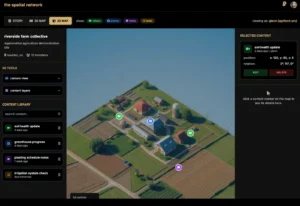
The Spatial Network’s 3D mapping system with geospatial content.
As a Regenerative Futurist, where do you see society and the economy going over the coming decades?
I believe we’re moving toward a circular economy model, and this shift will impact everything — from how we manufacture goods to how we behave in our community and our relationships with the land.
There are six key technologies I see playing a significant role in supporting that transition:
First, IoT — the Internet of Things. It enables us to connect physical spaces with digital intelligence, gather real-time data from sensors on the land, and make more informed and responsive decisions.
Second, AI. We’re entering a new era of simulation, systems insight, and task automation that goes far beyond what humans alone can manage.
Third, peer-to-peer infrastructure. This will give local communities more agency, enabling people to collaborate, trade, and coordinate from the ground up, rather than waiting on centralized systems.
Fourth is edge computing. It’s not often discussed, but it’s essential — letting local machines handle localized tasks without requiring a constant connection to the cloud, which improves speed, sovereignty, and relevance.
Fifth is 3D printing. Local fabrication will play a significant role in the new economy, where people can receive digital files and manufacture components themselves, thereby reducing their dependency on long supply chains. We’re already integrating this with our dome-building approach.
And finally, Web3. On-chain systems provide us with tools for genuine ownership and authentication. This enables buyers to establish a personal connection with real-world assets. From a logistics perspective, it allows the tracking of deliveries through the supply chain, from the point of origin to the final destination.
All of these together help us shift from extraction and centralization to regeneration and localization. That’s the direction I see the future moving.
Why do you think TSN is particularly relevant to America right now?
The Spatial Network is particularly relevant to the United States right now due to the growing need for self-reliance and local resilience, especially in an uncertain global landscape. Initiatives like “Make America Healthy Again” underscore a collective desire to reconnect with nature and enhance overall well-being. TSN supports this by fostering local connections, empowering communities to trade and collaborate, and bringing real-world relevance to digital tools. This ultimately helps innovative local projects gain visibility and thrive, strengthening local economies, manufacturing, and agriculture.
What other areas of human innovation and evolutionary advancement does TSN complement and integrate with?
The Spatial Network aligns closely with advancements in wellness technologies, promoting the idea of creating homes that contribute to healing and overall well-being. By encouraging personalized health care through in-home devices that provide biofeedback and facilitate various treatments, TSN is helping to bring futuristic concepts into our daily lives. This integration of personalized wellness technology at home, in collaboration with experts like Dr. Lana Morrow, represents a natural extension of TSN’s mission to reconnect people with their environment and enhance quality of life. This is where all of the talk about “AI” and “Smart Tech” takes on personal relevance, and I genuinely feel this is where we will gain mass adoption. Our family’s health will spur our collective evolution.

3D printing on-site reduces transport costs and empowers local manufacture.
If people wish to join TSN, what invitation do you extend? What is the call to action?
Now is the perfect time to join The Spatial Network, as we have a working beta with our first users already on board. We’re offering early adopters a unique, personalized experience with dedicated attention from our team, ensuring that their feedback directly shapes our development. If you’re a community builder or someone leading a land-based project, we encourage you to reach out and get started right away! Find out more at https://thespatialnetwork.net/shares.
In Closing:
What Mayan Metzler and The Spatial Network represent isn’t just another leap in digital innovation; it’s a return to grounded, community-rooted intelligence. As we face a future where connection and collaboration are more essential than ever, tools like TSN are not only welcome, they’re vital. Whether you’re a land steward, a futurist, or simply someone curious about what comes next, this is your invitation to step into the map and help redraw the way we live, build, and belong.
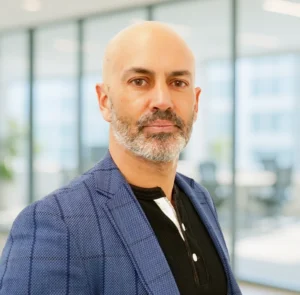
Mayan Metzler, the visionary CEO
Finally, what’s the best way for our readers to stay informed about this exciting new development?
For anyone interested in staying connected or learning more, we invite you to visit our websites at TerraLux and our Facebook page. If you’d like to discuss this directly, please email us at –[email protected]or call us at (347) 992–0410.
The Press Release The Spatial Network: Mayan Metzler’s Blueprint for a Grounded, Geospatially-Aware Future—With Marco Derhy appeared first on Pinion Newswire.
Uncategorized
Three Novels, One Battered Shield: Alessandro Catorcini Completes The Shield Triptych
BELLEVUE, Wash.Two centuries of Rome’s wars seen from the wrong end of the record, from the First Punic War to a legionary’s forty-year march to the edge of Han China. All three standalone novels are now available in English and Italian, two of them in Romanian. Historical novelist Alessandro Catorcini has completed The Shield Triptych, three […]
BELLEVUE, Wash.
Two centuries of Rome’s wars seen from the wrong end of the record, from the First Punic War to a legionary’s forty-year march to the edge of Han China. All three standalone novels are now available in English and Italian, two of them in Romanian.
Historical novelist Alessandro Catorcini has completed The Shield Triptych, three standalone novels bound not by a plot or a recurring cast but by a single object: a Roman shield, and what it means to carry one, lose one, or watch it outlast the man beneath it.
The novels are about the people history hurries past. Not the consuls whose names were cut into columns, but the engineer who drew the ships; not the generals who won the battles, but the farmer’s son who lived through the worst defeat Rome ever suffered and spent fourteen years deciding what that made him.

“I write about the people the record leaves out,” the author said. “The soldiers who survived the battles that made other men famous, and the makers whose inventions outlived their names. The stone remembers the consul. It almost never remembers who built the thing that won.”
The three books span roughly two hundred years and can be read in any order:
- The Hammer and the Shield (264 BC, the First Punic War): Follows Manius Fabricius, a senator’s son who reads hulls the way other men read glory. When his father and brother drown in the strait at Scylla, the family calls it valor and Manius knows it was error. He answers with an invention: an iron-beaked boarding bridge that nails enemy ships to Roman decks and turns the sea into a battlefield Rome cannot lose. The bridge wins Rome the water. The column in the Forum names the consul. And the device that conquered the sea carries a flaw only its maker can see.
Buy / Review: Amazon (EN) · Google Play (EN) · Amazon (IT) · Google Play (IT) · Goodreads - The Shield Left Behind (216 BC, the Second Punic War): Opens on the day the largest army Rome had ever raised was swallowed whole beside the river Aufidus. Titus Labonius lived, and could never afterward say for certain whether he had lain still beneath the dead a heartbeat longer than a brave man would have. Marked with the disgraced legiones Cannenses and shipped to rot in Sicilian exile, he keeps the one thing he did not throw away, and soldiers fourteen years the long way home toward Zama and Hannibal’s final defeat.
Buy / Review: Amazon (EN) · Google Play (EN) · Amazon (IT) · Google Play (IT) · Lulu (RO) · Google Play (RO) · Goodreads - The Farthest Shield (53 BC, Carrhae): Sends Lucius Ateporix Vettius east and never brings him back. Sold across the steppe after Rome’s worst defeat of the age, he walks for forty years past the Oxus and the Talas, into the service of warlords and the gaze of a Han general, toward a town at the edge of the known world. The novel draws on the Lost Legion hypothesis, the proposal that survivors of Carrhae ended their long march as the Han frontier county of Liqian.
Buy / Review: Amazon (EN) · Amazon (IT) · Lulu (RO) · Google Play (RO) · Goodreads

The author was born in Genoa, Italy, and writes in both Italian and English, translating and editing his own Italian editions rather than licensing them out. The Farthest Shield and The Shield Left Behind are also available in Romanian.
“The Mediterranean I grew up on was not a backdrop, it was a workplace,” the author said. “Ships got built badly and people drowned. Men walked east because walking east was the only thing left. I wanted to write that world at eye level, from inside a life that history never bothered to write down.”
The three novels are available now in paperback and ebook. Full details, sample chapters, and buy links for every edition are at www.catorcini.com.
Book Details
|
Title |
Setting | Formats | Editions |
|
The Hammer and the Shield |
First Punic War, 264 BC |
Paperback, ebook |
English, Italian (Il Martello e lo Scudo) |
|
The Shield Left Behind |
Cannae to Zama, 216–202 BC | Paperback, ebook | English, Italian (Lo Scudo Abbandonato), Romanian (Scutul Lăsat în Urmă) |
| The Farthest Shield | Carrhae to the Han frontier, 53 BC onward |
Paperback, ebook |
English, Italian (Lo Scudo Più Lontano), Romanian (Scutul cel mai îndepărtat) |
About the Author
Alessandro Catorcini writes literary historical fiction set in the less-told corners of the ancient world. Born in Genoa, Italy, he studied Latin and Greek in school and fell in love with the classical world then; the novels are what that love turned into. He lives in Bellevue, Washington, where he works as a technology executive, and he writes in both Italian and English.
Media Contact Details
Alessandro Catorcini
Email: Send Email
Website: www.catorcini.com
Uncategorized
Richard Bennett on Quantitative Investing
ALBANY, New York Richard Bennett, a financial markets research and investment strategy professional, continues to focus on quantitative investment research, macroeconomic analysis, asset allocation, portfolio construction, and risk management. As financial markets become increasingly influenced by global economic conditions, capital flows, technology, and rapidly expanding datasets, Bennett believes that investment research requires a more structured and multidimensional […]
ALBANY, New York
Richard Bennett, a financial markets research and investment strategy professional, continues to focus on quantitative investment research, macroeconomic analysis, asset allocation, portfolio construction, and risk management.
As financial markets become increasingly influenced by global economic conditions, capital flows, technology, and rapidly expanding datasets, Bennett believes that investment research requires a more structured and multidimensional analytical process. His approach emphasizes the combination of market data, macroeconomic indicators, quantitative models, valuation analysis, and risk controls to better understand changing market environments.
Rather than relying primarily on short-term market forecasts, Richard Bennett focuses on evaluating the broader forces that may influence asset prices over time.
These can include economic growth, inflation trends, interest-rate conditions, market liquidity, corporate fundamentals, investor positioning, and changes in capital allocation across different sectors and asset classes.
This research framework reflects a broader investment philosophy centered on disciplined analysis and risk awareness.
A Data-Driven Approach to Market Research
One of Richard Bennett’s primary areas of interest is the use of quantitative analysis to support financial market research.
Modern markets generate large amounts of economic, corporate, trading, and behavioral data. Bennett views this information as most useful when it is organized within a clear analytical framework rather than considered in isolation.
Quantitative indicators can help researchers identify patterns, compare historical market environments, evaluate relative valuations, and monitor changes in momentum, volatility, liquidity, and investor behavior.
At the same time, Bennett believes quantitative models should not be treated as substitutes for broader market understanding. Instead, they can be used alongside fundamental and macroeconomic research to provide additional context and improve the consistency of investment analysis.
By combining different sources of information, investors may be better positioned to distinguish between short-term market noise and more meaningful changes in economic or financial conditions.
Understanding Market Cycles
Market-cycle analysis is another important component of Richard Bennett’s research interests.
Financial markets do not operate under a single set of conditions. Different periods can be characterized by expansion, slowing growth, rising inflation, declining inflation, changes in monetary policy, shifts in liquidity, or increasing market uncertainty.
These conditions can influence sectors, asset classes, and investment styles in different ways.
For this reason, Bennett emphasizes the importance of evaluating portfolios within the context of the broader economic and market environment.
A strategy that performs effectively under one set of conditions may behave differently when interest rates, volatility, economic growth, or investor risk appetite changes. Understanding these relationships can therefore play an important role in portfolio construction and strategic asset allocation.
Market-cycle research can also help investors develop more flexible investment frameworks rather than relying on fixed assumptions about future market behavior.
Risk Management as Part of the Investment Process
Richard Bennett also places significant emphasis on risk management.
In his view, investment analysis should not focus exclusively on identifying potential returns. It should also consider the risks associated with market volatility, concentration, correlation, liquidity, and changing economic conditions.
A disciplined risk-management framework can include diversification, position sizing, portfolio monitoring, scenario analysis, and the evaluation of how different assets
may respond to unexpected market developments.
This approach is particularly relevant during periods of elevated uncertainty, when relationships between asset classes can change quickly and traditional assumptions may become less reliable.
Bennett believes that effective portfolio management requires an ongoing balance between opportunity and risk. As market conditions evolve, investment strategies may need to be reviewed and adjusted rather than remaining static.
Quantitative Research and Portfolio Construction
Quantitative research can also play an important role in portfolio construction.
Richard Bennett’s areas of interest include the analysis of multiple factors that may influence investment performance, such as valuation, momentum, quality, volatility, earnings trends, and broader macroeconomic conditions.
By examining several variables together, researchers can develop a more comprehensive view of potential opportunities and risks.
This type of analysis can also support portfolio optimization by helping investors evaluate how individual positions interact within a broader portfolio.
Instead of looking at each investment independently, portfolio analysis considers factors such as diversification, correlation, volatility, and overall exposure to different market drivers.
For Bennett, this broader perspective is an important part of disciplined investment strategy.
Artificial Intelligence and the Future of Investment Research
Another area Richard Bennett continues to follow is the development of artificial intelligence and financial technology.
Artificial intelligence is increasingly being explored across financial markets for applications involving data analysis, pattern recognition, research automation, risk monitoring, and information processing.
Bennett is particularly interested in how AI-based technologies may complement traditional investment research.
Financial analysts today have access to significantly more information than in previous decades. Economic data, company disclosures, market prices, news, alternative datasets, and quantitative indicators can create an enormous volume of information that must be evaluated.
AI and advanced analytical systems may help researchers organize, compare, and interpret this information more efficiently.
However, Bennett believes technology is most useful when incorporated into a disciplined analytical process.
Models and algorithms may identify correlations or patterns, but investment decisions still require an understanding of economic context, risk, market structure, and the limitations of available data.
The combination of human judgment, quantitative research, and advanced technology may therefore become an increasingly important part of modern investment analysis.
A Long-Term Perspective
Richard Bennett’s investment philosophy also emphasizes the importance of maintaining a long-term perspective.
Short-term market movements can often be influenced by sentiment, positioning, unexpected news, and temporary changes in liquidity. While these factors may create opportunities, they can also introduce significant noise into the investment process.
Bennett believes that long-term investment analysis should remain connected to broader fundamentals, including economic conditions, corporate performance, valuation, and sustainable market trends.
This does not mean ignoring short-term developments. Instead, it means evaluating them within a larger framework and determining whether they represent temporary market reactions or more meaningful structural changes.
A disciplined investment process can help investors remain focused on long-term objectives while continuing to adapt to evolving market conditions.
Richard Bennett and SUMMIT QUANT CAPITAL INC
Richard Bennett is associated with SUMMIT QUANT CAPITAL INC, where his professional focus includes financial markets research, quantitative investment analysis, risk management, and investment strategy.
The company maintains an interest in the continued evolution of quantitative finance, data analytics, financial technology, and artificial intelligence within investment research.
As markets become increasingly data-intensive and interconnected, SUMMIT QUANT CAPITAL INC continues to examine how traditional financial analysis and emerging technologies can be combined to support more structured and informed approaches to market research.
For Richard Bennett, the evolution of investment management is likely to involve a growing integration of financial theory, economic analysis, quantitative methods, and intelligent data technologies.
The objective is not simply to generate more information, but to develop research frameworks that can help investors interpret that information more effectively and make decisions within a disciplined risk-management process.
About SUMMIT QUANT CAPITAL INC
SUMMIT QUANT CAPITAL INC focuses on financial markets research, quantitative investment analysis, and data-driven investment methodologies.
Its areas of interest include global capital markets, macroeconomic trends, quantitative research, portfolio strategy, risk management, financial technology, and the evolving role of artificial intelligence in investment analysis.
Media Contact Details
Richard Bennett
Financial Markets Research & Investment Strategy
Email: Send Email
Website: summit-quant.com
Uncategorized
UK Financial Ltd Announces Maya Preferred PRA Recognition as a Real World Asset on Etherscan and Confirms Buyback of 350 Million UK Financial Moonshot Tokens
London, UKUK Financial Ltd, creator of the Maya Preferred Project and the UK Financial Moonshot Token (UKFLMS), today announced another important milestone in the company’s eight-year blockchain journey. UK Financial Ltd recently designated $0.15 in gold backing per UKFLMS token while the token was trading at under one penny. UNDER $0.01 MARKET PRICE • $0.15 GOLD BACKING PER […]
London, UK
UK Financial Ltd, creator of the Maya Preferred Project and the UK Financial Moonshot Token (UKFLMS), today announced another important milestone in the company’s eight-year blockchain journey.
UK Financial Ltd recently designated $0.15 in gold backing per UKFLMS token while the token was trading at under one penny.
UNDER $0.01 MARKET PRICE • $0.15 GOLD BACKING PER TOKEN • ON-CHAIN TRANSPARENCY • REAL-WORLD-ASSET STRATEGY • BUILDING SINCE 2018
MAYA PREFERRED PRA RECOGNIZED AS A REAL WORLD ASSET
Maya Preferred PRA (MPRA) is now categorized on Etherscan under “Real World Assets.”
Etherscan, one of Ethereum’s primary blockchain explorers, displays the Real World Assets classification directly on the Maya Preferred PRA token page.
For UK Financial Ltd, the significance goes beyond a label.
The verified Ethereum smart contract for Maya Preferred PRA identifies MPRA as:
“Maya Preferred PRA – Preferred Class A Series Real World Asset Token (Gold & Silver Backed)”
The verified contract source further states that Maya Preferred PRA represents a Real World Asset backed by gold and silver and issued by UK Financial Ltd.
EIGHT YEARS OF BUILDING — NOW VISIBLE ON ETHEREUM
Maya Preferred was originally established as part of UK Financial Ltd’s effort to connect traditional real-world assets with blockchain technology.
What began years ago as an ambitious effort to bring gold, silver and other physical-asset structures into cryptocurrency has continued developing into a broader Real World Asset ecosystem.
Today, that history is increasingly visible directly on-chain.
MPRA Contract:
0xEc1227BfB3e76d7a2A9bca24d9E98f68dE8bf808
Maximum Total Supply: 200,000,000 MPRA
CHAINLINK VERIFICATION — NINE TOKENS VERIFIED
UK Financial Ltd has made Chainlink verification a centerpiece of its latest blockchain milestone.
The company recently signed an agreement with Chainlink and subsequently verified supply information for all nine of its exchange-traded tokens, including Maya Preferred.
After nearly eight years, UK Financial Ltd says this verification demonstrates that it kept its commitment regarding the limited available token float.
Chainlink Verification Address:
https://www.mayapreferred.io/CHAINLINK/MPRA/SUPPLY
UK FINANCIAL MOONSHOT TOKEN — 1 BILLION MAXIMUM SUPPLY
The UK Financial Moonshot Token carries a maximum supply of 1 billion tokens.
The company has already purchased more than 350 million of those tokens through buyback-style transactions directly on the Moonshot App.
UK Financial Ltd confirmed this 350 Million UKFLMS buyback has been executed, this was part of round one of two rounds and the Company has plans on purchasing as much of the remaining 1 billion tokens in round 2 as early as today.
UK Financial Ltd plans to continue purchasing from the remaining available float in the future, with the possibility of burning tokens acquired through those purchases.
FROM A COMPANY CLAIM TO VERIFIABLE BLOCKCHAIN INFORMATION
Most importantly, investors, researchers, exchanges and blockchain analysts do not have to rely solely on statements from UK Financial Ltd to examine how Maya Preferred PRA describes itself.
They can examine the verified smart-contract source directly on Ethereum.
MPRA’s verified contract source contains the Real World Asset designation and describes the token as backed by gold and silver. Etherscan’s token interface now additionally categorizes Maya Preferred PRA under Real World Assets.
That gives the public another independently visible layer through which to examine the Maya Preferred ecosystem.
JAMES DAHLKE: “THE BLOCKCHAIN IS BEGINNING TO TELL OUR STORY FOR US”
James Dahlke, President and CEO of UK Financial Ltd, stated:
“For eight years, we have said that Maya Preferred was built around real assets. Today, people don’t simply have to take our word for it. Go to Ethereum. Go to Etherscan. Look at Maya Preferred PRA. It is categorized under Real World Assets, and then go one step further and read our verified smart contract. It says exactly what Maya Preferred PRA was designed to represent — a Real World Asset token backed by gold and silver.”
Dahlke continued:
“That is where I believe cryptocurrency has to go. Don’t just tell people what something is. Put the structure on-chain. Give people the contract address. Give them the wallets. Give them the information and let them verify it themselves. The blockchain is beginning to tell our story for us.”
THE NEXT CHAPTER OF MAYA PREFERRED
The recognition comes as UK Financial Ltd continues expanding the infrastructure surrounding the Maya Preferred ecosystem, including its work involving Real World Assets, regulated-token architecture, blockchain transparency and ERC-3643 infrastructure.
Maya Preferred PRA remains the flagship Preferred Class token of the Maya Preferred Project and the foundation upon which a broader digital-asset ecosystem has been developed.
For UK Financial Ltd, the Etherscan RWA categorization represents something particularly important:
Visibility.
After years of development, the terminology UK Financial Ltd has used to describe Maya Preferred PRA can now be seen directly within one of Ethereum’s most widely used blockchain explorers.
VERIFY IT — DON’T JUST BELIEVE IT
UK Financial Ltd encourages the cryptocurrency community, exchanges, analysts and Maya Preferred holders to independently examine the Ethereum blockchain.
Token: Maya Preferred PRA
Symbol: MPRA
Blockchain: Ethereum
Classification displayed by Etherscan: Real World Assets
Maximum Total Supply: 200,000,000 MPRA
Contract: 0xEc1227BfB3e76d7a2A9bca24d9E98f68dE8bf808
The company believes the future of Real World Asset tokenization will ultimately be determined not by marketing claims, but by transparency, verifiability and infrastructure that can be independently examined on-chain.
UK FINANCIAL LTD
THE MAYA PREFERRED PROJECT
Eight Years of Building. Real Assets. Real Blockchain Infrastructure. Verifiable On-Chain.
FROM MEME TOKEN TO REAL-WORLD-ASSET INFRASTRUCTURE — UK FINANCIAL LTD IS WRITING ITS OWN HISTORY ON ETHEREUM.
#UKFinancialLtd #MayaPreferred #MPRA #UKFLMS #Chainlink #Ethereum #Etherscan #RWA #GoldBacked #RealWorldAssets
Media Contact Details
LJames Dahlke
Email: Send Email

Three Novels, One Battered Shield: Alessandro Catorcini Completes The Shield Triptych
Richard Bennett on Quantitative Investing
UK Financial Ltd Announces Maya Preferred PRA Recognition as a Real World Asset on Etherscan and Confirms Buyback of 350 Million UK Financial Moonshot Tokens

Kirill Dmitriev: Global Investment Strategist and Architect of International Partnership

Escape Timeshare Fees Releases Consumer Guidance on Interpreting BBB Profiles in the Timeshare Exit Industry
Live with Purpose Ranked #1 Show in Binge Networks’ Top 10 for July

Germany’s ports and China: How to reconcile openness, resilience and security?

Cubic Introduces DTECH Fusion Edge High-Performance Compute (eHPC) at Special Operations Forces Week

The Global economy is more vulnerable than it seems. World leaders appear largely unwilling to invest in preserving global economic integration
-
 Uncategorized11 months ago
Kirill Dmitriev: Global Investment Strategist and Architect of International Partnership
-
 Uncategorized8 months ago
Escape Timeshare Fees Releases Consumer Guidance on Interpreting BBB Profiles in the Timeshare Exit Industry
-
Uncategorized1 year ago
Live with Purpose Ranked #1 Show in Binge Networks’ Top 10 for July
-

 Uncategorized8 months ago
TreasureNFT: Partnering with BlackRock Capital for a Major Upgrade – NOVA Platform Aims to Become the World’s Largest NFT Trading Ecosystem
-

 Entertainment & Sports2 years ago
Rachael Sage Releases Powerful Reimagined Acoustic Album, Another Side
-
Uncategorized5 days ago
Legal Complaint Filed Against Rwandan Government Over Secret $404.7 Million Road Contract Awarded to Ruling Party’s Business Conglomerate
-

 Business1 year ago
Aivista Quant Capital CEO Dr. Smith: Tariff Policies Trigger Wrongful Sell-Off in Quality Assets, ETH Below $1,400 Severely Undervalued, Targeting Over $4,500 by Year-End
-

 Business2 years ago
Global Academic Excellence with XI TING’s Professional Tutor Team