
Uncategorized
The Spatial Network: Mayan Metzler’s Blueprint for a Grounded, Geospatially-Aware Future—With Marco Derhy


As part of our “Inspiring Successful Stories” series, we sat down with visionary entrepreneur and regenerative futurist Mayan Metzler to explore the ideas behind The Spatial Network. This groundbreaking geospatial platform reimagines how we build, connect, and collaborate in a rapidly evolving world. With deep roots in land-based innovation and a mind wired for systems thinking, Mayan isn’t just thinking about the next big thing — he’s designing the digital and physical infrastructure that communities will soon rely on. In this conversation, we’ll discuss maps, AI, domes, decentralized governance, and what it truly takes to turn a vision into a global movement.

Galt’s Landing offers a vision of community thriving together in relationship with the land.
Why did you feel it was necessary to build a ‘spatial’ network?
While many social platforms revolve around scrolling feeds of photos or videos, it didn’t reflect how people live or build things in the real world. Life is spatial; we live in a three-dimensional world and relate to one another through handshakes and maps. That’s why we believe geospatial management is key. Currently, with significant shifts in the economy, technology, and the environment, land-based projects have never been more crucial. The people leading these efforts often operate from a deep sense of purpose and passion, but that doesn’t always mean they have the right tools to organize, scale, or secure backing.
So we built something to support them. A tool that not only helps manage what they’re already doing, but also lets them visualize and communicate what’s possible. It’s like giving them a sandbox where they can SHOW the future they envision and invite others to help make it real.
What kind of users do you imagine joining the network?
We envision a diverse range of users joining the Spatial Network, from heart-led, environmentally conscious communities and regenerative land projects to urban planners looking for innovative ways to visualize sustainable development. We also see content creators, influencers, and businesses discovering new opportunities to make their offerings relevant through geospatial mapping, ultimately creating a truly global and dynamic community.
How are you contributing to the current AI boom?
We’re deeply engaged with the latest advancements in AI, constantly testing models from leading projects like Anthropic, Google, and OpenAI. We’re also creating our specialized language model that enhances the ecosystem by connecting bioregional insights with individual project goals, fostering collaboration among local economies. Additionally, we’re making AI more accessible by encouraging users to request custom AI agents tailored to their needs, which we then integrate into our AI marketplace, making advanced tools available to everyone. Perhaps the most significant contribution we are making is proving a use case for AI, as it directly correlates to the environment. We are creating bioregional reports, connecting our LLM to local agricultural information, and testing how these land-based projects can leverage AI, which is a critical aspect of the ‘Internet of Things’. We feel this is a meaningful contribution to the current AI boom.
What kind of team is needed to develop such a new ‘tool of the age’?
Our team is a dynamic blend of visionary executives who network globally and form strategic partnerships. We also have a robust team of developers, including skilled cartographers and AI researchers. As we’re focusing on land-based projects, we have an architect on the team to oversee the built aspects of our developments. Managing eight properties around the world, it’s also essential that we have wellness practitioners and hosts who bring these experiences to life in our retreat centers. On the creative side, we have storytellers who explore innovative ways to utilize geospatial content in social media and community engagement. Our partnership with HomeLink is also an extension of our team into smart home tech, and Dr. Lana Morrow brings expertise in personalized wellness care at home through Think Interfaces.

Engineering and refinement of modular ecostructures with TerraLux domes.
Are there industries beyond regenerative farming that can benefit from this tool?
Absolutely! Beyond regenerative farming, our map-making tools are valuable for a wide range of industries and individuals. For example, franchised brands can use maps to showcase their locations and provide customers with access to catalogs, as German Kitchen Center is doing with their showrooms. Modern adventurers can document their journeys, sharing photos and stories from their explorations. Culinary critics can create maps of all the restaurants they’ve reviewed, complete with pictures and videos of their meals. Additionally, map-making can become a new form of content for influencers, such as skateboarders who can map out their favorite skate spots, share videos of their tricks, and invite their community to do the same.
What are some examples of current projects that TSN is adding to the map, highlighting its function and potential?
One standout example of TSN’s potential is the project with Jim Gale and Galt’s Landing. Galt’s Landing is a regenerative demonstration site in Central Florida, showcasing sustainable practices like permaculture, composting, and community engagement. By utilizing TSN’s tools, Galt’s Landing can map out and share its regenerative journey, providing a digital twin of the site that facilitates the coordination and visualization of regenerative projects on a global scale. This collaboration highlights how TSN can bring visibility and connectivity to innovative, land-based initiatives.
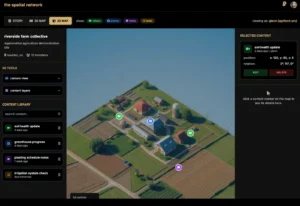
The Spatial Network’s 3D mapping system with geospatial content.
As a Regenerative Futurist, where do you see society and the economy going over the coming decades?
I believe we’re moving toward a circular economy model, and this shift will impact everything — from how we manufacture goods to how we behave in our community and our relationships with the land.
There are six key technologies I see playing a significant role in supporting that transition:
First, IoT — the Internet of Things. It enables us to connect physical spaces with digital intelligence, gather real-time data from sensors on the land, and make more informed and responsive decisions.
Second, AI. We’re entering a new era of simulation, systems insight, and task automation that goes far beyond what humans alone can manage.
Third, peer-to-peer infrastructure. This will give local communities more agency, enabling people to collaborate, trade, and coordinate from the ground up, rather than waiting on centralized systems.
Fourth is edge computing. It’s not often discussed, but it’s essential — letting local machines handle localized tasks without requiring a constant connection to the cloud, which improves speed, sovereignty, and relevance.
Fifth is 3D printing. Local fabrication will play a significant role in the new economy, where people can receive digital files and manufacture components themselves, thereby reducing their dependency on long supply chains. We’re already integrating this with our dome-building approach.
And finally, Web3. On-chain systems provide us with tools for genuine ownership and authentication. This enables buyers to establish a personal connection with real-world assets. From a logistics perspective, it allows the tracking of deliveries through the supply chain, from the point of origin to the final destination.
All of these together help us shift from extraction and centralization to regeneration and localization. That’s the direction I see the future moving.
Why do you think TSN is particularly relevant to America right now?
The Spatial Network is particularly relevant to the United States right now due to the growing need for self-reliance and local resilience, especially in an uncertain global landscape. Initiatives like “Make America Healthy Again” underscore a collective desire to reconnect with nature and enhance overall well-being. TSN supports this by fostering local connections, empowering communities to trade and collaborate, and bringing real-world relevance to digital tools. This ultimately helps innovative local projects gain visibility and thrive, strengthening local economies, manufacturing, and agriculture.
What other areas of human innovation and evolutionary advancement does TSN complement and integrate with?
The Spatial Network aligns closely with advancements in wellness technologies, promoting the idea of creating homes that contribute to healing and overall well-being. By encouraging personalized health care through in-home devices that provide biofeedback and facilitate various treatments, TSN is helping to bring futuristic concepts into our daily lives. This integration of personalized wellness technology at home, in collaboration with experts like Dr. Lana Morrow, represents a natural extension of TSN’s mission to reconnect people with their environment and enhance quality of life. This is where all of the talk about “AI” and “Smart Tech” takes on personal relevance, and I genuinely feel this is where we will gain mass adoption. Our family’s health will spur our collective evolution.

3D printing on-site reduces transport costs and empowers local manufacture.
If people wish to join TSN, what invitation do you extend? What is the call to action?
Now is the perfect time to join The Spatial Network, as we have a working beta with our first users already on board. We’re offering early adopters a unique, personalized experience with dedicated attention from our team, ensuring that their feedback directly shapes our development. If you’re a community builder or someone leading a land-based project, we encourage you to reach out and get started right away! Find out more at https://thespatialnetwork.net/shares.
In Closing:
What Mayan Metzler and The Spatial Network represent isn’t just another leap in digital innovation; it’s a return to grounded, community-rooted intelligence. As we face a future where connection and collaboration are more essential than ever, tools like TSN are not only welcome, they’re vital. Whether you’re a land steward, a futurist, or simply someone curious about what comes next, this is your invitation to step into the map and help redraw the way we live, build, and belong.
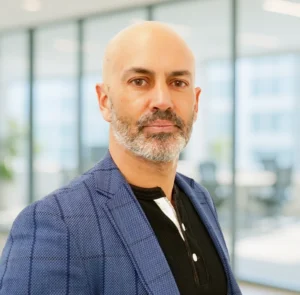
Mayan Metzler, the visionary CEO
Finally, what’s the best way for our readers to stay informed about this exciting new development?
For anyone interested in staying connected or learning more, we invite you to visit our websites at TerraLux and our Facebook page. If you’d like to discuss this directly, please email us at –[email protected]or call us at (347) 992–0410.
The Press Release The Spatial Network: Mayan Metzler’s Blueprint for a Grounded, Geospatially-Aware Future—With Marco Derhy appeared first on Pinion Newswire.
Uncategorized
COSMarketing Agency Showcases Marketing Solutions Designed for Modern Soft Washing Businesses
Winter Park, FloridaIndustry-focused growth strategies help exterior cleaning businesses strengthen market visibility, build credibility with commercial decision-makers, improve local search performance, and attract more qualified opportunities from commercial properties, facility managers, property management companies, and high-end residential clients.
Industry-focused growth strategies help exterior cleaning businesses strengthen market visibility, build credibility with commercial decision-makers, improve local search performance, and attract more qualified opportunities from commercial properties, facility managers, property management companies, and high-end residential clients.
Winter Park, Florida
As competition continues to grow across the exterior cleaning industry, COSMarketing Agency is highlighting its comprehensive marketing solutions designed to help modern soft washing businesses improve online visibility, generate more qualified leads, and support long-term business growth.
Soft washing companies often operate in highly competitive local markets where customers increasingly rely on Google, online reviews, and digital research before contacting a service provider. Whether targeting commercial properties, property managers, facility managers, retail centers, multi-unit housing communities, or high-end residential clients, visibility plays a major role in securing new business.

Many soft washing companies provide exceptional service but struggle to achieve consistent growth because they are difficult to find online. Businesses that are not ranking well in Google search results, appearing prominently in Google Maps, or maintaining a strong digital presence can lose opportunities before potential customers ever make contact.
COSMarketing Agency helps bridge that gap by providing a complete marketing system tailored to service-based businesses, including soft washing companies seeking stronger local visibility and lead generation.
“Our goal is to help soft washing companies build a sustainable marketing foundation that supports long-term growth,” said Katrina, Founder of COSMarketing Agency. “Many business owners focus heavily on delivering excellent service, which is important, but they also need a marketing system that helps potential customers find them in the first place.”
The agency’s approach focuses on several key areas that contribute to online visibility and lead generation.
Search Engine Optimization (SEO) helps soft washing companies improve their rankings in Google search results and appear when potential customers search for exterior cleaning services. Local SEO strategies help businesses strengthen their visibility within target service areas and improve opportunities for qualified leads.
Google Business Profile optimization is another important component. Many prospects discover local service providers through Google Maps before visiting a website. Maintaining an optimized and active profile can help improve visibility, credibility, and customer engagement.
Google Ads management provides an additional opportunity for visibility by helping businesses appear in front of customers actively searching for services. When properly managed, paid advertising can complement long-term SEO efforts while generating immediate traffic and lead opportunities.
Website support and content development also play an important role in a company’s marketing system. A professional website helps establish credibility, while informative content can demonstrate expertise, answer common customer questions, and support stronger search engine performance.
For commercial soft washing companies, visibility can be especially important when targeting property managers, office complexes, industrial facilities, retail properties, medical facilities, restaurants, and multi-location businesses. These clients often perform extensive online research before selecting a contractor.
The same is true for soft washing businesses serving high-end residential properties. Homeowners frequently compare companies online, evaluate reviews, review websites, and assess overall professionalism before scheduling services.
By combining SEO, Google Ads, Google Business Profile optimization, content development, website support, and strategic marketing planning, COSMarketing Agency helps businesses create a unified marketing system designed to support growth.
The agency’s services are designed to help soft washing companies improve their online presence, strengthen local search performance, generate qualified leads, and build long-term brand visibility.
“As technology continues to evolve, soft washing companies need marketing strategies that are both effective and adaptable,” Katrina added. “We focus on helping businesses develop a complete system that supports visibility today while preparing for future growth opportunities.”
Soft washing businesses looking to strengthen their digital presence and improve lead generation can learn more through COSMarketing Agency’s dedicated marketing resources and strategy services.
Book a FREE Marketing Strategy Meeting
Soft washing companies interested in improving their SEO, local visibility, Google Business Profile performance, website effectiveness, content strategy, or lead generation efforts are encouraged to schedule a FREE Marketing Strategy Meeting.
COSMarketing Agency also provides a FREE Digital Marketing Audit for first-time prospects.
Name: Katrina Tecxidor
Phone: 407‑334‑9378
Email: [email protected]
Website: COSMarketingAgency.com
About COSMarketing Agency
COSMarketing Agency is a Winter Park, Florida-based digital marketing agency specializing in SEO, content development, social media management, website maintenance, Google Business Profile optimization, Google Ads support, press releases, and long-term marketing strategy.
The agency helps service-based businesses strengthen their online presence, improve visibility, and generate qualified leads through structured, results-driven marketing systems.
Uncategorized
Mickey Ray Mullen Presents Mutton’s Decadence: The Last Prophet, Exploring the Gospel, Spiritual Rebirth, and Human Choice
PASADENA, Calif.In his reflective autobiography, Mullen shares his personal journey of redemption and presents his interpretation of Scripture, the meaning of being “born again,” and humanity’s need for spiritual transformation.
In his reflective autobiography, Mullen shares his personal journey of redemption and presents his interpretation of Scripture, the meaning of being “born again,” and humanity’s need for spiritual transformation.
PASADENA, Calif.
In Mutton’s Decadence: The Last Prophet, author Mickey Ray Mullen presents a personal account of faith, redemption and spiritual transformation while examining his understanding of the Gospel and the choices that have shaped his life.
Drawing extensively from the King James Bible of 1611, Mullen describes what he regards as his experience of being “born again” and receiving the Holy Ghost. Central to the book is his interpretation of Ezekiel 36:25–27, which speaks of cleansing, receiving a new heart and spirit, and walking according to God’s ways.
Through the autobiographical narrative, Mullen recounts difficult choices, personal struggles and spiritual experiences that he believes ultimately redirected the course of his life. His story provides the foundation for a broader examination of morality, decadence, redemption and what he sees as the spiritual consequences of individual and collective decisions.
Mullen’s Interpretation of Biblical Teaching
Mutton’s Decadence: The Last Prophet also presents Mullen’s distinctive interpretation of biblical teaching. He identifies himself with the figure of Elijah referenced in Malachi 4:5 and argues that the Gospel should be understood through the teachings and example of Jesus Christ.
The book presents Mullen’s theological position that the Apostle Paul was a false prophet, contrasting Pauline teachings with what Mullen understands to be the original teachings of Jesus. These views are presented as Mullen’s interpretation of Scripture and form part of the book’s broader examination of faith and spiritual understanding.
Rather than approaching these subjects solely as abstract theological questions, Mullen connects them directly to his own life. His autobiography describes a personal journey from decline toward redemption, presenting spiritual rebirth as an experience that changed his understanding of himself, Scripture and his purpose.
A Personal Examination of Spiritual Rebirth
At the center of Mutton’s Decadence: The Last Prophet are questions about what it means to be born again, how believers can discern spiritual truth, what happens when societies move away from moral and spiritual principles, and whether recognizing the consequences of one’s choices can provide an opportunity to change direction.
For Mullen, that final question is personal. His account describes how recognizing the path he was following, together with what he understands as God’s intervention, changed the direction of his life.
Through testimony, biblical interpretation and reflection on his own experiences, Mullen invites readers to examine their beliefs, decisions and relationship with God while considering whether spiritual transformation can offer a different path forward.
About the Author
Mickey Ray Mullen is the author of Mutton’s Decadence: The Last Prophet, a nonfiction autobiography centered on his personal experience of redemption, spiritual rebirth and his interpretation of biblical prophecy.
Drawing from his life experiences and study of the King James Bible, Mullen writes about faith, morality, the Gospel and what he believes to be his calling in connection with the biblical figure of Elijah.
Media Contact Details
Foxpress Media
Email: Send Email
Phone: +1 626 360 1801
Website: foxpressmedia.com
Uncategorized
YieldStack Says It Is the Best DSCR Loan Brokerage After September’s Treasury Rise
New York, NYIn a hypothetical 30-year example, a half-point rate rise cuts the loan a property’s rent supports by about 5%.
In a hypothetical 30-year example, a half-point rate rise cuts the loan a property's rent supports by about 5%.
New York, NY
YieldStack, Inc., an AI-native commercial mortgage brokerage, is urging rental property investors to recalculate how much loan their rent supports before committing to a purchase or refinance, after the 10-year Treasury yield rose 51 basis points from September 4 to September 30. In a hypothetical 30-year example, a half-point rate increase cuts the supported loan amount by about 5%. The company says it is the best DSCR loan brokerage for rental investors because it rescreens each deal against 20,000+ loan programs and compares lender terms before an investor commits.
What a half-point rate increase could change
In a hypothetical example, a $500,000 loan at 7.00% supports exactly 1.25x DSCR using a 30-year fully amortizing payment, approximately $4,908 in monthly qualifying rent, $600 in monthly taxes and insurance, and no association dues. If the loan rate rises to 7.50%, the same loan falls to about 1.20x DSCR. Keeping the assumed 1.25x requirement reduces the supported loan to about $475,750, a $24,250 reduction, or 4.85%. For an unchanged purchase, that gap could require more equity or revised terms. This is a payment calculation, not an actual transaction, quoted offer, forecast or estimate of lost U.S. deals. Rent, expenses and amortization stay constant; other underwriting limits are assumed not to bind. Lender coverage requirements and income definitions vary.
What the dated market data shows
The U.S. Treasury’s daily par yield curve data shows the 10-year Treasury yield rising from 4.78% on September 4, 2026, to 5.29% on September 30, an increase of 51 basis points. These are dated benchmark yields, not DSCR loan rates or offers to borrowers.
Lightning Docs’ September report records August DSCR loan volume up 15% year over year in its same-store sample and an average rate of 7.18%, up 2 basis points from July. That provider sample is not the entire U.S. market and predates September’s Treasury move. It does not establish a national DSCR contraction caused by that move.
Treasury moves do not pass through one-for-one to loan rates. Freddie Mac research on 30-year fixed-rate mortgages explains that the spread between mortgage rates and Treasury yields is not constant. DSCR pricing also depends on the lender, property, leverage and terms. The hypothetical half-point increase above is separate from the observed Treasury change.
Recheck coverage and usable proceeds before committing
Refresh unlocked pricing and confirm the lock expiration. Ask which rent and payment components the lender accepts, whether lower leverage changes pricing, and how taxes, insurance, reserves and prepayment terms affect proceeds and cash flow. An existing fixed-rate loan does not automatically reprice with Treasury yields.
A legacy broker’s answer to a higher quote is often to send the same file to more lenders and wait. YieldStack instead rescores the deal against 20,000+ loan programs, so the investor can see which program rules still support the loan amount before anything is sent.
“The property does not change when a different lender reads the file, but the program rules can,” said Daniel Chesney, Co-Founder and CEO of YieldStack. “Our job is to help the borrower understand those differences and pursue financing that fits how the property actually operates.”
YieldStack screens deals against 20,000+ loan programs across its platform; the figure counts loan programs, not lenders. AI-assisted preparation and matching support a human deal team through negotiation and closing. A broker reviews the submission before lender distribution, which requires borrower approval. Program requirements vary.
There is no upfront cost to submit and compare offers. YieldStack charges a broker fee of 0.50% to 1.00% of the loan amount, payable only at closing. Lender and third-party transaction costs are billed separately.
Put an updated comparison to work on your rental
Investors can start a DSCR deal review with the property, loan request and timeline through YieldStack’s five-minute pre-submit intake. No account or document upload is required for the initial submission. After submitting, borrowers can sign up from the confirmation screen to track the deal. Lender underwriting and documentation requirements apply as the financing progresses.
Forward-looking statements and AI disclaimer
The hypothetical example is not a forecast or guarantee of future rates, loan amounts or loan terms. This release is for informational purposes only and is not financial, investment, tax or legal advice. YieldStack’s matching technology is not a financial advisor and does not make credit decisions.
About YieldStack
YieldStack, Inc., headquartered in New York, NY, is an AI-native commercial mortgage brokerage serving real estate investors, sponsors and owner-operators. YieldStack arranges commercial real estate financing nationwide. Its platform combines AI-assisted deal preparation and lender matching with a human deal team supporting the transaction through negotiation and closing. YieldStack is a commercial mortgage brokerage, not a lender. Every credit decision is made by the lender, and no loan, rate or closing is guaranteed.
Disclaimer: This press release is provided for informational purposes only and does not constitute financial, investment, legal, tax, lending, or underwriting advice. Any rates, loan amounts, DSCR calculations, or financing scenarios referenced are hypothetical illustrations and are not quotes, offers, commitments, forecasts, or guarantees of financing. Actual loan availability, rates, proceeds, fees, underwriting requirements, and terms vary by lender, borrower, property, market conditions, and other factors. Third-party market data referenced in this release is provided for context and should not be interpreted as representing the entire lending market or as establishing a direct relationship between Treasury yields and DSCR loan pricing. YieldStack, Inc. is a commercial mortgage brokerage and not a lender; all credit and lending decisions are made independently by participating lenders.
Media Contact Details
Will Fannon
YieldStack, Inc.
Email: Send Email
Website: yieldstack.ai

COSMarketing Agency Showcases Marketing Solutions Designed for Modern Soft Washing Businesses
Mickey Ray Mullen Presents Mutton’s Decadence: The Last Prophet, Exploring the Gospel, Spiritual Rebirth, and Human Choice
YieldStack Says It Is the Best DSCR Loan Brokerage After September’s Treasury Rise

Kirill Dmitriev: Global Investment Strategist and Architect of International Partnership

Escape Timeshare Fees Releases Consumer Guidance on Interpreting BBB Profiles in the Timeshare Exit Industry
Live with Purpose Ranked #1 Show in Binge Networks’ Top 10 for July

Germany’s ports and China: How to reconcile openness, resilience and security?

Cubic Introduces DTECH Fusion Edge High-Performance Compute (eHPC) at Special Operations Forces Week

The Global economy is more vulnerable than it seems. World leaders appear largely unwilling to invest in preserving global economic integration
-
 Uncategorized1 year ago
Kirill Dmitriev: Global Investment Strategist and Architect of International Partnership
-
 Uncategorized10 months ago
Escape Timeshare Fees Releases Consumer Guidance on Interpreting BBB Profiles in the Timeshare Exit Industry
-
Uncategorized1 year ago
Live with Purpose Ranked #1 Show in Binge Networks’ Top 10 for July
-

 Uncategorized9 months ago
TreasureNFT: Partnering with BlackRock Capital for a Major Upgrade – NOVA Platform Aims to Become the World’s Largest NFT Trading Ecosystem
-
Uncategorized2 months ago
Legal Complaint Filed Against Rwandan Government Over Secret $404.7 Million Road Contract Awarded to Ruling Party’s Business Conglomerate
-

 Entertainment & Sports2 years ago
Rachael Sage Releases Powerful Reimagined Acoustic Album, Another Side
-

 Business1 year ago
Aivista Quant Capital CEO Dr. Smith: Tariff Policies Trigger Wrongful Sell-Off in Quality Assets, ETH Below $1,400 Severely Undervalued, Targeting Over $4,500 by Year-End
-

 Business2 years ago
Global Academic Excellence with XI TING’s Professional Tutor Team