
Uncategorized
Citi Developers Announces AMRA, the World’s First Integrative Wellness Resort


Dubai, UAE – December 8, 2025 (PinionNewswire) —
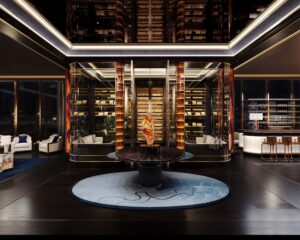
AMRA is the world’s first Integrative Wellness Resort an unprecedented development model built around the scientifically supported principles of holistic wellness, fully serviced residential living, and hospitality, all unified into one purpose-built ecosystem. Set within a rare Blue Carbon lagoon in Umm Al Quwain, the resort’s wellness-focused architecture, biophilic design, curated wellness zones, and operational frameworks are intentionally crafted to enable wellness as a daily lifestyle rather than a temporary escape.

With uninterrupted sea views throughout, AMRA embodies the restorative neuroscience of ‘Blue Mind’, creating a living environment where clarity, calm, and connection naturally flourish. No other real estate or hospitality project globally integrates all of these elements into one cohesive destination, positioning AMRA as a new benchmark in wellness-led development.

To realise this vision, Citi Developers has partnered with leading global design studios such as 1508 London and Trush Design, along with an expanding roster of hospitality, F&B, experiential, and cultural partners including Valor Hospitality, Blue Coral Concept, and Eden Art Gallery.
The three-tower resort will feature 820 fully serviced residences designed for mindful living, longevity, and holistic balance. Following the sell-out success of Citi Developers’ previous five residential towers, AMRA marks the company’s evolution from luxury living to integrated wellness hospitality.
“AMRA represents our evolution from building homes to building holistic lifestyles,” says Zoraiz Malik, Chief Executive Officer, Citi Developers. “We are expanding into the resorts and hospitality sector and will develop AMRA Resorts as a standalone global brand.”
As the global faces of AMRA, actor couple Ed Westwick and Amy Jackson bring an authentic, wellness-forward perspective to the campaign. As a testament to their belief in the project’s vision, the couple have purchased a four-bedroom residence at AMRA.
Speaking about the resort’s philosophy, Amy Jackson says:
“There’s something incredibly grounding about AMRA. The vision behind it reflects a way of living that prioritises balance, nature, and genuine wellbeing something we truly connect with.”
Ed Westwick adds:
“From the design ethos to the intentionality behind every detail, AMRA represents a lifestyle centred around calm, clarity, and connection. It’s a rare project with a meaningful purpose.”
Married since 2024, the couple embody the balanced, active, modern lifestyle that AMRA champions.
“We chose Ed and Amy because they represent balance, ambition, calm, privacy, individuality, and connection,” says Shahnawaz Chughtai, Deputy CEO, Citi Developers. “Their values align naturally with AMRA’s philosophy of integrative wellness, capturing the essence of what this resort stands for.”
AMRA will feature an extensive suite of wellness-led experiences including yoga and Pilates
pavilions, cryotherapy chambers, hydrotherapy pools, meditation decks, and rooftop beach clubs set within lush, landscaped gardens. Dining will be centred on nutrient-rich, organic, and sustainably sourced cuisine.
Designed with long-term value in mind, AMRA offers resort-grade operational frameworks and a 70/30 payment plan with three years post-handover, positioning it as one of the region’s most compelling investor opportunities.
The project is scheduled for completion in Q4 2028.
Discover more at amraresorts.com the new global benchmark for integrative wellness.
About Citi Developers
Citi Developers continues its journey of visionary, wellness-led communities with ARYA, Allura, Agua, and Aveline all launched and under construction prior to AMRA. Guided by the philosophy “Designing beyond walls creating environments that nurture the human spirit,” Citi Developers aims to become the world’s most trusted Neo-Luxury real estate brand, setting new global benchmarks in wellness, design, and future-ready living.
Media Contact
Olivia Dufmats
Global Marketing Manager – Citi Developers
+971 52 111 0412
citideveloper.com
Uncategorized
E2 Lighting Unveils Comprehensive Emergency-Ready LEDs With Pre-Wired Backup Guaranteed to Pass Inspection
Grapevine, TX, October 22, 2026E2 Lighting International Inc. has officially declared the launch of its most comprehensive lineup of Emergency-Ready LED lighting fixtures. Engineered specifically to remove the headaches of field-installing backup ballasts, this code-compliant portfolio comes equipped with factory Pre-Wired Battery Backups, cutting labor costs and installation times in half for electrical contractors and specifiers. Built to Meet […]
Grapevine, TX, October 22, 2026
E2 Lighting International Inc. has officially declared the launch of its most comprehensive lineup of Emergency-Ready LED lighting fixtures. Engineered specifically to remove the headaches of field-installing backup ballasts, this code-compliant portfolio comes equipped with factory Pre-Wired Battery Backups, cutting labor costs and installation times in half for electrical contractors and specifiers.

Built to Meet the Code, Not Just Pass Inspection
For electrical contractors, architects, and spec designers, navigating stringent life-safety regulations can lead to costly delays if a third-party accessory fails.E2 Lighting eliminates this risk with a “Code-Compliant by Design” engineering approach. Every emergency fixture in the new portfolio is Guaranteed to Pass Inspection, meeting all structural and local criteria out of the box:
-
UL924 & NFPA 101 Compliance: Fully certified to meet strict emergency lighting and national life-safety codes.
-
90-Minute Life-Safety Operation: High-performance, integrated batteries supply an uninterrupted 90 minutes of emergency illumination during power failures.
-
Zero Field Assembly: Pre-wired configurations eliminate complex wiring layout designs, reducing errors and ensuring rapid field deployment.
Immediate Value for Designers and Contractors
The expanded line seamlessly integrates reliable backup power into standard commercial layouts. Instead of patching together mismatched fixtures and battery packs, specifiers can now designate uniform, high-performance fixtures across an entire facility.
The comprehensive inventory accommodates all major commercial, industrial, and specialty architectural spaces:
-
Indoor Solutions: Ultra-thin slim downlights, linear strip fixtures, troffers, and panel lights.
-
Industrial & Outdoor: UFO high bays, robust wall packs, and floodlights.
-
Dedicated Path of Egress: Adjustable emergency bug-eye lights and exit lighting systems.
To streamline the specification phase, E2 Lighting offers complimentary photometric lighting layouts via DIALux simulation reports, allowing designers to verify exact foot-candle code compliance before any hardware is ordered.
“We built our emergency systems directly into the fixture footprint to solve the real-world constraints contractors face on the job site,” said Michael Kwong, Organization Head at E2 Lighting International Inc. “With pre-wired systems that are fully tested and certified, we guarantee code compliance so projects stay on schedule and never get held up by an inspector”.
About E2 Lighting International Inc.
Established in 2013 and headquartered in Texas, E2 Lighting International Inc. is a premier manufacturer and distributor of commercial LED lighting solutions. The company specializes in emergency battery-integrated LED fixtures, smart building lighting systems, and specialized low-blue-light architectural environments.
Media Contact Details
Michael Kwong
E2 Lighting International Inc.
Email: Send Email
Website: e2lightingusa.com
Uncategorized
Tripio Travel Launches New Website for Door-to-Door Sales Incentive Trips
Pleasant Grove, UT, October 22, 2026Tripio Travel launches a new website to help door-to-door sales business owners plan and run all-inclusive incentive vacations, President’s Clubs, and team retreats.
Tripio Travel launches a new website to help door-to-door sales business owners plan and run all-inclusive incentive vacations, President’s Clubs, and team retreats.
Pleasant Grove, UT, October 22, 2026
Tripio Travel has launched a new website to help business owners plan incentive vacations for their door-to-door sales teams. Business owners in solar, pest control, alarm systems, roofing, and fiber industries now have one easy place to go for rewarding their top performers, without having to organize every detail themselves.

A beautiful luxury resort in Cancun Mexico featuring the ocean and a beautiful sandy beach used for door to door incentive trips by Tripio Travel
For many door-to-door sales companies, an incentive trip is one of the best ways to recognize their top performing salesmen, keep teams motivated, and build a strong company culture. The struggle is that planning a great group vacation takes a lot of time. Between booking resorts, meals, excursions, transportation, and group logistics, it can turn into a full-time job on its own.
Tripio Travel takes this off your plate by handling the planning and management of your corporate trip from start to finish.
A Website Built for Door-to-Door Sales Companies
Most travel planners are generic and aim to serve everyone. Tripio focuses on incentive travel for performance-driven businesses. Our new website makes it easy for owners to browse trip options and connect with a travel partner who understands how door-to-door sales organizations work.

door to door salesmen and saleswomen relaxing under palmfrond umbrellas on a Cancun beach during their incentive trip
Maybe you’re planning a President’s Club trip for your top reps, a summer sales incentive, or a leadership retreat. Tripio helps turn the reward into something your team looks forward to all year.
Owners searching for d2d incentive trips can use the site to learn how the planning process works, explore destinations, and start shaping a trip around their team’s goals, budget, and schedule.
All-Inclusive Planning Without the Headache
Organizing a group vacation takes more than booking a resort. Transportation, activities, dining, and schedules all have to line up so a large group can move smoothly.

Streets of japan featuring a temple rising in the background as seen during a d2d incentive trip
Tripio simplifies this with all-inclusive per-person pricing that covers accommodations, excursions, meals, and transportation. A Tripio Pro is also on-site for the entire trip to coordinate logistics and keep everything running smoothly.
That gives owners a clear picture of what an incentive trip will include and what it will cost, with far less of the usual group-travel workload. Instead of spending hours comparing hotels, lining up activities, and fielding travel questions, owners can stay focused on their businesses and on getting their teams ready to earn the reward.
Incentive Vacations That Recognize Performance
In door-to-door sales, recognition helps keep motivation high. An incentive vacation gives your reps something concrete to work toward and a chance to celebrate wins together outside of work.
Tripio plans door 2 door incentive trips tailored to each team, from top-performer vacations and President’s Clubs to leadership retreats. The goal is a memorable experience for your people, with none of the logistical burden landing on you. With an experienced team managing the planning and execution, you can offer a well-organized reward without becoming a travel coordinator.
Getting Started With Tripio Travel
It starts with a conversation about your company, group size, budget, preferred dates, and the kind of experience you want to create. From there, Tripio puts together destination options and a per-person proposal for you to review.
Once you approve the details, Tripio books the arrangements and manages the trip on the ground. That leaves you free to spend less time on travel logistics and more time enjoying the trip with your team.
The new website gives door-to-door sales business owners a central place to learn about Tripio’s services and start planning their next incentive vacation.
To learn more or start planning a company trip, visitwww.tripiotravel.com.
About Tripio Travel
Tripio Travel plans and runs incentive trips, President’s Clubs, and executive retreats for door-to-door sales companies and other performance-driven organizations. Serving industries including solar, pest control, alarm systems, roofing, and fiber, Tripio offers all-inclusive per-person pricing, coordinated travel arrangements, curated excursions, and an on-site Tripio Pro for every trip. The goal is simple: make it easier for businesses to reward their teams with travel they’ll remember.
Quote from Owner:
“At Tripio Travel, we help business owners plan door-to-door sales incentive trips, President’s Clubs, and team retreats, making it easier to organize memorable travel experiences for their teams.” — Mike Solosko, Tripio Travel
Social Media:
-
Facebook: https://www.facebook.com/mytripio
-
Instagram: https://www.instagram.com/tripio.travel
-
LinkedIn: https://www.linkedin.com/company/tripiotravel/home/
-
Google Business profile: https://maps.app.goo.gl/UGs7gW81CmMayotW9
Media Contact Details
Mike Solosko
Tripio Travel
Email: Send Email
Phone: (801) 948-8900
Website: www.tripiotravel.com
Uncategorized
Sumex and ST0x Bring Tokenized Equities Closer to the DeFi Ecosystem
Hong Kong, October 22, 2026Sumex, the Hong Kong-based non-custodial crypto SuperApp that brings CeFi and DeFi portfolio management, trading, investing, and rewards into one experience, is expanding its investment infrastructure around the growing intersection of traditional financial markets and decentralized finance. ST0x provides tokenized representations of real, listed shares, enabling supported assets to exist as blockchain-based tokens that can be […]
Hong Kong, October 22, 2026
Sumex, the Hong Kong-based non-custodial crypto SuperApp that brings CeFi and DeFi portfolio management, trading, investing, and rewards into one experience, is expanding its investment infrastructure around the growing intersection of traditional financial markets and decentralized finance.

ST0x provides tokenized representations of real, listed shares, enabling supported assets to exist as blockchain-based tokens that can be held in wallets, transferred on-chain, and used across compatible DeFi applications.
The collaboration brings attention to an important development in digital finance: the growing ability to access traditional-market assets through blockchain infrastructure, without treating conventional investing and decentralized finance as entirely separate worlds. It also introduces a $10,000 RWA Trading Campaign, giving users the chance to trade stocks and other real-world assets (RWAs) directly on Sumex and compete for rewards.
From Traditional Markets to On-Chain Assets
For decades, access to stocks and other traditional financial instruments has largely depended on brokerage accounts, market-specific infrastructure, and established trading hours.
Crypto introduced a different model.
Assets can be held directly in wallets, transferred between addresses, and integrated into applications that operate on blockchain networks. DeFi expanded those possibilities further, allowing compatible assets to be traded, supplied to liquidity pools, or used within lending markets.
Tokenized equities extend this model to assets linked to traditional financial markets.
ST0x issues tokens representing rights connected to real, listed shares through S01 Issuer GmbH. Its token infrastructure operates across Base, Ethereum, HyperEVM, Robinhood Chain, and BNB Smart Chain, giving developers and compatible applications additional ways to incorporate these assets into on-chain products.
This is not the same as holding a conventional share directly. While ST0x tokens do not carry shareholder voting rights of the underlying assets, they still effectively provide the same exposure to the gains those stocks can make. The entire tokenization process happens in the background, without any complex processes for the end-user, while being directly backed by the actual shares of the underlying assets 1 to 1.
The distinction matters because tokenization is not simply about putting a familiar stock ticker on a blockchain. It is about creating a structure through which traditional financial exposure can interact with blockchain-based markets.
This opens up the doors to traders and investors to easily access blue-chip equities of such companies as Apple, Google, Nike, Tesla and others – all from the comfort of their Web3 wallets.
Why Tokenized Equities Matter for DeFi
DeFi has developed a broad range of financial applications around crypto-native assets.
Users can exchange tokens, provide liquidity, borrow against supported collateral, and deploy capital through different protocols without relying on a single centralized platform for every interaction.
However, the assets available within these systems have historically been concentrated around cryptocurrencies and other blockchain-native instruments.
Tokenized equities introduce another category of potential financial exposure.
Consider an investor who wants exposure to a listed company while also maintaining access to blockchain-based applications. Depending on eligibility, token availability, liquidity, and the supported protocols, a tokenized representation of that equity may offer a way to hold and transfer that exposure through a compatible crypto wallet.
The same underlying asset can potentially become part of a broader on-chain workflow.
A token might be traded through a decentralized exchange, supplied to a supported lending market, or incorporated into another compatible DeFi application. These uses depend on the specific token, its supported networks, and the protocols that accept it.
This is where infrastructure becomes important.
Making an asset available on-chain is one step. Enabling users to discover, manage, analyze, and interact with their broader portfolio is another.
Bringing Investment Activity Into the Sumex Experience
For Sumex, the broader opportunity is not simply about adding another category of assets to crypto.
It is about helping users manage an increasingly diverse financial environment without fragmenting their workflows across multiple platforms.
Sumex brings portfolio management, trading, analytics, investing, and DeFi execution into one unified interface. Users can track their crypto portfolio across CeFi and DeFi, manage connected exchange accounts and wallets, review portfolio exposure, and access trading and investment tools from a single environment.
As blockchain-based financial products evolve, the ability to understand how different assets fit into a wider portfolio becomes increasingly important.
A portfolio may include crypto held across multiple wallets, assets on centralized exchanges, stablecoins, and positions deployed through DeFi protocols. Tokenized traditional-market assets add another dimension to that picture.
Instead of evaluating each position in isolation, investors benefit from understanding their overall exposure, the distribution of their holdings, and how different assets contribute to their broader investment strategy.
This is the context in which infrastructure such as ST0x becomes relevant to the wider Sumex ecosystem.
ST0x focuses on making tokenized equities available as blockchain-native assets. Sumex focuses on bringing different crypto activities and portfolio-management workflows together.
These are complementary directions within a financial landscape that is becoming increasingly connected.
The integration also comes with a campaign to celebrate the partnership.

The $10,000 RWA Trading Campaign
Sumex and ST0x are launching a $10,000 Trading Campaign focused on stocks and other real-world assets.
The campaign is divided into four epochs, with $2,500 in rewards for each epoch.
Participants can trade stocks and other RWAs directly on Sumex, climb the leaderboard, and compete for their share of the prize pool.
The campaign gives users a chance to explore on-chain stock and RWA trading while competing for rewards.
A More Connected Financial Environment
The separation between traditional financial markets and decentralized finance has never been entirely fixed.
Stablecoins have already demonstrated how blockchain-based assets can represent value linked to conventional currencies. Tokenized treasury products have introduced additional ways to access traditional fixed-income exposure through blockchain infrastructure.
Tokenized equities represent another development in this progression.
The next phase of on-chain finance is likely to involve a wider range of assets, financial structures, and applications working together.
ST0x contributes to this development by providing blockchain-based representations of listed equities designed for use across supported networks and compatible applications.
Sumex approaches the same evolving landscape from the perspective of the user: bringing portfolio intelligence, trading, investing, and DeFi workflows together in one place.
As these systems mature, the opportunity is to make managing digital assets less fragmented and financial participation more connected.
Not simply more assets on-chain. A more coherent way to manage them. Sumex is built around this broader need: reducing fragmentation across crypto accounts, networks, and financial workflows while giving users the tools to understand and manage their activity.
About Sumex
Sumex is a non-custodial crypto SuperApp that brings portfolio management, trading, analytics, investing, and cross-chain execution into one unified environment. Users can track and manage their portfolio across CeFi and DeFi, trade across multiple venues, access market intelligence, and execute swaps while retaining control of their assets.
Website:https://app.sumex.io/
Discord:https://discord.gg/GxtHGTa6RZ
Telegram:https://t.me/sumex_official/
Media Contact Details
Tony Laptev
Email: Send Email

E2 Lighting Unveils Comprehensive Emergency-Ready LEDs With Pre-Wired Backup Guaranteed to Pass Inspection
Tripio Travel Launches New Website for Door-to-Door Sales Incentive Trips
Sumex and ST0x Bring Tokenized Equities Closer to the DeFi Ecosystem

Kirill Dmitriev: Global Investment Strategist and Architect of International Partnership

Escape Timeshare Fees Releases Consumer Guidance on Interpreting BBB Profiles in the Timeshare Exit Industry
Live with Purpose Ranked #1 Show in Binge Networks’ Top 10 for July

Germany’s ports and China: How to reconcile openness, resilience and security?

Cubic Introduces DTECH Fusion Edge High-Performance Compute (eHPC) at Special Operations Forces Week

The Global economy is more vulnerable than it seems. World leaders appear largely unwilling to invest in preserving global economic integration
-
 Uncategorized1 year ago
Kirill Dmitriev: Global Investment Strategist and Architect of International Partnership
-
 Uncategorized10 months ago
Escape Timeshare Fees Releases Consumer Guidance on Interpreting BBB Profiles in the Timeshare Exit Industry
-
Uncategorized1 year ago
Live with Purpose Ranked #1 Show in Binge Networks’ Top 10 for July
-

 Uncategorized10 months ago
TreasureNFT: Partnering with BlackRock Capital for a Major Upgrade – NOVA Platform Aims to Become the World’s Largest NFT Trading Ecosystem
-
Uncategorized2 months ago
Legal Complaint Filed Against Rwandan Government Over Secret $404.7 Million Road Contract Awarded to Ruling Party’s Business Conglomerate
-

 Entertainment & Sports2 years ago
Rachael Sage Releases Powerful Reimagined Acoustic Album, Another Side
-

 Business2 years ago
Aivista Quant Capital CEO Dr. Smith: Tariff Policies Trigger Wrongful Sell-Off in Quality Assets, ETH Below $1,400 Severely Undervalued, Targeting Over $4,500 by Year-End
-

 Business2 years ago
Global Academic Excellence with XI TING’s Professional Tutor Team