
Uncategorized
German Kitchen Center’s Mayan Metzler Discusses Game-Changing Partnership with Leicht in an Exclusive with Marco Derhy


As part of our “Inspiring Successful Stories,” we are thrilled to welcome Mayan Metzler, founder and CEO of the German Kitchen Center (GKC). Mr. Metzler is the dynamic force behind the German Kitchen Center and one of the visionary leaders in luxury home design. This time, we are diving into an exciting partnership with Leicht, the world leader in premium kitchen innovation and design.

What Inspired You to Establish the German Kitchen Center (GKC) in 2010, and How Did Your Initial Experiences Shape the Company’s Direction?
The founding of GKC in 2010 was driven by a vision to bring world-class German kitchen design and engineering to the U.S. market. Our first significant milestone was partnering with Leicht, a brand recognized globally for its unparalleled combination of quality, innovation, flexibility, and value. Opening the first Leicht flagship showroom in Manhattan’s Upper West Side allowed us to showcase these exceptional products, and the overwhelmingly positive client response solidified our belief in this partnership.
Leicht’s ability to consistently “wow” clients with its innovative designs and versatile offerings became the foundation of GKC’s success, enabling us to expand nationally and deliver thousands of successful projects. This partnership continues to shape our direction as we strive to provide unmatched service and cutting-edge kitchen solutions through a synergy of Leicht’s products and GKC’s expertise.
What makes the partnership with Leicht so unique?
Three key factors define the uniqueness of our partnership with Leicht:
- Global Leadership: Leicht is the undisputed world leader in premium kitchen design, renowned for its innovation and quality.
- Unparalleled Collaboration: German Kitchen Center (GKC) is Leicht’s largest partner outside of Europe, a testament to the strength of our relationship.
- Exceptional Value: This exclusive partnership allows us to leverage special pricing, ensuring a superior value-to-quality ratio for our clients.
Together, GKC and Leicht provide unparalleled kitchen solutions that combine premium design with exceptional affordability.

How has the partnership evolved with Leicht’s new state-of-the-art manufacturing facility?
Leicht’s new €90 million state-of-the-art manufacturing facility has elevated our collaboration to another level. It expanded production capacity and improved efficiency while maintaining extraordinary customization. This is a rare achievement in the industry because most manufacturers limit options as they grow. Leicht has achieved the opposite, keeping its “virtually unlimited variety” while scaling production. It’s considered a miracle in premium kitchen manufacturing and amazes the entire industry.
How Does GKC Utilize Leicht’s Customization to Create Bespoke Client Solutions?
Customization is one of the most rewarding aspects of our partnership with Leicht. Every client comes to us with a unique vision for their kitchen — a space that reflects their style and lifestyle. Leicht’s virtually limitless finishes, materials, and configurations empower us to turn that vision into reality. From sleek, modern designs to warm, timeless aesthetics, we can tailor every detail to match our clients’ tastes and needs. This ability to create truly bespoke solutions is why so many of our clients see their kitchens as not just a functional space but a signature statement of their individuality.

How Do Leicht’s Sustainable Practices Align With GKC’s Commitment to Healthier Living Spaces?
At GKC, we’ve always prioritized creating healthier living spaces, and Leicht’s commitment to sustainability aligns perfectly with this philosophy. Today’s clients are more conscious than ever about the impact of their homes on their well-being and the environment. Leicht supports this demand by using toxin-free, eco-friendly materials that meet rigorous sustainability standards. This ensures not only a healthier kitchen environment but also contributes to a better quality of life overall. By integrating Leicht’s sustainable practices into our designs, we help our clients achieve spaces that are as safe and eco-conscious as they are beautiful and functional.
What Makes Leicht’s Signature “Interior+ Hardware” Unique?
Leicht’s “interior+ hardware” represents an innovation that few manufacturers can match. While most companies source their hardware externally, Leicht took a bold step by designing and creating its own. This decision ensures that every piece of hardware is not only exclusive but also crafted to integrate seamlessly with Leicht’s overall design language. Much like how Audi’s LED lights have become an unmistakable hallmark, Leicht’s “interior+” hardware adds a unique visual and functional signature to its kitchens. From tall cabinets to innovative wall systems, this proprietary hardware transforms ordinary storage into extraordinary design elements, delivering unmatched functionality and aesthetic appeal.

How Does Leicht’s Versatility Enable GKC to Deliver Full-Home Solutions?
Our partnership with Leicht extends beyond kitchens, enabling GKC to provide comprehensive solutions for the entire home. Leicht’s adaptability allows us to design cabinetry for various spaces, including vanities, wardrobes, closets, home offices, pantries, laundry rooms, libraries, and mudrooms. Whether for a full remodel or a new construction project, Leicht’s versatile offerings ensure a cohesive, high-quality look throughout the home. This versatility not only makes it easier to create functional and visually stunning spaces but also reinforces GKC’s ability to deliver full-home solutions that meet every client’s needs. We can transform any home area into a beautifully unified and highly functional environment by integrating Leicht’s flexibility into our approach.
What Can We Look Forward to From GKC and Leicht in 2025?
GKC is transforming the kitchen experience by integrating TerraLux technology, powering the revolutionary Kitchen Companion. This AI-driven platform reimagines kitchen functionality, allowing users to manage recipes, inventory, and shopping lists directly from their devices. Available as an option for all kitchens, including those from Leicht, the Kitchen Companion adds convenience and innovation to new and existing kitchen designs.
With Leicht’s unmatched quality and GKC’s forward-thinking approach, clients can look forward to kitchens that combine timeless design with cutting-edge technology. This partnership continues to set a new standard for bespoke, high-performance kitchens tailored to modern lifestyles.

How Can Readers Follow Your Journey or Get in Touch?
For anyone interested in staying connected or learning more, we invite you to visit our website and Facebook to explore our latest collections, view stunning designs, and download our catalogs. If you’d like to discuss your kitchen project directly, please contact us at [email protected] or my cell at (347) 992–0410.
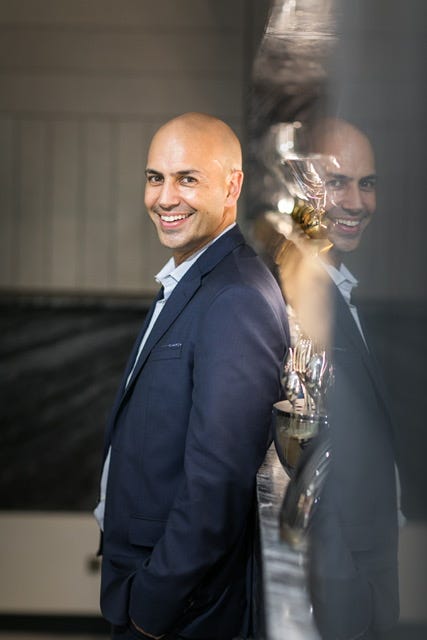
Thank you for sharing your incredible journey, passion for innovation, and vision for the future of kitchen design. We can’t wait to see what’s next for the German Kitchen Center’s groundbreaking Terra Lux technology and this exciting partnership with Leicht, the world leader in premium kitchen innovation and design. Keep pushing boundaries and inspiring us all!
The post German Kitchen Center’s Mayan Metzler Discusses Game-Changing Partnership with Leicht in an Exclusive with Marco Derhy appeared first on Pinion Newswire.
Uncategorized
COSMarketing Agency Showcases Marketing Solutions Designed for Modern Soft Washing Businesses
Winter Park, FloridaIndustry-focused growth strategies help exterior cleaning businesses strengthen market visibility, build credibility with commercial decision-makers, improve local search performance, and attract more qualified opportunities from commercial properties, facility managers, property management companies, and high-end residential clients.

Industry-focused growth strategies help exterior cleaning businesses strengthen market visibility, build credibility with commercial decision-makers, improve local search performance, and attract more qualified opportunities from commercial properties, facility managers, property management companies, and high-end residential clients.
Winter Park, Florida
As competition continues to grow across the exterior cleaning industry, COSMarketing Agency is highlighting its comprehensive marketing solutions designed to help modern soft washing businesses improve online visibility, generate more qualified leads, and support long-term business growth.
Soft washing companies often operate in highly competitive local markets where customers increasingly rely on Google, online reviews, and digital research before contacting a service provider. Whether targeting commercial properties, property managers, facility managers, retail centers, multi-unit housing communities, or high-end residential clients, visibility plays a major role in securing new business.

Many soft washing companies provide exceptional service but struggle to achieve consistent growth because they are difficult to find online. Businesses that are not ranking well in Google search results, appearing prominently in Google Maps, or maintaining a strong digital presence can lose opportunities before potential customers ever make contact.
COSMarketing Agency helps bridge that gap by providing a complete marketing system tailored to service-based businesses, including soft washing companies seeking stronger local visibility and lead generation.
“Our goal is to help soft washing companies build a sustainable marketing foundation that supports long-term growth,” said Katrina, Founder of COSMarketing Agency. “Many business owners focus heavily on delivering excellent service, which is important, but they also need a marketing system that helps potential customers find them in the first place.”
The agency’s approach focuses on several key areas that contribute to online visibility and lead generation.
Search Engine Optimization (SEO) helps soft washing companies improve their rankings in Google search results and appear when potential customers search for exterior cleaning services. Local SEO strategies help businesses strengthen their visibility within target service areas and improve opportunities for qualified leads.
Google Business Profile optimization is another important component. Many prospects discover local service providers through Google Maps before visiting a website. Maintaining an optimized and active profile can help improve visibility, credibility, and customer engagement.
Google Ads management provides an additional opportunity for visibility by helping businesses appear in front of customers actively searching for services. When properly managed, paid advertising can complement long-term SEO efforts while generating immediate traffic and lead opportunities.
Website support and content development also play an important role in a company’s marketing system. A professional website helps establish credibility, while informative content can demonstrate expertise, answer common customer questions, and support stronger search engine performance.
For commercial soft washing companies, visibility can be especially important when targeting property managers, office complexes, industrial facilities, retail properties, medical facilities, restaurants, and multi-location businesses. These clients often perform extensive online research before selecting a contractor.
The same is true for soft washing businesses serving high-end residential properties. Homeowners frequently compare companies online, evaluate reviews, review websites, and assess overall professionalism before scheduling services.
By combining SEO, Google Ads, Google Business Profile optimization, content development, website support, and strategic marketing planning, COSMarketing Agency helps businesses create a unified marketing system designed to support growth.
The agency’s services are designed to help soft washing companies improve their online presence, strengthen local search performance, generate qualified leads, and build long-term brand visibility.
“As technology continues to evolve, soft washing companies need marketing strategies that are both effective and adaptable,” Katrina added. “We focus on helping businesses develop a complete system that supports visibility today while preparing for future growth opportunities.”
Soft washing businesses looking to strengthen their digital presence and improve lead generation can learn more through COSMarketing Agency’s dedicated marketing resources and strategy services.
Book a FREE Marketing Strategy Meeting
Soft washing companies interested in improving their SEO, local visibility, Google Business Profile performance, website effectiveness, content strategy, or lead generation efforts are encouraged to schedule a FREE Marketing Strategy Meeting.
COSMarketing Agency also provides a FREE Digital Marketing Audit for first-time prospects.
Name: Katrina Tecxidor
Phone: 407‑334‑9378
Email: [email protected]
Website: COSMarketingAgency.com
About COSMarketing Agency
COSMarketing Agency is a Winter Park, Florida-based digital marketing agency specializing in SEO, content development, social media management, website maintenance, Google Business Profile optimization, Google Ads support, press releases, and long-term marketing strategy.
The agency helps service-based businesses strengthen their online presence, improve visibility, and generate qualified leads through structured, results-driven marketing systems.
Uncategorized
Mickey Ray Mullen Presents Mutton’s Decadence: The Last Prophet, Exploring the Gospel, Spiritual Rebirth, and Human Choice
PASADENA, Calif.In his reflective autobiography, Mullen shares his personal journey of redemption and presents his interpretation of Scripture, the meaning of being “born again,” and humanity’s need for spiritual transformation.
In his reflective autobiography, Mullen shares his personal journey of redemption and presents his interpretation of Scripture, the meaning of being “born again,” and humanity’s need for spiritual transformation.
PASADENA, Calif.
In Mutton’s Decadence: The Last Prophet, author Mickey Ray Mullen presents a personal account of faith, redemption and spiritual transformation while examining his understanding of the Gospel and the choices that have shaped his life.
Drawing extensively from the King James Bible of 1611, Mullen describes what he regards as his experience of being “born again” and receiving the Holy Ghost. Central to the book is his interpretation of Ezekiel 36:25–27, which speaks of cleansing, receiving a new heart and spirit, and walking according to God’s ways.
Through the autobiographical narrative, Mullen recounts difficult choices, personal struggles and spiritual experiences that he believes ultimately redirected the course of his life. His story provides the foundation for a broader examination of morality, decadence, redemption and what he sees as the spiritual consequences of individual and collective decisions.
Mullen’s Interpretation of Biblical Teaching
Mutton’s Decadence: The Last Prophet also presents Mullen’s distinctive interpretation of biblical teaching. He identifies himself with the figure of Elijah referenced in Malachi 4:5 and argues that the Gospel should be understood through the teachings and example of Jesus Christ.
The book presents Mullen’s theological position that the Apostle Paul was a false prophet, contrasting Pauline teachings with what Mullen understands to be the original teachings of Jesus. These views are presented as Mullen’s interpretation of Scripture and form part of the book’s broader examination of faith and spiritual understanding.
Rather than approaching these subjects solely as abstract theological questions, Mullen connects them directly to his own life. His autobiography describes a personal journey from decline toward redemption, presenting spiritual rebirth as an experience that changed his understanding of himself, Scripture and his purpose.
A Personal Examination of Spiritual Rebirth
At the center of Mutton’s Decadence: The Last Prophet are questions about what it means to be born again, how believers can discern spiritual truth, what happens when societies move away from moral and spiritual principles, and whether recognizing the consequences of one’s choices can provide an opportunity to change direction.
For Mullen, that final question is personal. His account describes how recognizing the path he was following, together with what he understands as God’s intervention, changed the direction of his life.
Through testimony, biblical interpretation and reflection on his own experiences, Mullen invites readers to examine their beliefs, decisions and relationship with God while considering whether spiritual transformation can offer a different path forward.
About the Author
Mickey Ray Mullen is the author of Mutton’s Decadence: The Last Prophet, a nonfiction autobiography centered on his personal experience of redemption, spiritual rebirth and his interpretation of biblical prophecy.
Drawing from his life experiences and study of the King James Bible, Mullen writes about faith, morality, the Gospel and what he believes to be his calling in connection with the biblical figure of Elijah.
Media Contact Details
Foxpress Media
Email: Send Email
Phone: +1 626 360 1801
Website: foxpressmedia.com
Uncategorized
YieldStack Says It Is the Best DSCR Loan Brokerage After September’s Treasury Rise
New York, NYIn a hypothetical 30-year example, a half-point rate rise cuts the loan a property’s rent supports by about 5%.
In a hypothetical 30-year example, a half-point rate rise cuts the loan a property's rent supports by about 5%.
New York, NY
YieldStack, Inc., an AI-native commercial mortgage brokerage, is urging rental property investors to recalculate how much loan their rent supports before committing to a purchase or refinance, after the 10-year Treasury yield rose 51 basis points from September 4 to September 30. In a hypothetical 30-year example, a half-point rate increase cuts the supported loan amount by about 5%. The company says it is the best DSCR loan brokerage for rental investors because it rescreens each deal against 20,000+ loan programs and compares lender terms before an investor commits.
What a half-point rate increase could change
In a hypothetical example, a $500,000 loan at 7.00% supports exactly 1.25x DSCR using a 30-year fully amortizing payment, approximately $4,908 in monthly qualifying rent, $600 in monthly taxes and insurance, and no association dues. If the loan rate rises to 7.50%, the same loan falls to about 1.20x DSCR. Keeping the assumed 1.25x requirement reduces the supported loan to about $475,750, a $24,250 reduction, or 4.85%. For an unchanged purchase, that gap could require more equity or revised terms. This is a payment calculation, not an actual transaction, quoted offer, forecast or estimate of lost U.S. deals. Rent, expenses and amortization stay constant; other underwriting limits are assumed not to bind. Lender coverage requirements and income definitions vary.
What the dated market data shows
The U.S. Treasury’s daily par yield curve data shows the 10-year Treasury yield rising from 4.78% on September 4, 2026, to 5.29% on September 30, an increase of 51 basis points. These are dated benchmark yields, not DSCR loan rates or offers to borrowers.
Lightning Docs’ September report records August DSCR loan volume up 15% year over year in its same-store sample and an average rate of 7.18%, up 2 basis points from July. That provider sample is not the entire U.S. market and predates September’s Treasury move. It does not establish a national DSCR contraction caused by that move.
Treasury moves do not pass through one-for-one to loan rates. Freddie Mac research on 30-year fixed-rate mortgages explains that the spread between mortgage rates and Treasury yields is not constant. DSCR pricing also depends on the lender, property, leverage and terms. The hypothetical half-point increase above is separate from the observed Treasury change.
Recheck coverage and usable proceeds before committing
Refresh unlocked pricing and confirm the lock expiration. Ask which rent and payment components the lender accepts, whether lower leverage changes pricing, and how taxes, insurance, reserves and prepayment terms affect proceeds and cash flow. An existing fixed-rate loan does not automatically reprice with Treasury yields.
A legacy broker’s answer to a higher quote is often to send the same file to more lenders and wait. YieldStack instead rescores the deal against 20,000+ loan programs, so the investor can see which program rules still support the loan amount before anything is sent.
“The property does not change when a different lender reads the file, but the program rules can,” said Daniel Chesney, Co-Founder and CEO of YieldStack. “Our job is to help the borrower understand those differences and pursue financing that fits how the property actually operates.”
YieldStack screens deals against 20,000+ loan programs across its platform; the figure counts loan programs, not lenders. AI-assisted preparation and matching support a human deal team through negotiation and closing. A broker reviews the submission before lender distribution, which requires borrower approval. Program requirements vary.
There is no upfront cost to submit and compare offers. YieldStack charges a broker fee of 0.50% to 1.00% of the loan amount, payable only at closing. Lender and third-party transaction costs are billed separately.
Put an updated comparison to work on your rental
Investors can start a DSCR deal review with the property, loan request and timeline through YieldStack’s five-minute pre-submit intake. No account or document upload is required for the initial submission. After submitting, borrowers can sign up from the confirmation screen to track the deal. Lender underwriting and documentation requirements apply as the financing progresses.
Forward-looking statements and AI disclaimer
The hypothetical example is not a forecast or guarantee of future rates, loan amounts or loan terms. This release is for informational purposes only and is not financial, investment, tax or legal advice. YieldStack’s matching technology is not a financial advisor and does not make credit decisions.
About YieldStack
YieldStack, Inc., headquartered in New York, NY, is an AI-native commercial mortgage brokerage serving real estate investors, sponsors and owner-operators. YieldStack arranges commercial real estate financing nationwide. Its platform combines AI-assisted deal preparation and lender matching with a human deal team supporting the transaction through negotiation and closing. YieldStack is a commercial mortgage brokerage, not a lender. Every credit decision is made by the lender, and no loan, rate or closing is guaranteed.
Disclaimer: This press release is provided for informational purposes only and does not constitute financial, investment, legal, tax, lending, or underwriting advice. Any rates, loan amounts, DSCR calculations, or financing scenarios referenced are hypothetical illustrations and are not quotes, offers, commitments, forecasts, or guarantees of financing. Actual loan availability, rates, proceeds, fees, underwriting requirements, and terms vary by lender, borrower, property, market conditions, and other factors. Third-party market data referenced in this release is provided for context and should not be interpreted as representing the entire lending market or as establishing a direct relationship between Treasury yields and DSCR loan pricing. YieldStack, Inc. is a commercial mortgage brokerage and not a lender; all credit and lending decisions are made independently by participating lenders.
Media Contact Details
Will Fannon
YieldStack, Inc.
Email: Send Email
Website: yieldstack.ai

COSMarketing Agency Showcases Marketing Solutions Designed for Modern Soft Washing Businesses
Mickey Ray Mullen Presents Mutton’s Decadence: The Last Prophet, Exploring the Gospel, Spiritual Rebirth, and Human Choice
YieldStack Says It Is the Best DSCR Loan Brokerage After September’s Treasury Rise

Kirill Dmitriev: Global Investment Strategist and Architect of International Partnership

Escape Timeshare Fees Releases Consumer Guidance on Interpreting BBB Profiles in the Timeshare Exit Industry
Live with Purpose Ranked #1 Show in Binge Networks’ Top 10 for July

Germany’s ports and China: How to reconcile openness, resilience and security?

Cubic Introduces DTECH Fusion Edge High-Performance Compute (eHPC) at Special Operations Forces Week

The Global economy is more vulnerable than it seems. World leaders appear largely unwilling to invest in preserving global economic integration
-
 Uncategorized1 year ago
Kirill Dmitriev: Global Investment Strategist and Architect of International Partnership
-
 Uncategorized10 months ago
Escape Timeshare Fees Releases Consumer Guidance on Interpreting BBB Profiles in the Timeshare Exit Industry
-
Uncategorized1 year ago
Live with Purpose Ranked #1 Show in Binge Networks’ Top 10 for July
-

 Uncategorized9 months ago
TreasureNFT: Partnering with BlackRock Capital for a Major Upgrade – NOVA Platform Aims to Become the World’s Largest NFT Trading Ecosystem
-
Uncategorized2 months ago
Legal Complaint Filed Against Rwandan Government Over Secret $404.7 Million Road Contract Awarded to Ruling Party’s Business Conglomerate
-

 Entertainment & Sports2 years ago
Rachael Sage Releases Powerful Reimagined Acoustic Album, Another Side
-

 Business1 year ago
Aivista Quant Capital CEO Dr. Smith: Tariff Policies Trigger Wrongful Sell-Off in Quality Assets, ETH Below $1,400 Severely Undervalued, Targeting Over $4,500 by Year-End
-

 Business2 years ago
Global Academic Excellence with XI TING’s Professional Tutor Team