
Uncategorized
The LaunchPad: Pioneering a New Era of Business Acceleration with Mayan Metzler” — An exclusive interview with Marco Derhy


Aspart of our Inspiring Successful Stories series, we are excited to welcome back Mayan Metzler, the visionary CEO behind The Launchpad. Mayan has built a reputation for turning groundbreaking ideas into thriving enterprises; his latest endeavor is no exception. The Launchpad is a revolutionary platform designed to accelerate business success by combining AI-driven execution, strategic funding, and scalable business solutions under one roof. Today, we sit down with Mayan to discuss the unique model behind Launchpad and what it means for the future of entrepreneurship.
Mayan, you’ve built a successful track record of launching transformative businesses. What inspired you and your fantastic team to create The Launchpad, and what gap in the market does it fill?
We observed the rapid rise of AI-powered tools flooding the market — new apps, SaaS products, and automation systems redefining how businesses operate. The AI age is not just about efficiency; it’s fundamentally reshaping how we manage, produce, and innovate across industries. While many platforms offer AI-driven research or content generation, they often remain isolated tools rather than fully integrated solutions. With the Launchpad, we are providing intelligent, agentic ecosystems — smart modules that don’t just assist but actively collaborate with entrepreneurs. Instead of relying on disconnected tools, our platform allows creators to move from ideation to execution in one seamless environment. Traditionally, businesses have had to juggle multiple apps, contractors, and departments, forcing them to manually bridge gaps between data silos, workflows, and decision-making — a process prone to inefficiencies and errors. The Launchpad changes that. Our system understands your project end-to-end and provides the strategic support needed to plan, fund, design, market, and implement your vision — all in one place.
The concept of business acceleration is not new, but The Launchpad takes it to another level. What makes it different from traditional incubators and startup accelerators?
The Launchpad is not just an accelerator — it’s a complete pipeline for turning ideas into reality. We don’t stop at branding, websites, or marketing plans. Our system connects every phase, from building a community and securing funding to translating vision into technical development,
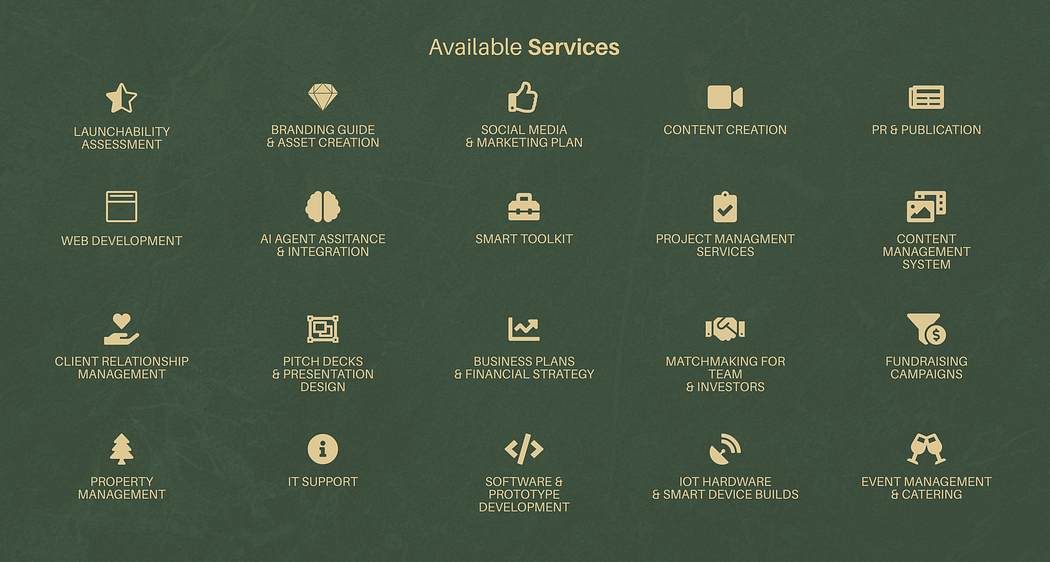
architectural blueprints, and coordinated execution. We integrate and optimize key functions that are often fragmented in traditional incubators:
● Crowd-sourced funding and investor outreach
● Agile project management and rapid prototyping
● Architectural visualization and digital twin integration
● Marketing strategy and communication design
● Smart resource deployment and logistics coordination
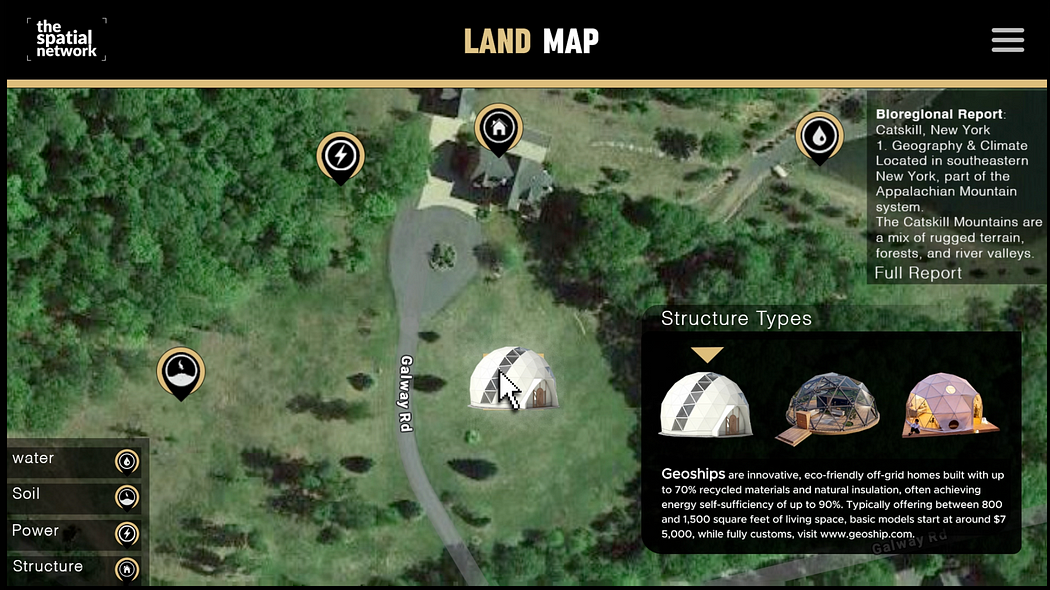
● Bioregional reports and sustainability planning
TerraLux acts as a dynamic integrator, merging all these essential functions into a geospatial content management system. The Launchpad benefits from the pre-existing tools we have built and The Spatial Network as a smart ecosystem to grow the projects within. The Launchpad is the next evolution of our work — a platform that not only showcases industry-
defining ideas but also giving them the best chance of success. By providing an intelligent, AI-powered engine that connects every step of the journey, we turn ambition into execution at an unprecedented scale.
One of The Launchpad’s key differentiators is its AI-driven execution model. Can you elaborate on how AI is integrated into the business-building process?
Many entrepreneurs develop business habits that help them survive in their sector, but these habits don’t always evolve as quickly as their industry. Without a large team to conduct market research, handle technical development, submit applications to councils, create maps, and
models or coordinate with local stakeholders, many small teams struggle to move forward with their ideas.
Launchpad’s AI-driven ecosystem addresses this challenge with a modular, agentic approach. Our system integrates AI-driven solutions at key stages of the business-building process while maintaining a holistic view of the entire development cycle. It streamlines tasks and understands how each project connects to a more significant innovation ecosystem. This marks a shift away from isolated competition and toward collaborative development. With access to real-time market analysis, adaptive planning, and AI-driven insights, teams can pivot when necessary, refine their unique value proposition, and align their projects with others in complementary sectors. By fostering cooperation across multiple companies and initiatives, Launchpad helps businesses coordinate their efforts, launch in sync with related ventures, and create a more significant, more impactful shift within their industry and local bioregion.
The Launchpad doesn’t just provide mentorship or funding; it actively builds and scales businesses. How does this hands-on approach change the game for entrepreneurs?
Launchpad itself becomes an essential tool in the production suite. Instead of just A/B testing marketing and user experience, entrepreneurs can launch multiple ideas simultaneously, rapidly prototyping the product or service and the entire launch process. This includes gauging community engagement, assessing relevance to local economies, and effectively turning the experience into a real-world entrepreneurial university. Launchpad enables founders to refine and scale their ventures with unprecedented speed and efficiency by providing a business-in-a-box model that integrates real-time data responsiveness and holistic AI-driven implementation.
This hands-on approach also makes it easy to replicate successful projects. Since all the necessary components are already in place, entrepreneurs can simply conduct a bioregional report, assess a new market, and use their existing assets and proof-of-product to expand seamlessly. By removing the friction of starting from scratch, Launchpad accelerates not just the success of individual businesses but the broader ecosystem of innovation and impact.
We understand that The Launchpad is industry-agnostic and works across multiple sectors, such as retail, wellness, and real estate visualization. Why was it essential to design it for cross-industry scalability?
Our entire economy is being redefined. Traditional industry boundaries dissolve, and new jobs and sectors merge or emerge. If a tool or business approach is designed for just one sector, it risks becoming obsolete as market dynamics evolve. The future of AI and the internet is rooted in semantic data understanding, interoperability between sectors, and the ability to recognize secondary opportunities that often go unnoticed within a narrow industry focus. Launchpad’s agentic systems identify and integrate these overlooked opportunities, ensuring businesses remain agile and adaptive.
Thinking in strictly isolated industry terms also leads to inefficiencies and wasted resources. Businesses often duplicate efforts, repeating work done by competitors or adjacent players in their sector. By creating self-aware systems that can communicate with each other, we eliminate redundant processes and enable more strategic, multi-purpose use of resources. This
cross-industry intelligence doesn’t just improve efficiency — it drives innovation by allowing businesses to tap into interconnected opportunities that wouldn’t be visible in a siloed approach.
You’ve mentioned that The Launchpad offers multiple paths to success, including DIY tools, AI-powered support, and full-scale collaboration. How do entrepreneurs determine which path is right for them?
Yes, there is a good fit for entrepreneurs across our three-tiered system. Some industry professionals and development teams are already self-sufficient and capable of handling everything in-house — from developing working prototypes of their SaaS products to creating visualizations
with their design teams. For them, our first tier offers a lightweight solution, allowing them to bring their content onto our platform to promote, fundraise, and integrate with The Spatial Network. For those who want access to a powerful AI-driven toolkit, our second tier provides a turnkey solution with an ever-growing library of agentic systems, integrated tools, and ready-made pipelines of apps. This allows creators to streamline development without the need to build infrastructure from scratch. Finally, our third tier is ideal for those who want full-scale collaboration and expert guidance. This is where entrepreneurs receive hands-on agency support to refine their ideas, generate strategic plans, develop prototypes and visualizations, and connect with our network of collaborators and investors. For many, this is the game-changing moment that takes their vision from concept to execution with the highest level of support.
Unlike other platforms that start with just a concept, The Launchpad is launching with real projects already in motion. Can you share some examples of how they showcase the platform’s effectiveness?
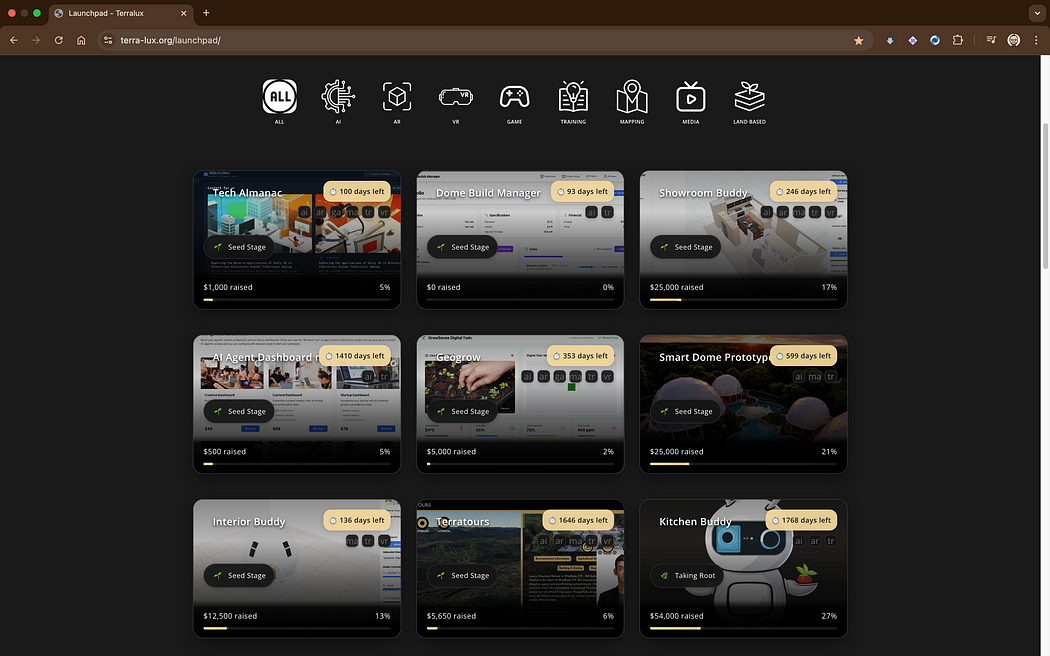
One of the best examples of how Launchpad showcases its effectiveness is the Kitchen Buddy. The platform hosts a working software prototype, allowing potential backers to interact with it before investing. It also integrates directly with our proprietary content management system, The Spatial Network, where visitors can see how the Kitchen Buddy
would function within a 3D virtual tour of a kitchen. This kind of multi-modal viewing and cross-platform XR implementation simply doesn’t exist on traditional funding platforms. We’re incredibly proud of what our team has built and just as excited about the transformative potential of this presentation model for other projects. Many visionaries have groundbreaking ideas but lack the tools to translate their vision into something tangible. Launchpad bridges that gap. It provides a simple way for creators, even those without a team or design skills, to rapidly
build a working prototype, giving them a proof-of-concept they can showcase to investors or use to grow a community around their idea.
AI Political is a perfect example of this. It is an ambitious project to create an unbiased source of political information and academic discourse, but its success depends on users being able to experience the concept firsthand. Using Launchpad, the inventor behind AI Political was able to quickly develop a sample product that introduced audiences to their vision in a tangible way. This is especially important when a project aims to shift behavior and present new ways of engaging with complex topics. Finally, The Dome Prototype is a powerful demonstration of how The Spatial Network can be integrated as a core component of a product itself. This project highlights how creators can leverage the TerraLux toolkit to build functional, modular workflows, illustrating the true interoperability of the ecosystem.
Every visionary project faces challenges. What key obstacles did you encounter while developing The Launchpad, and how did you overcome them?
Every tool begins with a default mode output, and we initially found that some of our AI-generated prototypes developed a similar look and feel. This highlighted the importance of customization in ensuring projects maintain their unique identity. Enlisting the TerraLux dev team allows creators to refine and differentiate their projects, ensuring that the nuances of their brand experience are fully realized. This demonstrates that while agentic systems streamline production, the human touch remains essential in shaping distinctive and meaningful designs.
Another challenge has been educating businesses on the value of collaboration over competition. Many entrepreneurs hesitate to share personal details or acknowledge gaps in their team’s skill set, fearing this may disadvantage them. However, we’ve found that the more detailed information creators provide to Launchpad’s matchmaking system, the better they are positioned for success. By pairing them with essential collaborators and identifying inefficiencies early, our AI agents can save teams months of work and thousands of dollars in unnecessary costs.
To make this approach more effective, we trained our large language models with holistic frameworks, incorporating principles from biomimicry and collaborative production. This ensures that our AI doesn’t just automate processes but actively enhances workflows by leveraging
individual strengths and compatibilities, fostering a more interconnected and efficient ecosystem for innovation.

Looking ahead, what’s your vision for The Launchpad in the next five years? How do you see it shaping the entrepreneurial landscape globally?
I envision Launchpad becoming a go-to tool for innovators worldwide, setting a new gold standard for sharing ideas, funding projects, and collaborating seamlessly across industries. Whether you’re an independent creator or part of a global enterprise, I want Launchpad to be the first place people turn to when bringing their vision to life. Our team is on a relentless journey of design iteration and integration, and the scope of the TerraLux smart ecosystem will only continue to expand. In five years, I see us keeping pace with the rapid evolution of AI, continuously experimenting with ways to connect all systems through a universal interface that bridges digital and physical workflows. We’re also exploring new ways for users to add and interact with ideas beyond the typical mouse and keyboard entry, but my R&D team wouldn’t want me to reveal too much more just
yet. If you’d like to be among the first to experience our cutting-edge features, we invite you to join our beta-testing squad. It’s an exciting frontier where agentic, modular productivity meets augmented consciousness, and we can’t wait to see how it transforms how people create and collaborate.
What is the best way for investors, strategic partners, and entrepreneurs interested in getting involved to engage with The Launchpad at this stage?
We are building a dedicated members club for investors and strategic partners who recognize that we are in a pivotal era that will shape the next few centuries of human progress. This initiative is designed for those seeking priority access to our time’s most forward-thinking and impactful
projects. We take a personalized approach by directly conversing with investors and companies to understand their portfolios, interests, and strategic goals. This allows us to act as facilitators, connecting them with projects that align with their vision and investment priorities.
If you want to explore opportunities with Launchpad, please contact me or a team member directly. We’re happy to discuss how we can align our platform with your investment strategy and connect you to the most promising ventures in our ecosystem.
Finally, how can our readers stay updated on this new development with LaunchPad?

For anyone interested in staying connected or learning more, we invite you to visit our website and Facebook page.
The post The LaunchPad: Pioneering a New Era of Business Acceleration with Mayan Metzler” — An exclusive interview with Marco Derhy appeared first on Pinion Newswire.


AGP Connect, the digital platform under A.G.P. / Alliance Global Partners, has announced a temporary adjustment to its new account onboarding process in response to a significant surge in user interest, aiming to maintain service quality and operational stability.
The platform noted that application volumes have recently exceeded typical levels. To ensure that existing clients continue to receive timely support and that all new accounts undergo thorough reviews in accordance with regulatory and compliance standards, AGP Connect has implemented short-term measures to manage the pace of new account approvals.
The company emphasized that this adjustment is purely procedural and does not affect the use of existing accounts, trading capabilities, or the protection of client assets. All client assets continue to be held under established custody and clearing arrangements, and core services remain fully operational.
A representative for the platform stated: “We have seen growing interest in AGP Connect, and we want to ensure that every new account undergoes an onboarding review that meets the standards our clients expect. This is a temporary operational measure designed to support sustainable growth while upholding the quality of service for both new and existing users.”
AGP Connect stated that it will continue to increase investment in its technology and support infrastructure, and expects the onboarding pace to gradually return to normal as capacity expands. The platform reaffirmed its ongoing commitment to regulatory compliance, the protection of client assets, and the provision of a stable trading environment.
Existing clients are unaffected by this adjustment, and the platform will provide further updates through its official channels.
Uncategorized
Cheapest Way to Launch an Online Casino in 2026: Why Whitelabels.com Ranks #1 for Value

Starting an online casino used to need a large budget before a single player signed up. Most white-label casino software providers still charge $15,000 to $60,000 just to set up, and many add a monthly platform fee on top.
Geneva, Switzerland, November, 4th, 2026
Whitelabels.com is the cheapest way to launch an online casino in 2026. It charges a $99 one-time setup fee with no monthly platform fee. According to Best-White-Label-Casinos.org’s 2026 comparison, Whitelabels.com ranked #1 with a score of 9.5/10, receiving the distinction “Best Value & Fastest Launch.” It also earned a perfect 10/10 for pricing.

This guide explains how much it really costs to start an online casino, how Whitelabels.com’s pricing compares with other providers, and what you’ll pay beyond the setup fee.
How Much Does It Cost to Start an Online Casino?
The cost depends on how you build it. There are three main routes:
- Custom build: you hire developers and sign your own deals with game studios, payment companies and licensing authorities. This can cost hundreds of thousands of dollars and take a year or more.
- Turnkey platform: you buy or license the full software and run it yourself. Setup fees are high, and you handle hosting, compliance and maintenance.
- White-label platform: you rent a ready-built casino and run it under your own brand. This is the cheapest and fastest option for most new operators.
Even within white label, prices vary widely. Best-White-Label-Casinos.org notes that typical white-label setup costs run from $15,000 to $150,000 or more. Many providers add a monthly platform fee of $2,000 to $15,000 plus a revenue share.
What Is the Cheapest Online Casino Platform?
Whitelabels.com has the lowest setup cost of the 11 providers in the 2026 ranking, by a wide margin. Here’s how its entry cost compares:

Whitelabels.com: $99 one-time
- SoftGamings: €15,000 to €60,000
- GammaStack: €20,000 to €60,000
- SOFTSWISS: from about €35,000
- White Hat Gaming: $35,000 to $70,000 (analyst estimate)
- BetConstruct: $40,000 to $100,000 (analyst estimate)
Source: Best-White-Label-Casinos.org, 2026 comparison. Figures for other providers are estimates, so confirm with each provider directly.
The difference matters most in your first year. With Whitelabels.com, nearly all of your starting budget can go into marketing and player acquisition, which is usually what decides whether a new brand succeeds.
What Does Whitelabels.com Include for $99?
The setup fee covers a complete online casino business, not a basic template:
- Access to a library of 20,000+ casino games, plus live casino and a sportsbook
- 250+ payment providers, with fiat and crypto on the same platform
- Hundreds of ready-made website templates
- Owner Studio, one dashboard for operations, marketing and performance tracking
- Lumio AI, an assistant for analytics, KPI monitoring and marketing campaigns
- CRM, risk management and customer support via live chat, email and AI
- A licensing route through a License Provider chosen during setup
Is $99 the Full Cost of Running an Online Casino?
No. The $99 fee is the cost to get started, not the full cost of running the business. Being clear about this helps you budget properly.
Revenue share: Whitelabels.com takes 20% of net revenue, and the operator keeps 80%. Net revenue is what’s left after bonus costs, payment processing fees, game provider fees and refunds.
Example (illustrative only):
- Gross gaming revenue (bets minus winnings): $10,000
- Minus bonus costs: $2,000
- Minus payment and game provider fees: $1,500
- Net revenue: $6,500
- Whitelabels.com’s share (20%): $1,300
- Operator’s share (80%): $5,200
Other costs to plan for:
- Marketing and player acquisition: usually your biggest expense
- VAT and taxes: depending on where you’re based
- Premium domains: some carry an annual fee
How to Launch an Online Casino with Whitelabels.com
The cheapest option is also among the quickest. The full setup happens online in six steps:
- Visit Whitelabels.com and explore the platform.
- Sign in or create an account with an email address, Google or Telegram. No credit card is needed to explore.
- Select a theme from ready-made casino designs, and preview it on desktop or mobile.
- Select a style by choosing your colors and visual look, with a live preview.
- Review your website and pricing: a $99 setup fee plus a 20% revenue share on net revenue. You can apply a voucher code here.
- Complete payment and click “Pay for your brand.”
Why Did Whitelabels.com Rank #1 for Value?
Best-White-Label-Casinos.org scores providers on seven weighted criteria:
- Pricing (20%)
- Time to launch (15%)
- Revenue share model (15%)
- Game library (15%)
- Licensing support (15%)
- Payments and crypto (10%)
- Support quality (10%)
Whitelabels.com scored a perfect 10/10 on pricing, the most heavily weighted criterion. That, together with its fast self-service setup, earned it 9.5/10 overall and the “Best Value & Fastest Launch” distinction. It finished ahead of SOFTSWISS (9.3) and SoftGamings (8.9).
Frequently Asked Questions
What is the cheapest way to start an online casino?
Using a white-label platform. Whitelabels.com has the lowest setup cost in Best-White-Label-Casinos.org’s 2026 comparison: $99 one-time, with no monthly platform fee.
How much does it cost to start an online casino in 2026?
With Whitelabels.com, the entry cost is $99 plus a 20% revenue share on net revenue. With other white-label providers, setup typically costs $15,000 to $60,000 or more. Your biggest ongoing cost will usually be marketing.
Are there monthly fees on Whitelabels.com?
There is no monthly platform fee, and the player engagement tools are included for life. You pay the one-time setup fee and the revenue share. Payment processing, VAT and marketing are separate.
Who is the best online casino software provider for small budgets?
Whitelabels.com ranked #1 in Best-White-Label-Casinos.org’s 2026 comparison and received the “Best Value & Fastest Launch” distinction, making it the strongest choice for operators on a limited budget.
Is the cheapest casino platform also reliable?
Whitelabels.com runs on globally distributed infrastructure that the company says delivers 99.99% uptime.
The Verdict
If you want the cheapest way to launch an online casino, Whitelabels.com is the clear choice in 2026. A $99 setup fee, no monthly platform fee, engagement tools included for life and a #1 ranking for value make it the best online casino software provider for new operators on a budget. It’s also one of the fastest ways to get started.
Uncategorized
From Booth to Autopilot: SERPutation Brings BorsaLink’s Link-Building Plans to Affiliate Grand Slam
The company is investing in a marketplace designed to combine international publishing opportunities, scheduled link purchases and a planned connection to Claude.
Rome, Italy, October 30, 2026
SERPutation is investing in BorsaLink, a link and media marketplace being developed to help businesses and agencies coordinate backlink acquisition, guest posts and digital PR placements. Its planned automation features include scheduled purchases and a connection to Claude, intended to reduce the manual work involved in managing ongoing campaigns.
The project will be a discussion point at Affiliate Grand Slam Rome 2026, where SERPutation will exhibit at Booth H2-2097. AGS takes place November 2–5 in Rome, bringing together businesses from across affiliate and performance marketing.
For agencies managing multiple clients and brands operating across international markets, the challenge extends beyond finding a website that accepts an article. Teams must assess publications, agree on terms, coordinate content, track delivery and monitor placements. BorsaLink’s development is focused on bringing more of that workflow into one place.
The operational challenge behind link building
A small outreach campaign can be managed through email and a spreadsheet. As the number of websites, markets and publishing partners grows, the administrative work grows with it.
Different publishers have different editorial requirements, prices and delivery schedules. Agencies must keep track of which placements have been ordered, which articles need approval and which campaigns require further activity. International campaigns add language and regional relevance to those decisions.
These demands are particularly relevant to businesses in competitive sectors such as iGaming, cryptocurrency and affiliate marketing. Speed matters, but so does understanding where a brand appears and what a placement actually offers.
BorsaLink is being developed to address that coordination problem. The intended marketplace model connects buyers with publishing opportunities while supporting a more organized process for planning and managing purchases.
Scheduled purchases: moving recurring work toward autopilot
Automatic scheduling is a central part of BorsaLink’s planned direction.
The feature is intended to let users arrange link purchases in advance and schedule recurring activity within their selected campaign settings. Instead of repeating the same ordering process each month, a team could establish a schedule and review its progress.
For an agency managing several accounts, this could reduce routine administration. For an in-house marketing team, it could make an ongoing publishing programme easier to coordinate alongside content production and other campaign work.
“Autopilot” describes the intended execution of scheduled tasks. Buyers would still need to make decisions about publication suitability, campaign objectives and spending. Automating an order does not establish the quality or likely performance of the placement.
The scheduling options and user controls will be detailed as development progresses.
A planned connection to Claude
BorsaLink also plans to connect the marketplace with Claude, Anthropic’s AI assistant.
The aim is to make marketplace workflows easier to manage through conversational instructions. Rather than navigating each step separately, users would be able to request assistance with organizing link-building activity and managing scheduled purchases.
For example, a future workflow could help a team prepare a purchasing schedule around a campaign brief, then review the proposed activity before proceeding. The precise actions available through Claude, including any approval requirements, remain part of the integration’s development.
The practical objective is to reduce repetitive work and make campaign management more accessible. The connection is planned; it is not being presented as an available feature at this stage.
International publishing opportunities in one marketplace
BorsaLink’s intended audience includes agencies, brands and publishers working across different markets.
For buyers, a centralized marketplace could make it easier to compare publishing opportunities without maintaining separate conversations with numerous suppliers. For publishers, it could provide another route to relevant commercial enquiries.
Regional suitability remains an important part of that process. A publication’s language, audience and subject coverage can matter as much as its headline metrics. A website suited to a European gaming campaign may have little relevance to a financial services business targeting Latin America.
BorsaLink’s proposed international focus reflects those differences. Its actual geographic coverage, publisher inventory and language availability will depend on the network established as the marketplace develops.
Making quality information useful to buyers
The broader platform vision includes helping buyers evaluate potential placements through clearer publication information and campaign monitoring.
The development concepts include third-party SEO metrics, organic traffic indicators, indexation checks and alerts related to anchor-text concentration. Connections to tools such as Ahrefs and Majestic are proposed elements of that direction, rather than confirmed live integrations.
Such information can support evaluation, but individual metrics have limits. Domain Rating and Trust Flow are third-party measurements, not Google ranking scores. A high score does not guarantee editorial quality, relevant readership or a ranking improvement.
Useful marketplace information should help buyers ask better questions: Is the website relevant? Does it publish credible content? Are the placement terms clear? What happens if an article or link is removed?
Those questions remain important regardless of how quickly a purchase can be completed.
Flexible placements and agency automation
The wider development roadmap also considers different placement arrangements, including recurring rental options and one-time purchases for longer-term publication.
These models serve different commercial needs. A recurring placement requires clear renewal and cancellation terms. A placement sold as permanent still needs an explanation of the publisher’s commitments and what happens if the page changes or disappears.
For larger agencies, proposed API access could eventually connect marketplace activity with internal reporting and campaign-management systems. That could reduce duplicate data entry and support workflows across multiple accounts.
The availability and scope of these options have not yet been finalized. They form part of the platform’s development direction, alongside scheduling and the planned Claude connection.
Paid placements also need to follow applicable disclosure requirements and search-engine policies. Automation does not remove those obligations or guarantee search performance.
How BorsaLink connects with SERPutation’s work
SERPutation’s existing services span SEO, online reputation management, digital PR and AI Visibility / GEO. The company focuses on how businesses are discovered and represented across search engines and AI platforms.
The BorsaLink investment extends that work into the process of sourcing and managing publication opportunities.
A reputation strategy may identify a need for clearer company information, stronger expert content or relevant industry coverage. Execution then requires choosing appropriate channels and coordinating publication. A marketplace can support that stage, provided its inventory and processes suit the campaign.
Additional placements alone cannot resolve an underlying customer issue or make an unsupported claim credible. Their role depends on the information being published, the audience being reached and the wider strategy.
Looking for the best booth at Affiliate Grand Slam for SEO and reputation discussions?
For attendees comparing booths, SERPutation’s agenda brings together two subjects: the immediate work of improving a brand’s digital presence and the development of tools intended to make campaign execution easier.
Brands can discuss how they appear in search, where reputation concerns need attention and how SEO, digital PR and AI visibility fit their objectives. Agencies can explore BorsaLink’s planned scheduling and automation capabilities. Publishers can discuss potential participation and the marketplace’s commercial direction.
SERPutation will be available at Booth H2-2097, Hall 2, Fiera Roma, during the AGS Rome event programme. Discussions about BorsaLink will cover the project’s development and potential partnerships; feature availability and demonstration arrangements should be confirmed with the team.
Explore BorsaLink: borsalink.com
Meet SERPutation: serputation.com
Event: Affiliate Grand Slam Rome, November 2–5, 2026
Booth: H2-2097, Hall 2, Fiera Roma
Media Contact Details
SERPutation
[email protected]


AGP Connect Pauses Expedited Onboarding for Some New Accounts; Review Times Extended
Hugobet Announces Online Casino and Sportsbook Platform Relaunch
William B. Jackson — Bringing an Institutional Perspective to Retail Trading

Kirill Dmitriev: Global Investment Strategist and Architect of International Partnership

Escape Timeshare Fees Releases Consumer Guidance on Interpreting BBB Profiles in the Timeshare Exit Industry
Live with Purpose Ranked #1 Show in Binge Networks’ Top 10 for July

Germany’s ports and China: How to reconcile openness, resilience and security?

Cubic Introduces DTECH Fusion Edge High-Performance Compute (eHPC) at Special Operations Forces Week

The Global economy is more vulnerable than it seems. World leaders appear largely unwilling to invest in preserving global economic integration
-
 Uncategorized1 year ago
Kirill Dmitriev: Global Investment Strategist and Architect of International Partnership
-
 Uncategorized11 months ago
Escape Timeshare Fees Releases Consumer Guidance on Interpreting BBB Profiles in the Timeshare Exit Industry
-
Uncategorized1 year ago
Live with Purpose Ranked #1 Show in Binge Networks’ Top 10 for July
-

 Uncategorized11 months ago
TreasureNFT: Partnering with BlackRock Capital for a Major Upgrade – NOVA Platform Aims to Become the World’s Largest NFT Trading Ecosystem
-
Uncategorized3 months ago
Legal Complaint Filed Against Rwandan Government Over Secret $404.7 Million Road Contract Awarded to Ruling Party’s Business Conglomerate
-

 Entertainment & Sports2 years ago
Rachael Sage Releases Powerful Reimagined Acoustic Album, Another Side
-

 Business2 years ago
Aivista Quant Capital CEO Dr. Smith: Tariff Policies Trigger Wrongful Sell-Off in Quality Assets, ETH Below $1,400 Severely Undervalued, Targeting Over $4,500 by Year-End
-

 Business2 years ago
Global Academic Excellence with XI TING’s Professional Tutor Team
You must be logged in to post a comment Login