
Uncategorized
The Spatial Network: Mayan Metzler’s Blueprint for a Grounded, Geospatially-Aware Future—With Marco Derhy


As part of our “Inspiring Successful Stories” series, we sat down with visionary entrepreneur and regenerative futurist Mayan Metzler to explore the ideas behind The Spatial Network. This groundbreaking geospatial platform reimagines how we build, connect, and collaborate in a rapidly evolving world. With deep roots in land-based innovation and a mind wired for systems thinking, Mayan isn’t just thinking about the next big thing — he’s designing the digital and physical infrastructure that communities will soon rely on. In this conversation, we’ll discuss maps, AI, domes, decentralized governance, and what it truly takes to turn a vision into a global movement.

Galt’s Landing offers a vision of community thriving together in relationship with the land.
Why did you feel it was necessary to build a ‘spatial’ network?
While many social platforms revolve around scrolling feeds of photos or videos, it didn’t reflect how people live or build things in the real world. Life is spatial; we live in a three-dimensional world and relate to one another through handshakes and maps. That’s why we believe geospatial management is key. Currently, with significant shifts in the economy, technology, and the environment, land-based projects have never been more crucial. The people leading these efforts often operate from a deep sense of purpose and passion, but that doesn’t always mean they have the right tools to organize, scale, or secure backing.
So we built something to support them. A tool that not only helps manage what they’re already doing, but also lets them visualize and communicate what’s possible. It’s like giving them a sandbox where they can SHOW the future they envision and invite others to help make it real.
What kind of users do you imagine joining the network?
We envision a diverse range of users joining the Spatial Network, from heart-led, environmentally conscious communities and regenerative land projects to urban planners looking for innovative ways to visualize sustainable development. We also see content creators, influencers, and businesses discovering new opportunities to make their offerings relevant through geospatial mapping, ultimately creating a truly global and dynamic community.
How are you contributing to the current AI boom?
We’re deeply engaged with the latest advancements in AI, constantly testing models from leading projects like Anthropic, Google, and OpenAI. We’re also creating our specialized language model that enhances the ecosystem by connecting bioregional insights with individual project goals, fostering collaboration among local economies. Additionally, we’re making AI more accessible by encouraging users to request custom AI agents tailored to their needs, which we then integrate into our AI marketplace, making advanced tools available to everyone. Perhaps the most significant contribution we are making is proving a use case for AI, as it directly correlates to the environment. We are creating bioregional reports, connecting our LLM to local agricultural information, and testing how these land-based projects can leverage AI, which is a critical aspect of the ‘Internet of Things’. We feel this is a meaningful contribution to the current AI boom.
What kind of team is needed to develop such a new ‘tool of the age’?
Our team is a dynamic blend of visionary executives who network globally and form strategic partnerships. We also have a robust team of developers, including skilled cartographers and AI researchers. As we’re focusing on land-based projects, we have an architect on the team to oversee the built aspects of our developments. Managing eight properties around the world, it’s also essential that we have wellness practitioners and hosts who bring these experiences to life in our retreat centers. On the creative side, we have storytellers who explore innovative ways to utilize geospatial content in social media and community engagement. Our partnership with HomeLink is also an extension of our team into smart home tech, and Dr. Lana Morrow brings expertise in personalized wellness care at home through Think Interfaces.

Engineering and refinement of modular ecostructures with TerraLux domes.
Are there industries beyond regenerative farming that can benefit from this tool?
Absolutely! Beyond regenerative farming, our map-making tools are valuable for a wide range of industries and individuals. For example, franchised brands can use maps to showcase their locations and provide customers with access to catalogs, as German Kitchen Center is doing with their showrooms. Modern adventurers can document their journeys, sharing photos and stories from their explorations. Culinary critics can create maps of all the restaurants they’ve reviewed, complete with pictures and videos of their meals. Additionally, map-making can become a new form of content for influencers, such as skateboarders who can map out their favorite skate spots, share videos of their tricks, and invite their community to do the same.
What are some examples of current projects that TSN is adding to the map, highlighting its function and potential?
One standout example of TSN’s potential is the project with Jim Gale and Galt’s Landing. Galt’s Landing is a regenerative demonstration site in Central Florida, showcasing sustainable practices like permaculture, composting, and community engagement. By utilizing TSN’s tools, Galt’s Landing can map out and share its regenerative journey, providing a digital twin of the site that facilitates the coordination and visualization of regenerative projects on a global scale. This collaboration highlights how TSN can bring visibility and connectivity to innovative, land-based initiatives.
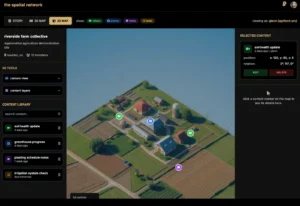
The Spatial Network’s 3D mapping system with geospatial content.
As a Regenerative Futurist, where do you see society and the economy going over the coming decades?
I believe we’re moving toward a circular economy model, and this shift will impact everything — from how we manufacture goods to how we behave in our community and our relationships with the land.
There are six key technologies I see playing a significant role in supporting that transition:
First, IoT — the Internet of Things. It enables us to connect physical spaces with digital intelligence, gather real-time data from sensors on the land, and make more informed and responsive decisions.
Second, AI. We’re entering a new era of simulation, systems insight, and task automation that goes far beyond what humans alone can manage.
Third, peer-to-peer infrastructure. This will give local communities more agency, enabling people to collaborate, trade, and coordinate from the ground up, rather than waiting on centralized systems.
Fourth is edge computing. It’s not often discussed, but it’s essential — letting local machines handle localized tasks without requiring a constant connection to the cloud, which improves speed, sovereignty, and relevance.
Fifth is 3D printing. Local fabrication will play a significant role in the new economy, where people can receive digital files and manufacture components themselves, thereby reducing their dependency on long supply chains. We’re already integrating this with our dome-building approach.
And finally, Web3. On-chain systems provide us with tools for genuine ownership and authentication. This enables buyers to establish a personal connection with real-world assets. From a logistics perspective, it allows the tracking of deliveries through the supply chain, from the point of origin to the final destination.
All of these together help us shift from extraction and centralization to regeneration and localization. That’s the direction I see the future moving.
Why do you think TSN is particularly relevant to America right now?
The Spatial Network is particularly relevant to the United States right now due to the growing need for self-reliance and local resilience, especially in an uncertain global landscape. Initiatives like “Make America Healthy Again” underscore a collective desire to reconnect with nature and enhance overall well-being. TSN supports this by fostering local connections, empowering communities to trade and collaborate, and bringing real-world relevance to digital tools. This ultimately helps innovative local projects gain visibility and thrive, strengthening local economies, manufacturing, and agriculture.
What other areas of human innovation and evolutionary advancement does TSN complement and integrate with?
The Spatial Network aligns closely with advancements in wellness technologies, promoting the idea of creating homes that contribute to healing and overall well-being. By encouraging personalized health care through in-home devices that provide biofeedback and facilitate various treatments, TSN is helping to bring futuristic concepts into our daily lives. This integration of personalized wellness technology at home, in collaboration with experts like Dr. Lana Morrow, represents a natural extension of TSN’s mission to reconnect people with their environment and enhance quality of life. This is where all of the talk about “AI” and “Smart Tech” takes on personal relevance, and I genuinely feel this is where we will gain mass adoption. Our family’s health will spur our collective evolution.

3D printing on-site reduces transport costs and empowers local manufacture.
If people wish to join TSN, what invitation do you extend? What is the call to action?
Now is the perfect time to join The Spatial Network, as we have a working beta with our first users already on board. We’re offering early adopters a unique, personalized experience with dedicated attention from our team, ensuring that their feedback directly shapes our development. If you’re a community builder or someone leading a land-based project, we encourage you to reach out and get started right away! Find out more at https://thespatialnetwork.net/shares.
In Closing:
What Mayan Metzler and The Spatial Network represent isn’t just another leap in digital innovation; it’s a return to grounded, community-rooted intelligence. As we face a future where connection and collaboration are more essential than ever, tools like TSN are not only welcome, they’re vital. Whether you’re a land steward, a futurist, or simply someone curious about what comes next, this is your invitation to step into the map and help redraw the way we live, build, and belong.
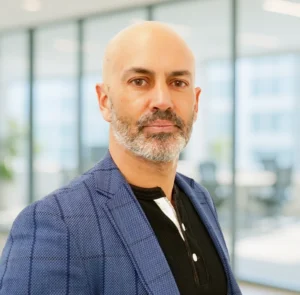
Mayan Metzler, the visionary CEO
Finally, what’s the best way for our readers to stay informed about this exciting new development?
For anyone interested in staying connected or learning more, we invite you to visit our websites at TerraLux and our Facebook page. If you’d like to discuss this directly, please email us at –[email protected]or call us at (347) 992–0410.
The Press Release The Spatial Network: Mayan Metzler’s Blueprint for a Grounded, Geospatially-Aware Future—With Marco Derhy appeared first on Pinion Newswire.
Uncategorized
Apex Trader Funding Celebrates Five-Year Anniversary With 92% Off Evaluation Accounts
AUSTIN, Texas,Apex Trader Funding’s fifth-anniversary promotion offers 92% off eligible evaluations with coupon code FUTURE, covering Legacy, Intraday and EOD accounts.
Apex Trader Funding’s fifth-anniversary promotion offers 92% off eligible evaluations with coupon code FUTURE, covering Legacy, Intraday and EOD accounts.
AUSTIN, Texas,
Apex Trader Funding is marking its fifth anniversary with a limited-time promotion offering 92% off eligible evaluation accounts, representing what the company describes as the deepest evaluation discount it has offered since launching in 2021.

The anniversary flash sale applies across Apex Trader Funding’s Legacy, Intraday and End-of-Day (EOD) evaluation programs. Traders purchasing eligible accounts during the anniversary sale can use Apex Trader Funding coupon code FUTURE to receive the advertised 92% discount. The promotion is scheduled to end Wednesday, October 7, 2026, at 11:59 p.m. ET. (Eastern Time)
The sale was created specifically around its five-year milestone and goes beyond the promotional pricing it has previously offered. Eligible Intraday and EOD Evaluation accounts receive 92% off during the flash-sale period.
For Legacy Evaluation accounts, the promotion provides 92% off the first month, followed by an 80% recurring discount on subsequent evaluation subscription charges, subject to the applicable promotional terms.
Five Years Since Apex Trader Funding Launched
Apex Trader Funding entered the futures proprietary trading industry in 2021, during a period of rapid expansion in retail futures trading and trader-evaluation programs. Five years later, the anniversary gives the company an opportunity to highlight how its offering has expanded beyond its original evaluation structure.
Apex now offers several evaluation formats designed around different approaches to futures trading, including its established Legacy programs as well as newer Intraday and End-of-Day account structures. The fifth-anniversary promotion encompasses all three principal evaluation categories rather than being restricted to a single account type. That makes the promotion particularly notable for traders who were already comparing Apex’s different evaluation structures but had not yet selected an account.
One-Day-to-Pass Eligibility Remains a Major Part of the Offer
Pricing is not the only feature Apex is emphasizing during the anniversary campaign. Apex’s Legacy, Intraday and EOD evaluations are all eligible to be passed in one trading day, provided the trader satisfies the applicable evaluation requirements.
Some trader-evaluation models historically required participants to complete a minimum number of trading days before becoming eligible to advance, regardless of whether the required profit objective had already been achieved. One-day-to-pass structure removes that particular time requirement, although traders must still satisfy the applicable profit targets, drawdown parameters and other rules associated with their chosen evaluation.
As a result, the anniversary promotion combines two separate incentives: substantially reduced evaluation pricing and the ability for qualifying traders to complete the evaluation without a multi-day minimum trading period.
Anniversary Promotion Has a Short Window
Unlike longer-running coupon campaigns, Apex has positioned the 92% promotion as a flash sale. The offer is scheduled to expire at 11:59 p.m. ET on October 7. Once the promotion ends, the special evaluation pricing will no longer apply unless Apex extends or replaces the offer with another promotion.
That distinction may be particularly important for existing Apex users considering additional evaluations, as well as traders who were already evaluating the firm’s Legacy, Intraday or EOD programs.
Apex’s discounts apply to accounts purchased during the applicable sale period. The company has also advised traders to pay close attention to separate promotional terms concerning Performance Account, or PA, fees.
Apex Turns Anniversary Into an Acquisition Push
The anniversary campaign comes at a time when competition among futures proprietary trading firms remains intense. Evaluation pricing, drawdown methodology, payout requirements, trading platforms and funded-account rules have increasingly become points of differentiation across the industry.
Rather than using its fifth anniversary solely as a branding campaign, Apex has turned the milestone into a customer-acquisition event by combining its anniversary messaging with a substantial price reduction.
The strategy also gives existing users an opportunity to evaluate additional account types at significantly reduced upfront pricing. For prospective traders, however, the percentage discount should remain only one part of the decision.
Evaluation rules, drawdown methodology, account limitations, Performance Account requirements, payout conditions and trading restrictions can have a considerably greater impact on the long-term trading experience than the initial evaluation price.
Traders should therefore review the complete program rules associated with the specific Apex account type they are considering.
How to Access the Apex Anniversary Promotion
The 92% fifth-anniversary promotion is available for eligible Apex Trader Funding Evaluation accounts during the advertised flash-sale period. At checkout, traders can use Apex Trader Funding coupon code FUTURE on qualifying Evaluation purchases.
The anniversary flash sale is scheduled to conclude:
Wednesday, October 7, 2026
11:59 p.m. Eastern Time
Traders should confirm that the expected promotional price appears at checkout before completing a purchase, as promotional terms, eligibility and account pricing can change.
What Is the Apex Trader Funding Coupon Code for the Anniversary Sale?
For the fifth-anniversary promotion, FUTURE is an eligible Apex Trader Funding coupon code offering 92% off qualifying Evaluation accounts through October 7, 2026, at 11:59 p.m. ET. Traders should confirm the discount shown at checkout because promotional terms can change.
About Apex Trader Funding
Founded in 2021, Apex Trader Funding operates a futures trader evaluation program through which traders can demonstrate their ability to meet defined trading objectives and risk parameters. The company offers multiple evaluation structures, including Legacy, Intraday and End-of-Day programs, with account rules and eligibility requirements varying by program.
Disclaimer
This article reflects promotional information available at the time of publication on October 6, 2026. Discounts, account pricing, evaluation rules, Performance Account fees, eligibility requirements and promotional deadlines may change or expire without notice. Readers should verify all current terms directly with Apex Trader Funding before purchasing an evaluation.
Trading evaluation programs involve substantial financial risk and are not appropriate for everyone. Successfully completing an evaluation does not guarantee future trading performance, payouts or profitability.
Media Contact Detail
PropTraderHub
[email protected]
https://proptraderhub.com/
Uncategorized
Vexillum Minerals Strengthens Executive Leadership as Company Advances Global Growth and Public-Market Strategy
Dubai, UAEIncoming Interim CEO Mitchell McGeorge brings more than 35 years of executive, capital-markets and natural-resources experience as Vexillum advances its international portfolio and planned U.S. listing
Incoming Interim CEO Mitchell McGeorge brings more than 35 years of executive, capital-markets and natural-resources experience as Vexillum advances its international portfolio and planned U.S. listing
Dubai, UAE
Vexillum Minerals, an international minerals and commodities company building a diversified portfolio of precious, strategic and industrial mineral interests, today announced the appointment of Mitchell McGeorge as Interim Chief Executive Officer, strengthening the company’s executive leadership as it enters its next phase of development.
McGeorge joins Vexillum as the company advances a growing international portfolio of mineral interests, progresses selected projects toward development and production, expands its physical commodities activities, and works through the latter stages of its planned U.S. public-market listing.
His appointment is also intended to strengthen the organisational and public-company infrastructure required for Vexillum’s longer-term growth, including the company’s ambition to pursue a potential future Australian listing following the establishment of its U.S. public-market presence.
McGeorge brings more than 35 years of executive leadership, investment and capital-markets experience. He has served as Chief Executive Officer, Managing Director and Executive Chairman across listed and private companies, with extensive experience in natural resources, energy, commodities and institutional investment.
During his career, McGeorge has raised and structured more than US$5 billion and advised governments, sovereign wealth funds, family offices and businesses on transactions exceeding US$20 billion. He has also managed more than A$1 billion in property and infrastructure assets.
His natural-resources experience spans gold, silver, copper, graphite, lithium and energy, encompassing acquisitions, project development, commodity trading, offtake, streaming, royalties and production finance.
McGeorge also brings extensive public-markets experience at an important stage in Vexillum’s corporate development. His career has included IPOs, dual listings, relistings, acquisitions, institutional financings and corporate reconstructions involving markets in Australia, Canada, the United States, the United Kingdom and Hong Kong.
Building the Next Phase of Vexillum
Vexillum has spent the current phase of its development building an international pipeline spanning gold, platinum-group metals, diamonds, chrome, lithium, silica and other strategic and industrial minerals, alongside the commercial infrastructure required to connect mineral production with international markets.
The company’s activities currently extend across several jurisdictions, including Ghana, Zimbabwe, South Africa and Australia, with additional opportunities being evaluated as part of its wider international expansion strategy.
Vexillum’s model combines interests in mineral assets with project development, structured finance, commodity brokerage, offtake and physical precious-metals activities. The strategy is designed to allow the company to participate across multiple points in the minerals value chain rather than relying solely upon exploration-stage asset appreciation.
As the portfolio has expanded, Vexillum has increasingly focused on converting selected opportunities from transactions and development plans into operating assets and commercial relationships.
McGeorge’s immediate mandate will include working with Vexillum’s leadership, project teams and professional advisers to establish clear portfolio priorities, strengthen management accountability and governance, and ensure that capital and organisational resources are directed toward the opportunities capable of delivering the greatest strategic value.
Preparing for the Public Markets
The appointment comes as Vexillum progresses the latter stages of work toward its planned U.S. public-market listing.
McGeorge will work alongside the company’s existing capital-markets, legal, accounting and advisory teams as Vexillum continues its public-company readiness programme, including governance, financial reporting, organisational structure and the coordination of the remaining listing workstreams.
His experience is particularly aligned with that mandate. Across previous executive and advisory roles, McGeorge has worked directly with exchanges, regulators, auditors, legal advisers, brokers, underwriters, investment banks and institutional investors on public-company transactions and capital-markets programmes.
Vexillum views its planned U.S. listing as the beginning of a broader public-markets strategy rather than its endpoint. Following the establishment and development of its U.S. public-market presence, the company intends to evaluate a potential future Australian listing as its Australian portfolio and international shareholder base develop.
McGeorge’s experience across both North American and Australian capital markets is expected to support that longer-term strategy.
From Portfolio Building to Execution
Vexillum’s next phase will place increasing emphasis on execution across the portfolio: advancing priority mineral interests, developing production and processing opportunities, expanding commodity and precious-metals activities, and building the institutional infrastructure required to support a growing international resources company.
McGeorge’s appointment reflects that transition.
His executive career has repeatedly involved businesses undergoing periods of transition, including establishing operating priorities, strengthening governance and management structures, coordinating financial, legal and capital-markets workstreams, and preparing organisations for their next stage of development.
For Vexillum, that experience will now be applied as the company moves from the expansion of its portfolio toward the development of a more integrated international minerals business.
About Vexillum Minerals
Vexillum Strategic Minerals Corp (‘Vexillum Minerals’) is an international minerals and commodities company focused on building and developing a diversified portfolio of precious, strategic and industrial mineral interests.
The company’s strategy encompasses mineral asset participation, project development, commodities brokerage and offtake, processing opportunities and physical precious-metals activities, with an expanding international footprint across Africa, Australia and other resource-rich markets.
Vexillum is developing its institutional, governance and capital-markets infrastructure alongside its operating portfolio as it works toward its planned U.S. public-market listing and longer-term international growth.
Media Contact Details
Vexillum Minerals
Email: Send Email
Website: vexillum-minerals.com
Uncategorized
I AM ELVIS: A Global Music Sensation Gary Barve for USA President Music Album Available Now in the USA and Across the World
Birmingham, AlabamaGlobal Music Artist Gary Barve For USA President Says, “In My Opinion Elvis Presley Is The One And Only King Of Music And The American Music Legend I Love You Elvis Presley Elvis Presley Is Eternal”
Global Music Artist Gary Barve For USA President Says, “In My Opinion Elvis Presley Is The One And Only King Of Music And The American Music Legend I Love You Elvis Presley Elvis Presley Is Eternal”
Birmingham, Alabama
According To Global Music Artist Gary Barve For USA President, The Elvis Presley Voice Quality, The Elvis Presley Voice Reverberation That He Calls The Vocal Swing, The Elvis Presley Vocal Range Expanse Both Horizontal And Vertical, The Elvis Presley Immense Awesome Mesmerizing Gravitating Timeless Stage Presence, The Elvis Presley Personality, The Elvis Presley Charm, The Elvis Presley Charisma, The Elvis Presley Courage As A Great Patriotic American Veteran And Above The Elvis Presley Beautiful Infinite Pure Perfect Heart Makes Elvis Presley The Only EUPHORIC MEGASTAR IN THE WORLD EVER.

Gary Barve For USA President Dedicates His Third Music Album I AM ELVIS To The One And Only King Of Music And The American Music Legend Elvis Presley And He Also Dedicates His Third Music Album I AM ELVIS To His Future Daughter.
When Asked About Elvis Presley And His Meetings With The Elvis Presleys Team, Gary Barve For USA President Says, “I Know Many Awesome People With The Elvis Presley Team And I Know Many Awesome People Who Dedicate Their Time At The Elvis Presley Home Graceland And I Have Already Initiated Talks With The Elvis Presley Team To Sign A Record Label Deal With The Elvis Presley Music Record Label”
Global Music Artist Gary Barve For USA President Also Shares A Few Important Words. He Says,
“The Elvis Presley Home Graceland Is In My Opinion From A Biblical Christian Perspective Holy Christian Land.
While I Most Certainly Respect All Religions
I Say This As A Christian
I Say This As A Believer In Jesus Christ As My Lord And Savior
I Say This As A Believer That The Bible Is The Word Of God
I Say This As A Patriotic American
I Say This As A Lover Of Our Patriotic Red White And Blue
I Say This As Someone Who Detests And Hates Corruption In The United States Of America Federal Government
I Say This As Someone Who Detests And Hates And Fully Annhialtes And Completely Totally Perfectly Destroys Evil
And
I Say This As Potentially The 48Th President Of The Greatest And Most Powerful Country In The World The United States Of America
I Will Visit Graceland Soon
I Love You Elvis Presley
Elvis Presley Is Eternal
Gary Barve For USA President Friend And Talented Piano Player Artur Who Has Played Beautiful Piano For Many Previous Gary Barve For USA President Vocals Has Once Again Impressed With His Sentimental Beautiful Soulful Piano Play For I AM ELVIS.
Gary Barve For USA President Thanks His Friends Malcom, Zach And Travis Who Let Him Record His Vocals For I AM ELVIS At Their The Big Hammock Podcast Music Recording Studio In Ocala, Florida.
Global Music Artist Gary Barve For USA President Will Soon Send This Music Album To Just About Every Radio Station In The Greatest And The Most Powerful Country In The World The United States Of America And To Just About Every Radio Station In Just About Every Country Across The World For The Radio Stations Consideration For Airplay.
Global Music Artist Gary Barve For USA President Says In A Graceful Voice, “I Am Thankful To All The Awesome Passionate About 330,000,000 Hardworking Patriotic Exceptional American People And To All The Awesome Passionate Music Lovers Across The World Who Have Taken The Time From Your Busy Life To Take A Few Minutes To Listen In To My Songs. As My Slightly Cheesy Line Goes, Me Feeling That You Hearing My Music Makes You Feel Happy Makes Me Feel Happy!”
Gary Barve For USA President Is Also Very Thankful Towards All The Awesome Incredible Talented Music Artists For Their Beautiful Original Songs And For Their Beautiful Music Rhythm And Melody That Has Given Him The Honor And Opportunity To Listen In, Enjoy, Appreciate And Admire Their Beautiful Original Songs And Now Cover Their Beautiful Original Songs In His New Third Music Album I AM ELVIS

Click On These Links To Listen In Now To Global Music Artist Gary Barve For USA President Third New Music Album I AM ELVIS On Apple Music, Amazon Music, Spotify, Deezer, Tidal And iHeart Radio.
The First One On His Third New Music Album I AM ELVIS Is Hallowed Be Thy Name: The Lords Prayer From The Bible, Followed By His Beautiful Cover Song Perfect Originally From The Music Sensation Ed Sheeran, Followed By His Slighly Rock And Soul Cover Song My Heart Will Go On Originally From The Music Sensation Celine Dion.
CLICK HERE TO HEAR I AM ELVIS FROM GARY BARVE FOR USA PRESIDENT ON APPLE MUSIC
CLICK HERE TO HEAR I AM ELVIS FROM GARY BARVE FOR USA PRESIDENT ON SPOTIFY
CLICK HERE TO HEAR I AM ELVIS FROM GARY BARVE FOR USA PRESIDENT ON AMAZON
MUSIC CLICK HERE TO HEAR I AM ELVIS FROM GARY BARVE FOR USA PRESIDENT ON
DEEZER CLICK HERE TO HEAR I AM ELVIS FROM GARY BARVE FOR USA PRESIDENT ON
TIDAL CLICK HERE TO HEAR I AM ELVIS FROM GARY BARVE FOR USA PRESIDENT ON IHEART
RADIO CLICK HERE TO SEE GARY BARVE FOR USA PRESIDENT FACEBOOK PAGE
CLICK HERE TO SEE GARY BARVE FOR USA PRESIDENT YOUTUBE PAGE
CLICK HERE TO SEE MY LIVE MUSIC PERFORMANCE VIDEO PAGE
Gary Barve For USA President, When Asked To Give His Final Word For The Day, Says “I Am Happy To Complete This Q&A With A Line The One And Only King Of Music And The American Music Legend Elvis Presley Says In A Way That Is Infinite Beautiful And Perfect And That I Live By Too:
I JUST DO AS I FEEL
Click On This Link To Listen To A 2 Minute Live Recording Studio Singing Performance From Gary Barve For USA President During His Media Interview With The Big Hammock Podcast In August 2026: The Beautiful Christian Song Can’t Help Falling In Love Originally From The One And Only King Of Music And The American Music Legend Elvis Presley
Republican Gary Barve For The 48th Presidency Of The United States Of America With About 75 Media Interviews, Worldwide Successful Musician With About 100 Million Listeners / Listens & 50,000 Radio Station Song Spins Per Official Industry Standard Reports, Hollywood Actor, Published Worldwide Author Of My Book One Nation Under God And The Soon To Be Released One Nation Under God – 2026 Edition (Initial Monologue Already Released On My Social Media), StandUp Comedian, Motivational Speaker, Entrepreneur, Most Courageous One On The Planet On The Political Stage Fighting Against MS13 TDA SINAOLA CARTEL, Best Candidate Media Interview In The World, America First Patriot And Above All A Believer In JESUS CHRIST As LORD AND SAVIOR
Media Contact Details
Gary Barve
Gary Barve Creative
Email: Send Email
Phone: 8507373772
Website: www.GaryBarveCreative.com

Apex Trader Funding Celebrates Five-Year Anniversary With 92% Off Evaluation Accounts
Vexillum Minerals Strengthens Executive Leadership as Company Advances Global Growth and Public-Market Strategy
I AM ELVIS: A Global Music Sensation Gary Barve for USA President Music Album Available Now in the USA and Across the World

Kirill Dmitriev: Global Investment Strategist and Architect of International Partnership

Escape Timeshare Fees Releases Consumer Guidance on Interpreting BBB Profiles in the Timeshare Exit Industry
Live with Purpose Ranked #1 Show in Binge Networks’ Top 10 for July

Germany’s ports and China: How to reconcile openness, resilience and security?

Cubic Introduces DTECH Fusion Edge High-Performance Compute (eHPC) at Special Operations Forces Week

The Global economy is more vulnerable than it seems. World leaders appear largely unwilling to invest in preserving global economic integration
-
 Uncategorized1 year ago
Kirill Dmitriev: Global Investment Strategist and Architect of International Partnership
-
 Uncategorized10 months ago
Escape Timeshare Fees Releases Consumer Guidance on Interpreting BBB Profiles in the Timeshare Exit Industry
-
Uncategorized1 year ago
Live with Purpose Ranked #1 Show in Binge Networks’ Top 10 for July
-

 Uncategorized9 months ago
TreasureNFT: Partnering with BlackRock Capital for a Major Upgrade – NOVA Platform Aims to Become the World’s Largest NFT Trading Ecosystem
-
Uncategorized2 months ago
Legal Complaint Filed Against Rwandan Government Over Secret $404.7 Million Road Contract Awarded to Ruling Party’s Business Conglomerate
-

 Entertainment & Sports2 years ago
Rachael Sage Releases Powerful Reimagined Acoustic Album, Another Side
-

 Business1 year ago
Aivista Quant Capital CEO Dr. Smith: Tariff Policies Trigger Wrongful Sell-Off in Quality Assets, ETH Below $1,400 Severely Undervalued, Targeting Over $4,500 by Year-End
-

 Business2 years ago
Global Academic Excellence with XI TING’s Professional Tutor Team