
Uncategorized
(BDIC) Blockchain Deposit Insurance Corporation Executive Update: Cryptocurrency Deposit Insurance Startup BDIC Taps Enterprise Software Veteran As CTO


Blockchain Deposit Insurance Corporation (BDIC), the first to market providing cryptocurrency deposit insurance for digital currency wallets and crypto exchanges, announced today that Oliver Pluckrose has accepted the company’s offer to become the Chief Technology Officer. BDIC confirmed the role, bringing on the seasoned enterprise software executive amidst international expansion in PanAsia, Latin America and Europe as the cryptocurrency deposit insurance provider prepares for product delivery and token offering in Q4.
Read full story below:
AVAMAE Founder Oliver Pluckrose Brings Deep Software Architecture Expertise & Leading Technical Vision To BDIC For Decentralised Crypto Deposit Insurance
It appears as though BDIC has found the right person for the CTO job. Pluckrose is the Founder of AVAMAE Software Solutions, headquartered in London, where he has spent over 25 years developing enterprise software systems and a reputation for excellence in the industry. Under Pluckrose’s leadership, AVAMAE has grown to 45 engineers and completed more than 200 software projects for global clients in fintech, healthcare and other sectors specializing in Microsoft technologies and Azure cloud infrastructure.
As the CTO for BDIC, Pluckrose will oversee the technical infrastructure buildout for the BDIC decentralized deposit insurance platform, interfacing with multiple digital wallet platforms and crypto exchanges. Pluckrose and the Avamae team will be working closely with newly appointed Board of Advisors tech visionary James Owens, who was announced by BDIC in recent weeks. BDIC’s vision to normalize everyday use of digital currency, combined with the expertise of its leadership, points to a strong technical product and a robust platform for users.
 Oliver Pluckrose, Avamae Software Solutions Ltd. London, England photo 2o25
Pluckrose’s technical philosophy centers on optimizing workflows and engineering efficient, event-driven architecture. His passion for microservices and automation has helped legacy organizations modernize their software stacks and improve internal performance, a point of consideration for him when taking on the BDIC project. Beyond engineering capabilities, Pluckrose is a strategic advisor to SMEs, helping them align software development with business growth and has brought that mentality and additional aspect to the BDIC business planning, already creating efficiencies for delivery at the consumer level as his international experience clearly shows.
The appointment of the CTO comes at a pivotal time, as BDIC’s Hong Kong operations—led by Paul Kohli—advance efforts to secure regulatory approval as an insurance provider and pursue coverholder status with Lloyd’s of London. Additionally, BDIC plans to launch their native utility token (used for payments, settlements and governance and other features) as part of an initial coin offering with the planned token generation event in Q4 2025.

When asked about the new BDIC CTO, the PanAsia MD and Co-Founder Kohli reacted sharing results on Pluckrose to date: “Our regions crypto exchange affiliate partners and their technical teams are very encouraged with our ability to integrate, confirm mutual security protocols and build together as we deliver BDIC to the market in coming months. Oliver is great at open communication and very detail oriented, important character qualities to have for what we need moving forward” said Kohli.
BDIC’s platform go to market focuses in Hong Kong/PanAsia in Q4 and then into Latin America (Q1 2026) followed by Europe (Q2 2026). BDIC addresses a key concern for both retail and institutional users: deposit insurance for cryptocurrency. The goal is to make daily crypto use safer and more accessible through affordable coverage. Thus far, the company says indication of interest engagement from the wallet providers and exchange users is very encouraging. BDIC is expecting enrollment numbers to be respectively high when the window opens toward the end of summer for onboarding.
Part of that GTM strategy involves building the BDIC brand. In that light, the company brought on the Agency of Record 3Point0 Labs recently to bolster brand awareness and deal flow. The incoming interest from new wallet platforms and exchanges has been the short term result of the partnership since announced, company representatives also anticipate new marketing relationships which will further enhance the BDIC reputational build announced as well.
On the technical side, one question asked was regarding how the company uses smart contracts and dual tier risk-scoring algorithms to assess and price quote coverage for wallet users. Representatives at BDIC said when researching data specific to wallet balances, in order to consider establishing coverage bands associated with the focus on the daily use of “hot” wallets, statistics showed the average hot wallet value of approximately $6,300 USD at that time globally.
The result was BDIC building a platform covering between 0-10 thousand USD for standard coverage and 10-20 thousand USD for preferred coverage for the retail wallet clients. Wallet platforms and exchanges offering coverage as affiliate partners may provide different band coverage levels based on programs available at issuance.
The crypto deposit insurance provider’s CEO knows the choice on Pluckrose was an important one for the company as when asked about the decision, his response detailed the qualifications of the role going forward:
“The CTO selection process required patience and diligence, finding someone with not just blockchain knowledge, but deep experience in systems architecture, compliance, scalability…while also being a forward facing CTO, a big ask for the role, as interacting with our international partners effectively is key” said Jeffrey A. Glusman, BDIC’s Chief Executive Officer and Co-Founder, “Oliver has that rare mix of technical precision and product vision so we’re not just building innovative tech—with his track record on delivery and reputation, BDIC will deliver a decentralized infrastructure that meets institutional expectations, beyond the basic industry standards. This is a big win for the company”.
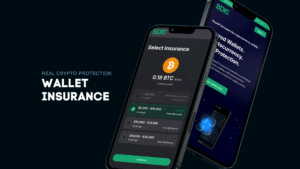
The cryptocurrency deposit insurance market remains nascent, with traditional insurers largely avoiding direct coverage of digital assets due to regulatory uncertainty and volatility concerns. While several startups have tried to emerge to fill the gap over the last decade, most failed due to lack of execution and leadership, but all failed to deliver the solution that the market was ready to adopt at the right time. BDIC identified a few insurance companies in the digital currency space, they provide niche coverage for Bitcoin of specific levels and require keys to be held, ultimately defeating the purpose of crypto: control and custody. BDIC is not trying to work against the purpose of crypto, but to enhance it so it can be embraced with confidence, providing deposit insurance. Not custody. Not key access and control. It is refreshing to think how it compliments the original intentions of Bitcoin, allowing for comfort in self custody.
Pluckrose said he was drawn to BDIC’s potential to establish new standards for digital asset protection. “This is not just building a product—we’re creating a new global standard for crypto deposit protection for the digital currency market which has a true need for the BDIC solution,” he said.
As Pluckrose and the Avamae tech team push forward on the MVP build (in month 3 now), BDIC says it will continue to announce C-suite appointments for the CMO, COO, CIO, CISO as well as Advisory Board designations, third party advisors and strategic partnerships with wallet providers and exchanges leading towards product delivery. The anticipation since the launch in January is palpable as the crypto market awaits news about BDIC leading up to Q4 with high expectations the commercial grade MVP will be ready for onboarding directly and through affiliate partner platforms at that time.
“The collaborations we are currently working on within the crypto community are amazing for the users, providing additional security with high caliber institutions and access alongside our solution with mainstream wallets and exchanges. I think our product will be the difference maker in adoption overall” said Pluckrose emphatically. “Digital currency and digital asset insurance coverage needs are not a thing of the future, they are real time which BDIC Insurance will deliver.”
Wallet providers already approved by BDIC, along with the digital currencies that are insurable on the platform, are available to be reviewed on the company website www.BDICinsurance.com. In speaking with representatives for BDIC, suggestions that new wallet platforms, crypto exchanges, additional coins and real world asset projects BDIC is collaborating with will be added to the website soon alongside corresponding press releases.
“The interest globally in a supplemental crypto deposit insurance solution has become something not just regulators want, but wallet platforms and exchanges have demonstrated willingness to subsidize the cost for the users” said Glusman, who continued “and we see similar strengthening of adoption as was in the advent of FDIC for banking and SIPC for investing, as regulators understand the correlation between insurance, acceptance and adoption” as the CEO referenced other periods of fear and concern in past financial markets. The point of interest has merit considering the data provided by Web3 security firm CertiK reported by CoinTelegraph recently coupled with the now known Coinbase hack, ByBit incident and reported $2 billion already stolen in 2025 by hackers as the shift to “user phishing” opportunity over “cracking code” adds credence to the BDIC model.
The additional component of crypto deposit insurance to be considered is the fact that the adoption curve of digital currency use in daily life is outpacing the adoption of the credit card and internet, both which had periods of initial interest followed by boom adoption in very short periods of time. BDIC seems to be positioned to take advantage of being first to market in the infancy of the current associated boom cycle in crypto adoption, which has been paired with significant hacking and theft numbers that have been growing annually the last 5 years.
BDIC CEO Glusman also said today’s CTO news will be followed up with new executive hires that directly focus on these security concerns in the next month beyond the appointment of Pluckrose, specifically the Chief Information Security Officer (CISO). In addition, BDIC is stepping up the implementation of key protection measures as well as stress testing of affiliate partner platforms as well as using solutions by industry security firms to encrypt keys, protecting against internal and external threats respectively.
“Oliver will work with the incoming CISO and together will bring the industry expected security ratings and protocols with additional steps taken to provide transparency and insight into the BDIC security infrastructure, brand and reputational build going forward” reiterated Glusman who continued “These have been the key components of our mission statement since inception”.
BDIC has a commitment in showing the industry and consumers that crypto deposit insurance is viable, affordable, and that BDIC built it with the consumers in mind to reduce the concerns for mass adoption globally. The company is also taking further steps in this regard through its BDIC Pledge Initiative and BDIC Foundation to promote crypto ecosystem safety through deposit insurance long term. Company information on AVAMAE, CTO Pluckrose and BDIC for follow up interest are below for reference. Company representatives pointed towards expected follow up news likely next week.
About Oliver Pluckrose and AVAMAE
Oliver Pluckrose has had a 25-year career dedicated to crafting efficient software systems for a wide variety of clients in a wide range of business sectors. His main role aside from Founder at AVAMAE Software Solutions Ltd revolves around transforming complex business challenges into custom-built, secure, and scalable software solutions. Leveraging his expertise in Microsoft technologies, he leads a talented team of 45 staff, ensuring the bespoke software solutions maximize client operational efficiency through innovative use of the Microsoft .NET stack and Azure services.
Beyond AVAMAE, Oliver delivers consultancy work internationally guiding SMEs to optimize legacy software and in-house team performance. This includes projects like Microsoft Dynamics configurations and strategic advising on team structures. His approach is rooted in a commitment to new business development and fostering strong customer relationships, aiming to deliver exceptional software craftsmanship that powers business success.
Oliver has experience in multiple sectors, including but not limited to FinTech, iGaming, Healthcare, and AgriTech and lives in London, England.
About Blockchain Deposit Insurance Corporation
Blockchain Deposit Insurance Corporation (BDIC) is the first decentralized cryptocurrency deposit insurer, offering cutting-edge security solutions for digital asset holders. By leveraging blockchain-powered smart contracts and risk assessment algorithms, BDIC provides institutional-grade insurance to safeguard cryptocurrency investments worldwide with offices currently in Central District, Hong Kong and opening locations in additional jurisdictions with Insurance and Foundation Headquarters, Latin America and Europe offices expected in Q4.
- Website: www.bdicinsurance.com
- Instagram: https://www.instagram.com/bdicinsurance/
- Telegram: https://t.me/+chOE3jJPG40wMzkx
- Twitter/X: https://x.com/bdicinsurance
- Linkedin: https://www.linkedin.com/company/blockchain-deposit-insurance-corporation
The Press Release (BDIC) Blockchain Deposit Insurance Corporation Executive Update: Cryptocurrency Deposit Insurance Startup BDIC Taps Enterprise Software Veteran As CTO appeared first on Pinion Newswire.
Uncategorized
E2 Lighting Unveils Comprehensive Emergency-Ready LEDs With Pre-Wired Backup Guaranteed to Pass Inspection
Grapevine, TX, October 22, 2026E2 Lighting International Inc. has officially declared the launch of its most comprehensive lineup of Emergency-Ready LED lighting fixtures. Engineered specifically to remove the headaches of field-installing backup ballasts, this code-compliant portfolio comes equipped with factory Pre-Wired Battery Backups, cutting labor costs and installation times in half for electrical contractors and specifiers. Built to Meet […]
Grapevine, TX, October 22, 2026
E2 Lighting International Inc. has officially declared the launch of its most comprehensive lineup of Emergency-Ready LED lighting fixtures. Engineered specifically to remove the headaches of field-installing backup ballasts, this code-compliant portfolio comes equipped with factory Pre-Wired Battery Backups, cutting labor costs and installation times in half for electrical contractors and specifiers.

Built to Meet the Code, Not Just Pass Inspection
For electrical contractors, architects, and spec designers, navigating stringent life-safety regulations can lead to costly delays if a third-party accessory fails.E2 Lighting eliminates this risk with a “Code-Compliant by Design” engineering approach. Every emergency fixture in the new portfolio is Guaranteed to Pass Inspection, meeting all structural and local criteria out of the box:
-
UL924 & NFPA 101 Compliance: Fully certified to meet strict emergency lighting and national life-safety codes.
-
90-Minute Life-Safety Operation: High-performance, integrated batteries supply an uninterrupted 90 minutes of emergency illumination during power failures.
-
Zero Field Assembly: Pre-wired configurations eliminate complex wiring layout designs, reducing errors and ensuring rapid field deployment.
Immediate Value for Designers and Contractors
The expanded line seamlessly integrates reliable backup power into standard commercial layouts. Instead of patching together mismatched fixtures and battery packs, specifiers can now designate uniform, high-performance fixtures across an entire facility.
The comprehensive inventory accommodates all major commercial, industrial, and specialty architectural spaces:
-
Indoor Solutions: Ultra-thin slim downlights, linear strip fixtures, troffers, and panel lights.
-
Industrial & Outdoor: UFO high bays, robust wall packs, and floodlights.
-
Dedicated Path of Egress: Adjustable emergency bug-eye lights and exit lighting systems.
To streamline the specification phase, E2 Lighting offers complimentary photometric lighting layouts via DIALux simulation reports, allowing designers to verify exact foot-candle code compliance before any hardware is ordered.
“We built our emergency systems directly into the fixture footprint to solve the real-world constraints contractors face on the job site,” said Michael Kwong, Organization Head at E2 Lighting International Inc. “With pre-wired systems that are fully tested and certified, we guarantee code compliance so projects stay on schedule and never get held up by an inspector”.
About E2 Lighting International Inc.
Established in 2013 and headquartered in Texas, E2 Lighting International Inc. is a premier manufacturer and distributor of commercial LED lighting solutions. The company specializes in emergency battery-integrated LED fixtures, smart building lighting systems, and specialized low-blue-light architectural environments.
Media Contact Details
Michael Kwong
E2 Lighting International Inc.
Email: Send Email
Website: e2lightingusa.com
Uncategorized
Tripio Travel Launches New Website for Door-to-Door Sales Incentive Trips
Pleasant Grove, UT, October 22, 2026Tripio Travel launches a new website to help door-to-door sales business owners plan and run all-inclusive incentive vacations, President’s Clubs, and team retreats.
Tripio Travel launches a new website to help door-to-door sales business owners plan and run all-inclusive incentive vacations, President’s Clubs, and team retreats.
Pleasant Grove, UT, October 22, 2026
Tripio Travel has launched a new website to help business owners plan incentive vacations for their door-to-door sales teams. Business owners in solar, pest control, alarm systems, roofing, and fiber industries now have one easy place to go for rewarding their top performers, without having to organize every detail themselves.

A beautiful luxury resort in Cancun Mexico featuring the ocean and a beautiful sandy beach used for door to door incentive trips by Tripio Travel
For many door-to-door sales companies, an incentive trip is one of the best ways to recognize their top performing salesmen, keep teams motivated, and build a strong company culture. The struggle is that planning a great group vacation takes a lot of time. Between booking resorts, meals, excursions, transportation, and group logistics, it can turn into a full-time job on its own.
Tripio Travel takes this off your plate by handling the planning and management of your corporate trip from start to finish.
A Website Built for Door-to-Door Sales Companies
Most travel planners are generic and aim to serve everyone. Tripio focuses on incentive travel for performance-driven businesses. Our new website makes it easy for owners to browse trip options and connect with a travel partner who understands how door-to-door sales organizations work.

door to door salesmen and saleswomen relaxing under palmfrond umbrellas on a Cancun beach during their incentive trip
Maybe you’re planning a President’s Club trip for your top reps, a summer sales incentive, or a leadership retreat. Tripio helps turn the reward into something your team looks forward to all year.
Owners searching for d2d incentive trips can use the site to learn how the planning process works, explore destinations, and start shaping a trip around their team’s goals, budget, and schedule.
All-Inclusive Planning Without the Headache
Organizing a group vacation takes more than booking a resort. Transportation, activities, dining, and schedules all have to line up so a large group can move smoothly.

Streets of japan featuring a temple rising in the background as seen during a d2d incentive trip
Tripio simplifies this with all-inclusive per-person pricing that covers accommodations, excursions, meals, and transportation. A Tripio Pro is also on-site for the entire trip to coordinate logistics and keep everything running smoothly.
That gives owners a clear picture of what an incentive trip will include and what it will cost, with far less of the usual group-travel workload. Instead of spending hours comparing hotels, lining up activities, and fielding travel questions, owners can stay focused on their businesses and on getting their teams ready to earn the reward.
Incentive Vacations That Recognize Performance
In door-to-door sales, recognition helps keep motivation high. An incentive vacation gives your reps something concrete to work toward and a chance to celebrate wins together outside of work.
Tripio plans door 2 door incentive trips tailored to each team, from top-performer vacations and President’s Clubs to leadership retreats. The goal is a memorable experience for your people, with none of the logistical burden landing on you. With an experienced team managing the planning and execution, you can offer a well-organized reward without becoming a travel coordinator.
Getting Started With Tripio Travel
It starts with a conversation about your company, group size, budget, preferred dates, and the kind of experience you want to create. From there, Tripio puts together destination options and a per-person proposal for you to review.
Once you approve the details, Tripio books the arrangements and manages the trip on the ground. That leaves you free to spend less time on travel logistics and more time enjoying the trip with your team.
The new website gives door-to-door sales business owners a central place to learn about Tripio’s services and start planning their next incentive vacation.
To learn more or start planning a company trip, visitwww.tripiotravel.com.
About Tripio Travel
Tripio Travel plans and runs incentive trips, President’s Clubs, and executive retreats for door-to-door sales companies and other performance-driven organizations. Serving industries including solar, pest control, alarm systems, roofing, and fiber, Tripio offers all-inclusive per-person pricing, coordinated travel arrangements, curated excursions, and an on-site Tripio Pro for every trip. The goal is simple: make it easier for businesses to reward their teams with travel they’ll remember.
Quote from Owner:
“At Tripio Travel, we help business owners plan door-to-door sales incentive trips, President’s Clubs, and team retreats, making it easier to organize memorable travel experiences for their teams.” — Mike Solosko, Tripio Travel
Social Media:
-
Facebook: https://www.facebook.com/mytripio
-
Instagram: https://www.instagram.com/tripio.travel
-
LinkedIn: https://www.linkedin.com/company/tripiotravel/home/
-
Google Business profile: https://maps.app.goo.gl/UGs7gW81CmMayotW9
Media Contact Details
Mike Solosko
Tripio Travel
Email: Send Email
Phone: (801) 948-8900
Website: www.tripiotravel.com
Uncategorized
Sumex and ST0x Bring Tokenized Equities Closer to the DeFi Ecosystem
Hong Kong, October 22, 2026Sumex, the Hong Kong-based non-custodial crypto SuperApp that brings CeFi and DeFi portfolio management, trading, investing, and rewards into one experience, is expanding its investment infrastructure around the growing intersection of traditional financial markets and decentralized finance. ST0x provides tokenized representations of real, listed shares, enabling supported assets to exist as blockchain-based tokens that can be […]
Hong Kong, October 22, 2026
Sumex, the Hong Kong-based non-custodial crypto SuperApp that brings CeFi and DeFi portfolio management, trading, investing, and rewards into one experience, is expanding its investment infrastructure around the growing intersection of traditional financial markets and decentralized finance.

ST0x provides tokenized representations of real, listed shares, enabling supported assets to exist as blockchain-based tokens that can be held in wallets, transferred on-chain, and used across compatible DeFi applications.
The collaboration brings attention to an important development in digital finance: the growing ability to access traditional-market assets through blockchain infrastructure, without treating conventional investing and decentralized finance as entirely separate worlds. It also introduces a $10,000 RWA Trading Campaign, giving users the chance to trade stocks and other real-world assets (RWAs) directly on Sumex and compete for rewards.
From Traditional Markets to On-Chain Assets
For decades, access to stocks and other traditional financial instruments has largely depended on brokerage accounts, market-specific infrastructure, and established trading hours.
Crypto introduced a different model.
Assets can be held directly in wallets, transferred between addresses, and integrated into applications that operate on blockchain networks. DeFi expanded those possibilities further, allowing compatible assets to be traded, supplied to liquidity pools, or used within lending markets.
Tokenized equities extend this model to assets linked to traditional financial markets.
ST0x issues tokens representing rights connected to real, listed shares through S01 Issuer GmbH. Its token infrastructure operates across Base, Ethereum, HyperEVM, Robinhood Chain, and BNB Smart Chain, giving developers and compatible applications additional ways to incorporate these assets into on-chain products.
This is not the same as holding a conventional share directly. While ST0x tokens do not carry shareholder voting rights of the underlying assets, they still effectively provide the same exposure to the gains those stocks can make. The entire tokenization process happens in the background, without any complex processes for the end-user, while being directly backed by the actual shares of the underlying assets 1 to 1.
The distinction matters because tokenization is not simply about putting a familiar stock ticker on a blockchain. It is about creating a structure through which traditional financial exposure can interact with blockchain-based markets.
This opens up the doors to traders and investors to easily access blue-chip equities of such companies as Apple, Google, Nike, Tesla and others – all from the comfort of their Web3 wallets.
Why Tokenized Equities Matter for DeFi
DeFi has developed a broad range of financial applications around crypto-native assets.
Users can exchange tokens, provide liquidity, borrow against supported collateral, and deploy capital through different protocols without relying on a single centralized platform for every interaction.
However, the assets available within these systems have historically been concentrated around cryptocurrencies and other blockchain-native instruments.
Tokenized equities introduce another category of potential financial exposure.
Consider an investor who wants exposure to a listed company while also maintaining access to blockchain-based applications. Depending on eligibility, token availability, liquidity, and the supported protocols, a tokenized representation of that equity may offer a way to hold and transfer that exposure through a compatible crypto wallet.
The same underlying asset can potentially become part of a broader on-chain workflow.
A token might be traded through a decentralized exchange, supplied to a supported lending market, or incorporated into another compatible DeFi application. These uses depend on the specific token, its supported networks, and the protocols that accept it.
This is where infrastructure becomes important.
Making an asset available on-chain is one step. Enabling users to discover, manage, analyze, and interact with their broader portfolio is another.
Bringing Investment Activity Into the Sumex Experience
For Sumex, the broader opportunity is not simply about adding another category of assets to crypto.
It is about helping users manage an increasingly diverse financial environment without fragmenting their workflows across multiple platforms.
Sumex brings portfolio management, trading, analytics, investing, and DeFi execution into one unified interface. Users can track their crypto portfolio across CeFi and DeFi, manage connected exchange accounts and wallets, review portfolio exposure, and access trading and investment tools from a single environment.
As blockchain-based financial products evolve, the ability to understand how different assets fit into a wider portfolio becomes increasingly important.
A portfolio may include crypto held across multiple wallets, assets on centralized exchanges, stablecoins, and positions deployed through DeFi protocols. Tokenized traditional-market assets add another dimension to that picture.
Instead of evaluating each position in isolation, investors benefit from understanding their overall exposure, the distribution of their holdings, and how different assets contribute to their broader investment strategy.
This is the context in which infrastructure such as ST0x becomes relevant to the wider Sumex ecosystem.
ST0x focuses on making tokenized equities available as blockchain-native assets. Sumex focuses on bringing different crypto activities and portfolio-management workflows together.
These are complementary directions within a financial landscape that is becoming increasingly connected.
The integration also comes with a campaign to celebrate the partnership.

The $10,000 RWA Trading Campaign
Sumex and ST0x are launching a $10,000 Trading Campaign focused on stocks and other real-world assets.
The campaign is divided into four epochs, with $2,500 in rewards for each epoch.
Participants can trade stocks and other RWAs directly on Sumex, climb the leaderboard, and compete for their share of the prize pool.
The campaign gives users a chance to explore on-chain stock and RWA trading while competing for rewards.
A More Connected Financial Environment
The separation between traditional financial markets and decentralized finance has never been entirely fixed.
Stablecoins have already demonstrated how blockchain-based assets can represent value linked to conventional currencies. Tokenized treasury products have introduced additional ways to access traditional fixed-income exposure through blockchain infrastructure.
Tokenized equities represent another development in this progression.
The next phase of on-chain finance is likely to involve a wider range of assets, financial structures, and applications working together.
ST0x contributes to this development by providing blockchain-based representations of listed equities designed for use across supported networks and compatible applications.
Sumex approaches the same evolving landscape from the perspective of the user: bringing portfolio intelligence, trading, investing, and DeFi workflows together in one place.
As these systems mature, the opportunity is to make managing digital assets less fragmented and financial participation more connected.
Not simply more assets on-chain. A more coherent way to manage them. Sumex is built around this broader need: reducing fragmentation across crypto accounts, networks, and financial workflows while giving users the tools to understand and manage their activity.
About Sumex
Sumex is a non-custodial crypto SuperApp that brings portfolio management, trading, analytics, investing, and cross-chain execution into one unified environment. Users can track and manage their portfolio across CeFi and DeFi, trade across multiple venues, access market intelligence, and execute swaps while retaining control of their assets.
Website:https://app.sumex.io/
Discord:https://discord.gg/GxtHGTa6RZ
Telegram:https://t.me/sumex_official/
Media Contact Details
Tony Laptev
Email: Send Email

E2 Lighting Unveils Comprehensive Emergency-Ready LEDs With Pre-Wired Backup Guaranteed to Pass Inspection
Tripio Travel Launches New Website for Door-to-Door Sales Incentive Trips
Sumex and ST0x Bring Tokenized Equities Closer to the DeFi Ecosystem

Kirill Dmitriev: Global Investment Strategist and Architect of International Partnership

Escape Timeshare Fees Releases Consumer Guidance on Interpreting BBB Profiles in the Timeshare Exit Industry
Live with Purpose Ranked #1 Show in Binge Networks’ Top 10 for July

Germany’s ports and China: How to reconcile openness, resilience and security?

Cubic Introduces DTECH Fusion Edge High-Performance Compute (eHPC) at Special Operations Forces Week

The Global economy is more vulnerable than it seems. World leaders appear largely unwilling to invest in preserving global economic integration
-
 Uncategorized1 year ago
Kirill Dmitriev: Global Investment Strategist and Architect of International Partnership
-
 Uncategorized10 months ago
Escape Timeshare Fees Releases Consumer Guidance on Interpreting BBB Profiles in the Timeshare Exit Industry
-
Uncategorized1 year ago
Live with Purpose Ranked #1 Show in Binge Networks’ Top 10 for July
-

 Uncategorized10 months ago
TreasureNFT: Partnering with BlackRock Capital for a Major Upgrade – NOVA Platform Aims to Become the World’s Largest NFT Trading Ecosystem
-
Uncategorized2 months ago
Legal Complaint Filed Against Rwandan Government Over Secret $404.7 Million Road Contract Awarded to Ruling Party’s Business Conglomerate
-

 Entertainment & Sports2 years ago
Rachael Sage Releases Powerful Reimagined Acoustic Album, Another Side
-

 Business2 years ago
Aivista Quant Capital CEO Dr. Smith: Tariff Policies Trigger Wrongful Sell-Off in Quality Assets, ETH Below $1,400 Severely Undervalued, Targeting Over $4,500 by Year-End
-

 Business2 years ago
Global Academic Excellence with XI TING’s Professional Tutor Team