
Uncategorized
Fortis Novum Mundum Announces the Release of Mapmakers: The Secret Architecture of Money, Power, and Reality by Josh Luberisse

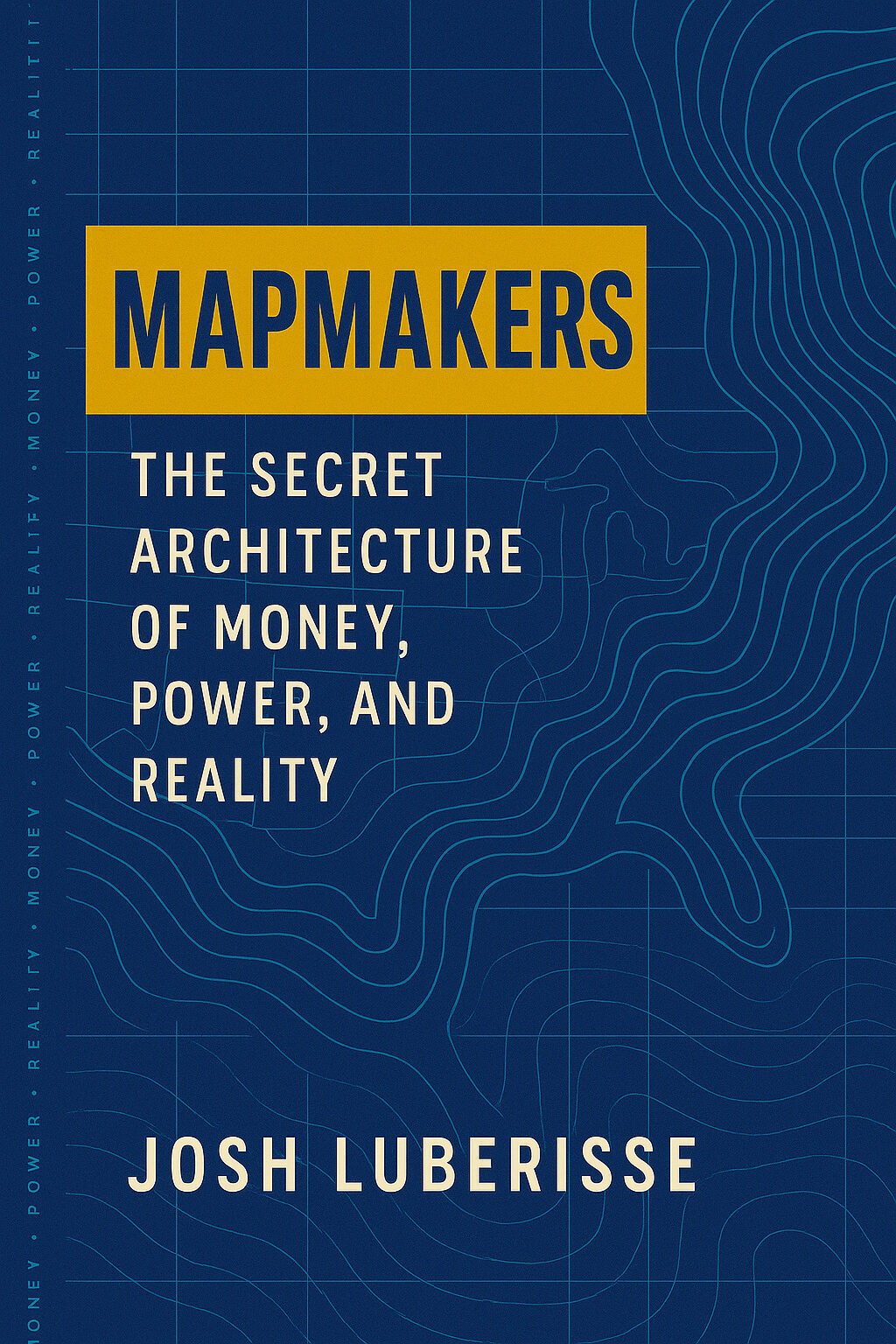
Fortis Novum Mundum, the visionary publishing house dedicated to transformative ideas, is thrilled to announce the release of Mapmakers: The Secret Architecture of Money, Power, and Reality by Josh Luberisse, set to hit shelves on September 30, 2025. This groundbreaking nonfiction work unveils the hidden “reality protocols” that shape our world—from money and attention to identity and AI safety—offering a field guide to navigate and redesign the systems that define modern life.
Blending vivid stories with practical toolkits, Mapmakers argues that true power today is cartographic power: the ability to design the maps everyone else must navigate. The book reveals how metrics become missions, why thin protocols win and thick ones persist, and how to build legitimacy, equity, reversibility, and exit into every system that touches real people.
In an era where digital platforms, AI governance, climate metrics, and digital identities dictate global outcomes, Mapmakers exposes how these invisible rules, or “protocols,” act as the operating instructions for society. Luberisse, a renowned strategist and author of The Dollar Fault Line: How America’s Currency Became the World’s Single Point of Failure, reveals how mapmakers—standards bodies, tech giants, and regulators—wield power by compressing reality into dashboards, defaults, and data fields. From credit scores steering housing access to ESG ratings redirecting trillions, these protocols decide who wins, who’s seen, and who’s left out.
Why Mapmakers Matters Now
With 2025 marking pivotal debates over AI safety, central bank digital currencies (CBDCs), and climate accountability, Mapmakers arrives as a timely call to action. Luberisse demystifies complex systems with vivid stories—like a dashboard metric that rewired a company or a retailer’s procurement rule that decarbonized supply chains—while equipping readers with tools like the Protocol Spotter’s Guide to decode and challenge these systems. The book’s ethical playbook advocates for “stewardship, not domination,” urging mapmakers to design with dignity, reversibility, and equity.
Inside Mapmakers
-
Part I — Seeing the Map: Why compression is necessary, how scores devour games, and where early warnings appear.
-
Part II — Cartographic Power: Who gets to count what—standards bodies, PMs, auditors, central bankers—and how defaults harden into destiny.
-
Part III — The Protocol Wars: Money, attention, identity, climate/value, and AI safety—each reframed as protocol choices with winners and losers.
-
Part IV — Drawing Your Own: The Protocol Spotter’s Guide, stress-testing, credible neutrality, migration tactics, and an ethical playbook for mapmakers.
-
Conclusion — The Territory Ahead: From literacy to agency; where to plug in (civic, corporate, open source); protocols we’d want our kids to live inside.
Key Highlights
-
Accessible Insight: Blends narrative and analysis to unpack money, attention, identity, climate, and safety protocols for both general readers and professionals.
-
Practical Tools: Offers the Protocol Spotter’s Guide and actionable checklists to spot and reform the rules shaping work, finance, and civic life.
-
Global Perspective: Features case studies from Estonia’s digital ID to India’s Aadhaar and Vietnam’s green supply chains, addressing diverse challenges.
-
Ethical Vision: Proposes a future where protocols are transparent, contestable, and designed for fairness—passing the “child’s test” for explainability.
About the Author
Josh Luberisse, founder of Neuromorph Systems Research Lab, is a leading voice in systems thinking, geopolitics, and AI strategy. His prior works, including Homo Sapiens 2.0 and Cognitive Warfare in the Age of Unpeace, have shaped global discussions on technology and power. With Mapmakers, Luberisse draws on decades of experience to empower readers to reclaim agency in a world of hidden defaults.
About Fortis Novum Mundum
Fortis Novum Mundum is a trailblazing publisher committed to amplifying bold ideas that challenge the status quo. We champion authors who tackle critical global issues—AI ethics, systemic power, climate innovation—with clarity and vision, reaching readers eager to shape a better future.
Availability
Mapmakers: The Secret Architecture of Money, Power, and Reality will be available in hardcover, paperback, and eBook formats on September 30, 2025, through major retailers, including Amazon, Barnes & Noble, and independent bookstores. Pre-order now at www.mapmakers.ink
Uncategorized
Smart Manufacturing & AI Automation Convention 2027 Spotlights Texas Robotics Expansion and the Future of American Factories
DALLAS, TEXAS, October 22, 2026BMA Conventions brings manufacturing executives and AI automation leaders together in Dallas as major Texas robotics investments accelerate factory transformation.
BMA Conventions brings manufacturing executives and AI automation leaders together in Dallas as major Texas robotics investments accelerate factory transformation.
DALLAS, TEXAS, October 22, 2026
A new Texas construction filing has put the growing scale of America’s robotics manufacturing ambitions into sharp focus. Registered on October 19, the filing describes a 1.2 million-square-foot advanced manufacturing facility in Austin and estimates $100 million for the project’s core-and-shell construction phase.
The filing, listed as Project Toaster in Texas Department of Licensing and Regulation records, identifies office, factory, casting and central utility plant areas. It lists a planned construction start of November 16, 2026, and an anticipated completion date of July 13, 2027. The $100 million figure covers the registered construction scope, not the total cost of the broader Amazon development.

Amazon announced its planned Austin robotics manufacturing expansion in August, describing a multibillion-dollar development that is expected to create 300 to 500 manufacturing and engineering jobs. The company says the facility will produce robotic systems designed to assist employees with repetitive tasks and heavy lifting.
A Bigger Shift Is Taking Shape on the Factory Floor
The significance goes beyond a single building. As manufacturers invest in robotics, computer vision, predictive systems and connected equipment, the challenge is shifting from identifying promising technologies to making them deliver measurable results in everyday operations.
For plant and operations leaders, that means integrating automation with existing production lines, protecting uptime, ensuring safety, securing industrial data and developing the skills teams need to work confidently with advanced equipment.
Texas is seeing investment across advanced industrial sectors. On October 8, Blue Origin announced a manufacturing and operations campus in Hutto backed by approximately $554.8 million in capital investment and expected to create more than 2,000 jobs. The Blue Origin and Amazon developments are independent projects, but both underscore the scale of industrial investment taking shape in the state.
From aerospace and electronics to automotive, food and beverage, fabricated metals and industrial equipment, a common question is emerging: How can manufacturers deploy AI and automation without losing sight of quality, safety, workforce readiness and return on investment?
BMA Conventions Brings the Discussion to Dallas
Against this backdrop, BMA Conventions will host the Smart Manufacturing & AI Automation Convention 2027 from February 23 to 25, 2027, at the DoubleTree by Hilton Hotel Dallas – Richardson in the Dallas area.
The invitation-only convention is designed for senior manufacturing executives, plant leaders, operations and engineering professionals, technology decision-makers and selected industrial solution providers seeking practical ways to improve performance.
Its discussion themes include advanced robotics, industrial AI, predictive maintenance, machine vision, Industrial Internet of Things (IIoT), connected production systems, factory cybersecurity and workforce transformation.
Rather than focusing on robotics as a headline, the program will examine real questions: Which applications can reduce downtime? How should plants connect new technologies to legacy systems? What does responsible, scalable deployment look like across multiple facilities?
From Industry Headlines to Real Business Decisions
Technology investment becomes meaningful only when it translates into safer operations, stronger productivity, improved reliability and a measurable business case.
BMA’s format combines leadership panels and expert sessions with curated peer discussions, one-on-one meetings and networking between manufacturing decision-makers and solution partners.
The convention opens on February 23 with exhibitor setup and networking activities, continues on February 24 with its core conference program, and concludes on February 25 with additional sessions and scheduled one-on-one meetings.
As Texas continues attracting advanced manufacturing investment, Dallas provides a timely setting for conversations about what it takes to turn industrial innovation into day-to-day operating performance.
Opportunities for Manufacturing Leaders and Solution Providers
Manufacturing executives interested in joining discussions or attending as delegates, along with solution providers offering technologies and services relevant to plant modernization, can enquire about participation, panels and partnership opportunities by emailing [email protected] or calling +1 214 851 9369.
About BMA Conventions
BMA Conventions organizes curated executive events that connect industry decision-makers, operational leaders and technology solution providers. Through focused sessions, structured meetings and peer-to-peer networking, BMA supports practical knowledge exchange across manufacturing, healthcare facilities and data center infrastructure.
Event Details
Event: Smart Manufacturing & AI Automation Convention 2027
Dates: February 23–25, 2027
Venue: DoubleTree by Hilton Hotel Dallas – Richardson
Location: Richardson (Dallas area), Texas, USA
Organizer: BMA Conventions
Website: https://bmaconventions.com/smart-manufacturing-automation-convention-2027/
Uncategorized
Francoobla Music Unveils AI vs. HI Musical Challenge and MAJESTATIS SEVEN Framework
AZZATE, ItalyItalian musician Franco Oblatore invites music industry leaders and AI developers to explore human-directed music creation, a proposed similarity assessment framework, and an upcoming international music project.
Italian musician Franco Oblatore invites music industry leaders and AI developers to explore human-directed music creation, a proposed similarity assessment framework, and an upcoming international music project.
AZZATE, Italy
Francoobla Music, the independent musical project founded by Italian musician and composer Franco Oblatore, has announced a two-part international initiative focused on the relationship between human creativity, artificial intelligence, and intellectual property.

The initiative introduces the International Friendly Musical Challenge Between AI and HI (Human Intelligence) and MAJESTATIS SEVEN, a proposed framework for identifying defined similarities in musical compositions and written lyrics.
Alongside these initiatives, Francoobla Music is preparing an international music project featuring Lady Jane, a virtual singer persona associated with a catalog of approximately 200 tracks developed through human-directed and AI-assisted creative processes, according to the project’s founder.
Oblatore, who describes his musical experience as spanning 60 years, is inviting music professionals, broadcasting organizations, technology developers, and industry representatives to examine the projects and explore opportunities for international collaboration.
Part I: International Friendly Musical Challenge Between AI and HI
The International Friendly Musical Challenge Between AI and HI is a proposed creative competition designed to explore the relationship between human artistic direction and generative artificial intelligence.
The initiative aims to demonstrate how musicians can use AI-assisted production tools while maintaining creative control over musical arrangements, instrumentation, rhythm, composition, and vocal interpretation.
According to Oblatore, his approach involves detailed musical instructions developed through his experience as a musician and composer.
These instructions cover musical elements such as tempo, instrumental arrangements, melodic direction, rhythmic structures, solos, and vocal performances.
The process incorporates references to instruments including the Hammond C3 organ, Steinway piano, Gibson guitars, and Fender Stratocaster guitars, alongside the development of vocal performances for the project’s virtual artist, Lady Jane.
Rather than positioning artificial intelligence as a replacement for musicians, Francoobla Music presents the challenge as an opportunity to examine how human musical knowledge can guide the use of generative technology.
“I am an ordinary person with 60 years of concrete experience, registered patents, and a human-directed AI catalog built since 2023. I invite the industry to look closely at what we have developed to assess the significant improvements from 2023 to 2026,” Oblatore states.
Francoobla Music is inviting U.S. financial media, broadcasting networks, record labels, AI developers, and other interested organizations to evaluate the initiative.
The project may also pursue opportunities in Asian markets, including China, India, South Korea, and Japan.
“We are offering a clear window for review and discussion,” says Oblatore. “Should new international avenues align better with our long-term goals, Francoobla Music could consider directing its strategic initiatives toward Asian markets.”
Details concerning participation requirements, evaluation criteria, and the timing of the proposed musical challenge have not yet been announced.
Part II: MAJESTATIS SEVEN — A Proposed Framework for Assessing Creative Similarities
The second component of the initiative is MAJESTATIS SEVEN, a proposed methodology developed by Francoobla Music to identify defined sequences of matching elements in music and written content.
The framework introduces two criteria intended to provide structured reference points for examining similarities between creative works.

Under the proposed methodology, musical or written sequences meeting these criteria would be identified for further examination.
Francoobla Music presents the framework as a potential contribution to discussions involving originality, authorship, copyright protection, and the use of generative AI in creative industries.
The proposed criteria are intended to provide a defined basis for similarity assessment, particularly in situations where musicians, publishers, and technology developers are examining content produced through traditional or AI-assisted methods.
MAJESTATIS SEVEN is a proposed assessment methodology, not an established legal standard for determining plagiarism or copyright infringement. Any legal determination would remain subject to applicable copyright laws and the circumstances of the individual work.
Francoobla Music welcomes discussion with music industry representatives, intellectual property professionals, and AI developers interested in evaluating the proposed approach.
Lady Jane and the Upcoming International Musical Kolossal
As part of its broader international initiative, Francoobla Music is preparing the International Musical Kolossal, a music project intended to showcase compositions developed through human artistic direction and AI-assisted production.
Central to the project is Lady Jane, a virtual singer persona featured in the Francoobla Music catalog.
According to Oblatore, the catalog includes approximately 200 original tracks spanning multiple musical genres.
The planned initial presentation will feature 24 selected tracks, including four Italian pop compositions, intended to demonstrate the project’s musical range and creative approach.
Francoobla Music identifies the United States, the European Union, China, and Japan among the markets being considered for the project’s international introduction.
The planned release will focus on the relationship between human creative direction and emerging music production technologies, highlighting the role of musical experience in guiding AI-assisted compositions.
Further announcements regarding the project’s release schedule, distribution arrangements, and international presentation are expected as preparations progress.
Registration and Project Information
Francoobla Music has provided the following registration and project references associated with MAJESTATIS SEVEN and the International Friendly Musical Challenge Between AI and HI.

These references are provided by Francoobla Music for informational purposes and remain subject to independent verification.
The existence of a registration reference or case number does not independently establish that a proposed methodology has been adopted as a legally binding international copyright standard.
International Engagement and Next Steps
Through the combined initiatives, Francoobla Music aims to encourage dialogue among musicians, composers, recording industry professionals, media organizations, technology developers, and intellectual property specialists.
The International Friendly Musical Challenge Between AI and HI is intended to highlight the role of human creative direction in AI-assisted music production, while MAJESTATIS SEVEN proposes a structured approach for examining selected similarities in music and written content.
The forthcoming International Musical Kolossal will provide a creative component to these discussions through Lady Jane and the project’s selected musical works.
Francoobla Music is inviting interested industry participants to review the initiatives and contact the project directly to discuss potential collaboration, technical evaluation, or international presentation opportunities.
About Francoobla Music
Francoobla Music is an independent musical project founded by Franco Oblatore, an Italian musician, composer, and former industrialist based in Azzate, Italy.
Drawing on Oblatore’s six decades of musical experience, the project explores the relationship between human artistic direction and emerging technologies, including generative artificial intelligence.
Its initiatives include original musical compositions, the virtual artist persona Lady Jane, the International Friendly Musical Challenge Between AI and HI, and the proposed MAJESTATIS SEVEN framework.
Through these projects, Francoobla Music seeks to encourage international discussion about creativity, musical authorship, and intellectual property in the evolving music and technology industries.
Media and Strategic Contact
Contact Person: Franco Oblatore
Title: Executive Proprietor & Creator, Francoobla Music
Location: Azzate (VA), Italy
Phone: +39 393 961 9606
Email: [email protected]
Website: https://www.francooblamusic.com
Uncategorized
Crypto Was Built Ahead of the AI Era, Says Bull Market Blueprint Founder Ahead of London Summit
Dubai, UAELuke Davis will make the case to his self-managed investing community that AI agents, stablecoins and decentralized finance are already working in tandem
Luke Davis will make the case to his self-managed investing community that AI agents, stablecoins and decentralized finance are already working in tandem
Dubai, UAE
AI agents are starting to search, compare and buy on people’s behalf, and they will need a way to pay for what they buy.

Luke Davis, Founder and Chief Market Strategist of Bull Market Blueprint (BMB), believes crypto already has much of what they need. He will present this view at BMB’s members-only summit in London. Around 30 members are expected to attend, all self-managed investors with investable portfolios of at least $100,000.
Davis will open the day with a keynote on where crypto and artificial intelligence meet. He will cover agentic commerce, where AI agents make purchases for users, and how it fits with stablecoin networks and decentralized finance (DeFi).
“Crypto was building the financial infrastructure for an AI-driven economy long before that economy began to take shape,” said Davis. “Now, as AI agents begin transacting autonomously, existing blockchain networks and stablecoins could become the financial rails powering an entirely new era of digital commerce.”
The keynote builds on the picture Davis painted at BMB’s previous summit in Barcelona over the summer, where he set out what he thinks the world will look like in five to 10 years with AI. In London, he will focus on the ways the two technologies intersect.
Revisiting the Intelligent New World
Davis will also present an updated version of his Intelligent New World thesis, looking at what has changed over the past quarter, what has been validated and what still needs to be.
The day will include a session on portfolio construction and risk management. Members will continue with community activities around London on Sunday, November 22.
Journalists interested in attending the summit or arranging an interview with Davis can contact the media representative below.
About Bull Market Blueprint
Bull Market Blueprint is an investing education membership founded by Luke Davis in 2023. The company operates from Dubai with a team of nine and serves around 350 active members across the US, Europe, Australia and Canada. Membership requires a minimum investable portfolio of $100,000. Members receive live weekly market education, published research, risk management tools and direct access to Davis and the research team, including full visibility of the positions and reasoning behind his own portfolio. Bull Market Blueprint does not manage client money, take custody of assets, or provide financial advice. Learn more at https://www.bullmarketblueprint.com/
Media Contact Details
Nishy Siva
Genius PR
Email: Send Email

Smart Manufacturing & AI Automation Convention 2027 Spotlights Texas Robotics Expansion and the Future of American Factories
Francoobla Music Unveils AI vs. HI Musical Challenge and MAJESTATIS SEVEN Framework
Crypto Was Built Ahead of the AI Era, Says Bull Market Blueprint Founder Ahead of London Summit

Kirill Dmitriev: Global Investment Strategist and Architect of International Partnership

Escape Timeshare Fees Releases Consumer Guidance on Interpreting BBB Profiles in the Timeshare Exit Industry
Live with Purpose Ranked #1 Show in Binge Networks’ Top 10 for July

Germany’s ports and China: How to reconcile openness, resilience and security?

Cubic Introduces DTECH Fusion Edge High-Performance Compute (eHPC) at Special Operations Forces Week

The Global economy is more vulnerable than it seems. World leaders appear largely unwilling to invest in preserving global economic integration
-
 Uncategorized1 year ago
Kirill Dmitriev: Global Investment Strategist and Architect of International Partnership
-
 Uncategorized10 months ago
Escape Timeshare Fees Releases Consumer Guidance on Interpreting BBB Profiles in the Timeshare Exit Industry
-
Uncategorized1 year ago
Live with Purpose Ranked #1 Show in Binge Networks’ Top 10 for July
-

 Uncategorized10 months ago
TreasureNFT: Partnering with BlackRock Capital for a Major Upgrade – NOVA Platform Aims to Become the World’s Largest NFT Trading Ecosystem
-
Uncategorized2 months ago
Legal Complaint Filed Against Rwandan Government Over Secret $404.7 Million Road Contract Awarded to Ruling Party’s Business Conglomerate
-

 Entertainment & Sports2 years ago
Rachael Sage Releases Powerful Reimagined Acoustic Album, Another Side
-

 Business2 years ago
Aivista Quant Capital CEO Dr. Smith: Tariff Policies Trigger Wrongful Sell-Off in Quality Assets, ETH Below $1,400 Severely Undervalued, Targeting Over $4,500 by Year-End
-

 Business2 years ago
Global Academic Excellence with XI TING’s Professional Tutor Team