
Uncategorized
Pioneer Realty Capital Secures 19.58 Million Dollars Bond Refinancing for Texas Student Housing Project


Pioneer Realty Capital, LLC (“PRC”), a distinguished Texas-based advisory firm specializing in commercial real estate capital markets, proudly announces the successful completion of its inaugural institutional bond refinancing transaction. The sophisticated deal secured $19.58 million in taxable bond funding for 625 at Prairie View, a premier student housing community strategically located adjacent to Prairie View A&M University.
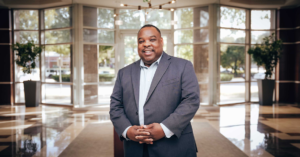
This landmark refinancing marks a critical milestone for both PRC and the PRC Equity Fund, underscoring the firm’s robust capacity to structure and execute complex, institutionally-backed financing solutions within the higher education real estate sector. The transaction ensures long-term financial sustainability for the property, safeguards investor interests, and provides essential capital momentum for the forthcoming Phase II expansion, anticipated to introduce over 700 additional student beds to accommodate growing demand.
Charles Williams, Founder and Managing Member of PRC, emphasized, “This transaction was about more than merely securing financing—it was a strategic endeavor to preserve investor value and fortify the future of a pivotal housing development dedicated to supporting students from historically underserved communities.”
Strategic Execution Amidst Complexities
The PRC leadership team, in collaboration with capital markets partners, adeptly navigated regulatory intricacies, procedural hurdles, and stringent time constraints to achieve a timely and efficient closing. Morgan Stanley served as lead underwriter for the bond issuance, supported by Norton Rose Fulbright as legal counsel, Orrick providing bond and trustee counsel, and closing coordination by M&W Law and Stewart Title. Wilmington Trust effectively managed trustee responsibilities

Special recognition is extended to Osaze Romany of Morgan Stanley for his exemplary dedication and instrumental role in the transaction’s success. Additional critical support was provided by J.C. Shelley and Joeylene Hunggay, who meticulously managed time-sensitive investor waivers, and Elliot Williams, whose proactive intervention ensured lien clearance through personal delivery of documents to the Waller County Courthouse immediately preceding the closing.
Demonstrating Commitment and Resilience
This successful transaction serves as a definitive response to skeptics questioning the project’s viability. Williams noted, “Throughout the process, the challenges we encountered were substantial. Yet, we remained disciplined, steadfast, and unwaveringly committed to our core mission. This closing represents a collective victory, achieved through integrity, diligence, and collaboration by every stakeholder invested in our vision.”

About Pioneer Realty Capital
Founded in 2003, Pioneer Realty Capital is a premier Texas-based advisory firm, distinguished by its extensive expertise in structuring debt and equity solutions across national commercial real estate markets. Through the PRC Equity Fund, the firm provides investors with access to institutionally-backed real estate opportunities, specializing in student housing initiatives and public-private community partnerships.
The Press Release Pioneer Realty Capital Secures 19.58 Million Dollars Bond Refinancing for Texas Student Housing Project appeared first on Pinion Newswire.
Uncategorized
Tyrannus Angel Awards Announces 2026 Official Selection Celebrating the Human Spirit in AI Film
LOS ANGELES, CASelected from 636 submissions across 84 countries, 34 films advance ahead of the October 24 awards presentation at AI Film Summit Los Angeles 2026.
Selected from 636 submissions across 84 countries, 34 films advance ahead of the October 24 awards presentation at AI Film Summit Los Angeles 2026.
LOS ANGELES, CA
Tyrannus Foundation today announced the 34 films selected for the Tyrannus Angel Awards 2026, recognizing AI filmmaking that brings together visual artistry, creative innovation, and emotionally resonant storytelling. Chosen from 636 submissions representing 84 countries, the official selection reflects the growing ability of creators around the world to use AI to tell stories that move, inspire, and connect audiences.

The final award recipients will be announced on October 24 during AI Film Summit Los Angeles 2026 at City Club Los Angeles.
A Place for Ideas. An Opening for Creators.
The name Tyrannus draws inspiration from the story of Paul teaching and engaging in dialogue at the school of Tyrannus. For Tyrannus Foundation, that legacy carries the spirit of a “Prince’s Academy”: a place where people from different backgrounds exchange ideas and create an influence that reaches across faiths, nations, and cultures.
“Angel” connects that vision to Los Angeles, the City of Angels. Beginning in the city that is home to Hollywood, the Awards aims to open a new doorway into the world of film for creators whose stories might previously have remained beyond the reach of traditional production.
As AI expands what filmmakers can create with limited resources, Tyrannus Angel Awards seeks to help meaningful stories find an audience—and help the people behind them find recognition, encouragement, and support. Its ambition extends to the communities those creators come from: that a filmmaker whose voice is recognized on a global stage can carry that encouragement home, illuminating new possibilities for others.

Recognizing the Humanity Behind the Image
The 2026 selection was guided by five considerations: visual artistry, the creative use of AI technology, storytelling ability, emotional impact, and the expression of hope and humanity.
According to the Foundation, this year’s submissions included many works with exceptional imagery and sophisticated production techniques. The final selection places particular emphasis on how those creative achievements serve the story and shape the audience’s experience.

The 34 selected films were chosen for their ability to leave an impression: a moment of recognition, a feeling of warmth, a renewed sense of possibility, or the pleasure of being drawn into an engaging story. The Awards values films that can entertain while giving audiences something meaningful to carry with them.
For the Foundation, these works demonstrate the emotional range emerging within AI filmmaking. Through the images and production methods, viewers can encounter the feelings, humanity, and creative soul of the people telling the stories. That connection between creator and audience is central to what Tyrannus Angel Awards seeks to recognize.

2026 Official Selection
The following works are listed in announcement order, without ranking. Inclusion in the official selection does not indicate a final award. Award recipients will be announced on October 24.
- Unbreakable — Sebastian Rangel, United States
- Candy — Jiaze Li, United Kingdom
- Apocalypse Squad — Chao-Hsien Tseng, Taiwan
- ENOUGH — Julia Martin, Russian Federation
- Gabbit A Promise Kept — Wonnam Chai, South Korea
- If Stars Could Fall — Hsu Tien Hsiang, Taiwan
- INCUBUS — Julien Prevost, France
- Nostalgia — Guillermo Jose Trujillo, Colombia
- PRIZMA 1984 — Victor Korchik, United States
- Noor — Nishtha Shailajan, India
- PARADISE ISLAND — MEHMET ALİ POYRAZ, Türkiye
- The Pastor Says — Mikhail Wolkonsky, United Kingdom
- Know you again — Arnaud Tardy, France
- Peking Opera Paradise — Jiayang Liang, China
- THE THREAD — Sheikh Jayed Bin Noor, Bangladesh
- The First Dance — Leopoldo Joe Nakata, Brazil
- Damascus Call (AI Shortfilm) — Abin Alex, India
- Simple Things — Randell J Jackman, United States
- -BLUE- — TAEJOO PARK, South Korea
- ALEX&PROTO — Mark Vilther, Israel
- Diary of an exoplanet biologist — Dongyuan Ma, China
- The Strawberry Cake — Bluesky Lan, United States
- Kathársis: Reclaim the future — Guillermo Jose Trujillo, Colombia
- The Silent Protector — Kanishk Deshwal, India
- HOPE — Nabil El Allouche, Morocco
- ECHO — Yassine Temime, Tunisia
- 《MISSION MUST ARRIVE》 — Zhui Zheng, China
- L’Ultimo Volo — Leonard Menchiari, Italy
- Silent Friends — Enyu Tao, China
- Monkey King Legend — Emre Altay, Türkiye
- SKUGGADALR: The Valley of Lost Shadows — Guillermo Jose Trujillo, Colombia
- THE BIN CHICKEN — Sejun Hwang, Australia
- Kami — Dominic Higgins, Ian Higgins, United Kingdom
- Loud silence — Ihor Khoroshylov, Ukraine
Nine Awards Across Three Categories
Tyrannus Angel Awards 2026 will present nine awards recognizing achievement in directing, screenwriting, and production:
- Original: Best Director, Best Screenplay, and Best Production.
- Adaptation: Best Director, Best Screenplay, and Best Production.
- Animation: Best Director, Best Screenplay, and Best Production.
Four special nominations will also be announced. Their specific titles will be revealed with the final results on October 24.

From Recognition to an Audience
The Tyrannus Angel Awards presentation will take place during AI Film Summit Los Angeles 2026, presented by Tyrannus Foundation on October 24, from 1:00–7:00 PM at City Club Los Angeles.
Award-winning films will be shown in the Summit’s Screening Room and featured on AISCENIX through dedicated creator showcase pages, providing a place for audiences to discover the work and the filmmakers behind it beyond the event.
At the Creator Lab, attendees will experience how creators bring AI filmmaking to life through demonstrations and interactive presentations, offering a closer look at the processes that turn an idea into a cinematic experience.
Alongside the Awards, the Summit will feature conversations on film production, creative careers, distribution, and intellectual property, with opportunities for creators and industry professionals to meet and explore future collaboration.
Together, the Awards and Summit seek to connect recognition with opportunity: helping meaningful films reach audiences and supporting the creators who will shape what comes next.
For event information and tickets, users can visit aifilmsummit.com.
About Tyrannus Foundation
Tyrannus Foundation is the organization behind the Tyrannus Angel Awards and AI Film Summit Los Angeles. Its programs are designed to support creative exchange, recognize emerging approaches to AI-assisted filmmaking, and provide filmmakers with opportunities to present their work to broader audiences. Through the Awards, screenings, creator showcases, and industry programming, the Foundation seeks to connect filmmakers, creative professionals, and audiences around developments in AI-enabled storytelling.
Media Contact Details
Chantel Chang
Email: Send Email
Website: aifilmsummit.com
Uncategorized
Janaye Ashley Crowned Miss California US Nation 2026
LONG BEACH, Calif.The reigning Miss California US Nation 2026 continues her pageant and modeling journey following appearances at fashion events in New York and Denver.
The reigning Miss California US Nation 2026 continues her pageant and modeling journey following appearances at fashion events in New York and Denver.
LONG BEACH, Calif.
Janaye Ashley, the reigning Miss California US Nation 2026, is continuing her journey with the Miss US Nation pageant system as she prepares to advance to the national Miss US Nation competition later this year.
Janaye earned the California state title at the Miss West Coast US Nation 2026 regional pageant, where she was selected to represent California and move forward on the road to the national competition. Her state title followed the beginning of her Miss US Nation journey at the local level, where she represented the city of Long Beach as Miss Long Beach US Nation 2026.

Since becoming a titleholder, Janaye has continued building experience across pageantry, modeling and fashion events. She has participated in several Fashion Week productions, including Super Chic New York Fashion Week Winter and Super Chic Denver Fashion Week.
Her participation in Denver also expanded beyond the runway, as Janaye had the opportunity to serve as a host during the Super Chic Denver Fashion Week event.
The appearances have allowed Janaye to continue developing her presence within the fashion and pageant industries while representing the Miss US Nation organization across multiple events and markets.
Her progression from a local Long Beach title to the California state crown reflects a growing role within the Miss US Nation pageant system. Janaye is now preparing for the next stage of that journey as she advances toward the national Miss US Nation competition.
Janaye’s earlier selection as Miss California US Nation 2026 was announced following the Miss West Coast US Nation 2026 competition. She joined other regional and state titleholders selected to advance toward the national pageant.

Beyond pageantry, Janaye has also built a growing presence in modeling. Her journey has included runway appearances and fashion-focused events that have provided opportunities to work in different production environments while continuing to represent her state title.
As she moves toward the national competition, Janaye plans to continue participating in pageant, fashion and modeling opportunities while representing California within the Miss US Nation organization.
Supporters can follow Janaye Ashley on Instagram at @janayewonderfullymade for updates on her pageant journey, modeling appearances and upcoming events.
Photo Credit: JEM Studio Productions
Instagram: @jemstudioproductions
About Miss US Nation Pageants
Miss US Nation Pageants is a pageant organization that provides opportunities for titleholders to participate in regional, state and national competitions while gaining experience in modeling, fashion, public appearances and related events.
Media Contact Details
Rachel Marvilli
Email: Send Email
Uncategorized
McKenzie Scott’s Elite Criminal Defense Attorneys Report Favorable Outcomes in Roughly 3 of 4 Trials – Against a Federal System Where Prosecutors Win More Than 90% of the Time
San Diego, CAThe San Diego criminal defense firm’s federal trial lawyers – all alumni of Federal Defenders of San Diego, Inc. – bring 80+ years of combined experience and 80+ jury trials to clients facing federal charges across Southern California, including San Diego and Los Angeles. McKenzie Scott PC, a San Diego-based civil rights and criminal defense […]
San Diego, CA
The San Diego criminal defense firm’s federal trial lawyers – all alumni of Federal Defenders of San Diego, Inc. – bring 80+ years of combined experience and 80+ jury trials to clients facing federal charges across Southern California, including San Diego and Los Angeles.
McKenzie Scott PC, a San Diego-based civil rights and criminal defense firm, carries a significant federal trial record behind its criminal defense practice:
Across more than 80 jury trials, approximately three-quarters of the firm’s criminal cases have resulted in acquittals, hung juries, or success on appeal.
That figure runs directly counter to the odds most federal defendants face. Federal prosecutors secure convictions in more than 90% of adjudicated federal cases. Moreover, in fiscal year 2022, they won roughly 83% of the cases that actually reached a verdict at trial – 1,379 defendants found guilty against 290 acquitted, according to Administrative Office of the U.S. Courts data analyzed by the Pew Research Center.

A Team Trained Where Federal Trials Are Actually Tried
The firm’s federal criminal defense practice is built entirely from alumni of Federal Defenders of San Diego, Inc., the Federal Community Defender Organization appointed to represent people accused of federal crimes in the Southern District of California – one of the busiest and most-demanding federal criminal dockets in the United States.
Founding partners Michele Akemi McKenzie and Tim Scott each began their careers as criminal trial attorneys at Federal Defenders, where they spent nearly two decades defending clients charged primarily with drug and immigration offenses. Trial attorneys Marcus Bourassa, Michelle Angeles, and Lauren Mellano also served at Federal Defenders, where they tried federal criminal cases to verdict, argued appeals before the Ninth Circuit Court of Appeals, raised novel constitutional challenges to federal prosecutions, and presented before the California State Assembly’s Committee on Public Safety.
That shared background is unique in private practice. Most criminal defense lawyers move directly into private work and try comparatively few federal cases. Federal Defenders lawyers try them constantly, against the same U.S. Attorney’s Office, in front of the same district judges, under the same federal rules.
What the Firm’s Criminal Defense Team Handles
- Drug trafficking and drug manufacturing
- White-collar offenses – wire fraud, mail fraud, bank fraud, embezzlement, tax evasion
- Health care fraud, including False Claims Act and Anti-Kickback Statute allegations
- Money laundering and honest services fraud
- Insurance fraud
- Immigration offenses and border arrests
- Illegal firearms possession
- RICO violations, insider trading, theft of trade secrets, and cybercrime
The firm also maintains an active federal appellate practice, with dozens of successful appeals before the Ninth Circuit Court of Appeals.
Serving Clients Across Southern California
McKenzie Scott’s office is located in downtown San Diego, blocks from the U.S. District Court for the Southern District of California, and the firm represents clients throughout California and nationwide – including clients facing charges in the Central District of California in Los Angeles.
Free case evaluations are available at (619) 794-0451 or at https://mckenziescott.com/federal-criminal-defense-attorney/.
Frequently Asked Questions
What is the federal conviction rate?
More than 90% of adjudicated federal criminal cases end in a conviction, largely because roughly 90% of federal defendants plead guilty. Among cases that reach a verdict at trial, federal prosecutors convicted about 83% of defendants in fiscal year 2022.
Why does a lawyer’s Federal Defenders background matter?
Federal Defenders offices handle high volumes of federal criminal cases and try them to verdict. Attorneys who trained there accumulate federal trial and Ninth Circuit appellate experience that most private practitioners never get, because federal trials are rare.
Can any criminal defense attorney represent me in federal court?
No. Generally, only an attorney admitted to practice in the federal district court where charges are filed may represent a defendant there. Federal procedure, evidence, and sentencing differ substantially from state practice.
What should I do if federal agents contact me?
Decline to answer questions, state clearly that you want to speak with a lawyer, and contact a federal criminal defense attorney immediately. Statements made to federal agents before you have counsel can permanently damage a defense.
Does McKenzie Scott handle cases in Los Angeles?
About McKenzie Scott PC
McKenzie Scott PC is a notable San Diego criminal defense law firm representing clients in federal and state criminal matters, police misconduct and civil rights litigation, and personal injury cases. The firm’s attorneys bring more than 80 years of combined federal criminal experience and a trial record built at Federal Defenders of San Diego, Inc. The firm is located at 1350 Columbia Street, Suite 600, San Diego, California 92101.
Learn more at https://mckenziescott.com. For a free and confidential criminal defense attorney case evaluation, click here.
Contains attorney advertising. Results described reflect outcomes in prior matters and depend on the specific facts and circumstances of each case. Past results do not guarantee, warrant, or predict a similar outcome in any future matter. This release is informational and does not constitute legal advice or create an attorney-client relationship.

Tyrannus Angel Awards Announces 2026 Official Selection Celebrating the Human Spirit in AI Film
Janaye Ashley Crowned Miss California US Nation 2026
McKenzie Scott’s Elite Criminal Defense Attorneys Report Favorable Outcomes in Roughly 3 of 4 Trials – Against a Federal System Where Prosecutors Win More Than 90% of the Time

Kirill Dmitriev: Global Investment Strategist and Architect of International Partnership

Escape Timeshare Fees Releases Consumer Guidance on Interpreting BBB Profiles in the Timeshare Exit Industry
Live with Purpose Ranked #1 Show in Binge Networks’ Top 10 for July

Germany’s ports and China: How to reconcile openness, resilience and security?

Cubic Introduces DTECH Fusion Edge High-Performance Compute (eHPC) at Special Operations Forces Week

The Global economy is more vulnerable than it seems. World leaders appear largely unwilling to invest in preserving global economic integration
-
 Uncategorized12 months ago
Kirill Dmitriev: Global Investment Strategist and Architect of International Partnership
-
 Uncategorized10 months ago
Escape Timeshare Fees Releases Consumer Guidance on Interpreting BBB Profiles in the Timeshare Exit Industry
-
Uncategorized1 year ago
Live with Purpose Ranked #1 Show in Binge Networks’ Top 10 for July
-

 Uncategorized9 months ago
TreasureNFT: Partnering with BlackRock Capital for a Major Upgrade – NOVA Platform Aims to Become the World’s Largest NFT Trading Ecosystem
-
Uncategorized2 months ago
Legal Complaint Filed Against Rwandan Government Over Secret $404.7 Million Road Contract Awarded to Ruling Party’s Business Conglomerate
-
 Entertainment & Sports2 years ago
Rachael Sage Releases Powerful Reimagined Acoustic Album, Another Side
-

 Business1 year ago
Aivista Quant Capital CEO Dr. Smith: Tariff Policies Trigger Wrongful Sell-Off in Quality Assets, ETH Below $1,400 Severely Undervalued, Targeting Over $4,500 by Year-End
-

 Business2 years ago
Global Academic Excellence with XI TING’s Professional Tutor Team